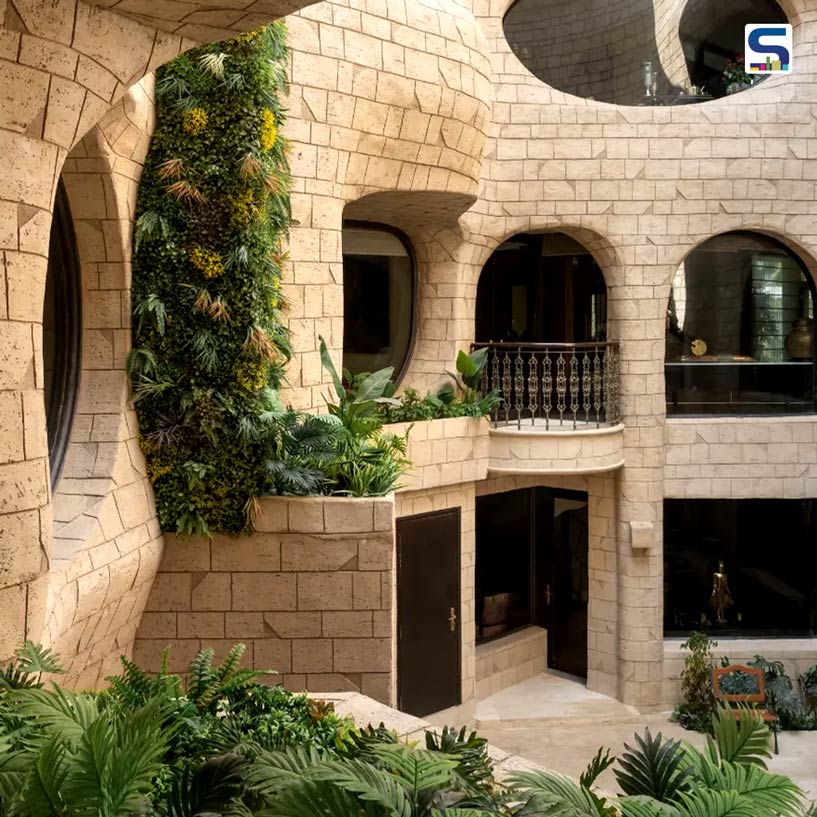
The Fonte D’Amore courtyard in New Delhi, designed by principal architect Manish Gulati of Manifestation of Fluid Architecture (M:OFA) reimagines a neglected 645 sqft internal atrium as the emotional and sculptural heart of a home. What was once an overlooked void has now been transformed into an immersive architectural experience where memory, craft, technology and symbolism. Drawing a perfect balance of love and technical achievement, SURFACES REPORTER (SR) showcases how digital and parametric tools, artisanal craft and an emotional narrative shape this residence.
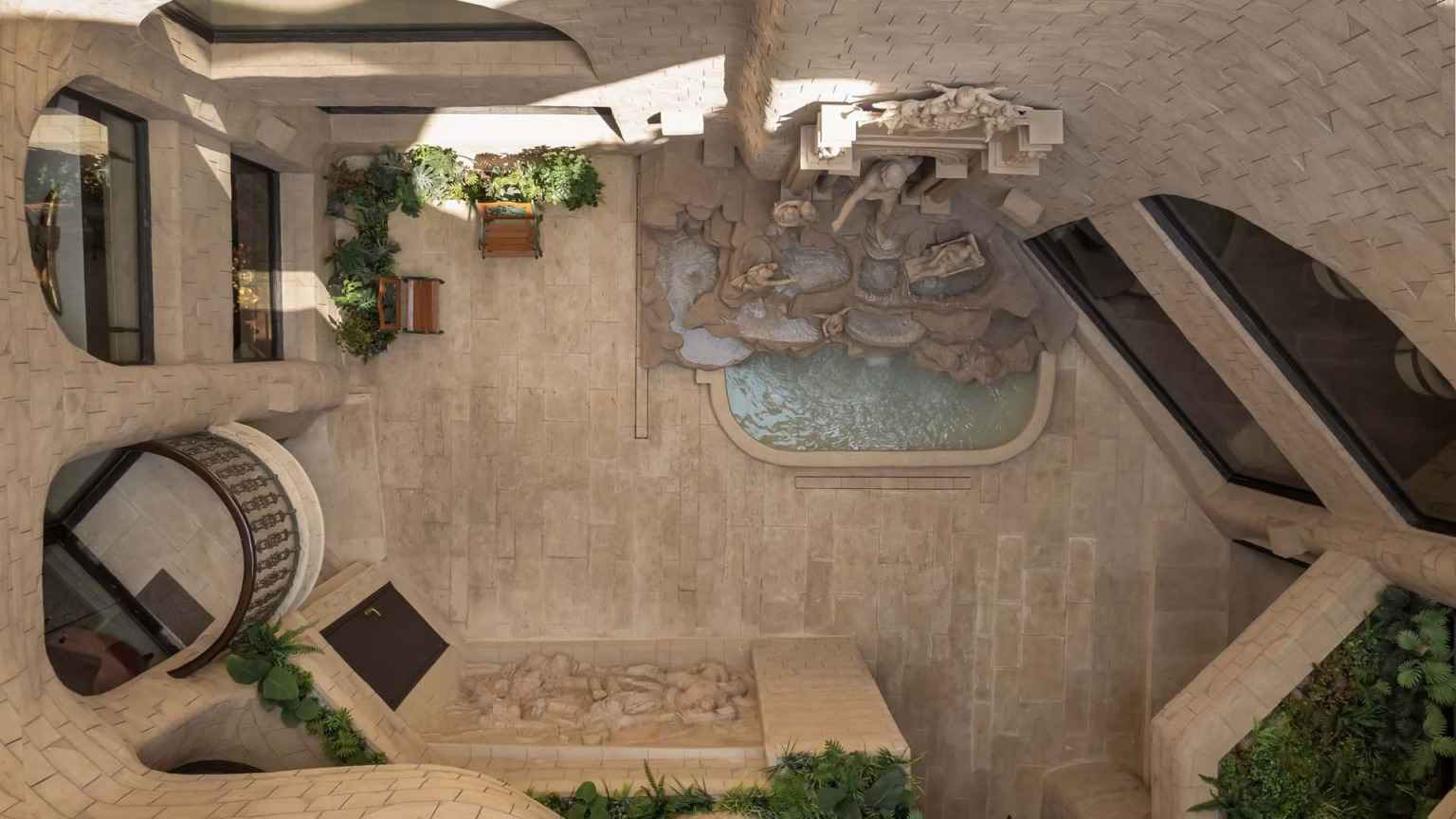
M:OFA anchored the lower level of the residence in classical symmetry, echoing traditional Renaissance courtyards that rely on proportion and balance.
Gaudi meets parametric design
The Fonte D’Amore courtyard project started as an intimate gesture for a husband commissioning a personalized space as a wedding gift for his wife. This sentiment shaped not just the brief but the architectural language itself. The couple’s shared memories became the conceptual foundation, particularly a proposal at Rome’s Trevi Fountain and their fondness for Antoni Gaudí’s expressive, nature-inspired geometries encountered during travels their in Barcelona. These references guided the design toward a fusion of Renaissance order and fluid, Gaudi-esque forms, thereby giving the courtyard its name, Fonte D’Amore, or the Fountain of Love.
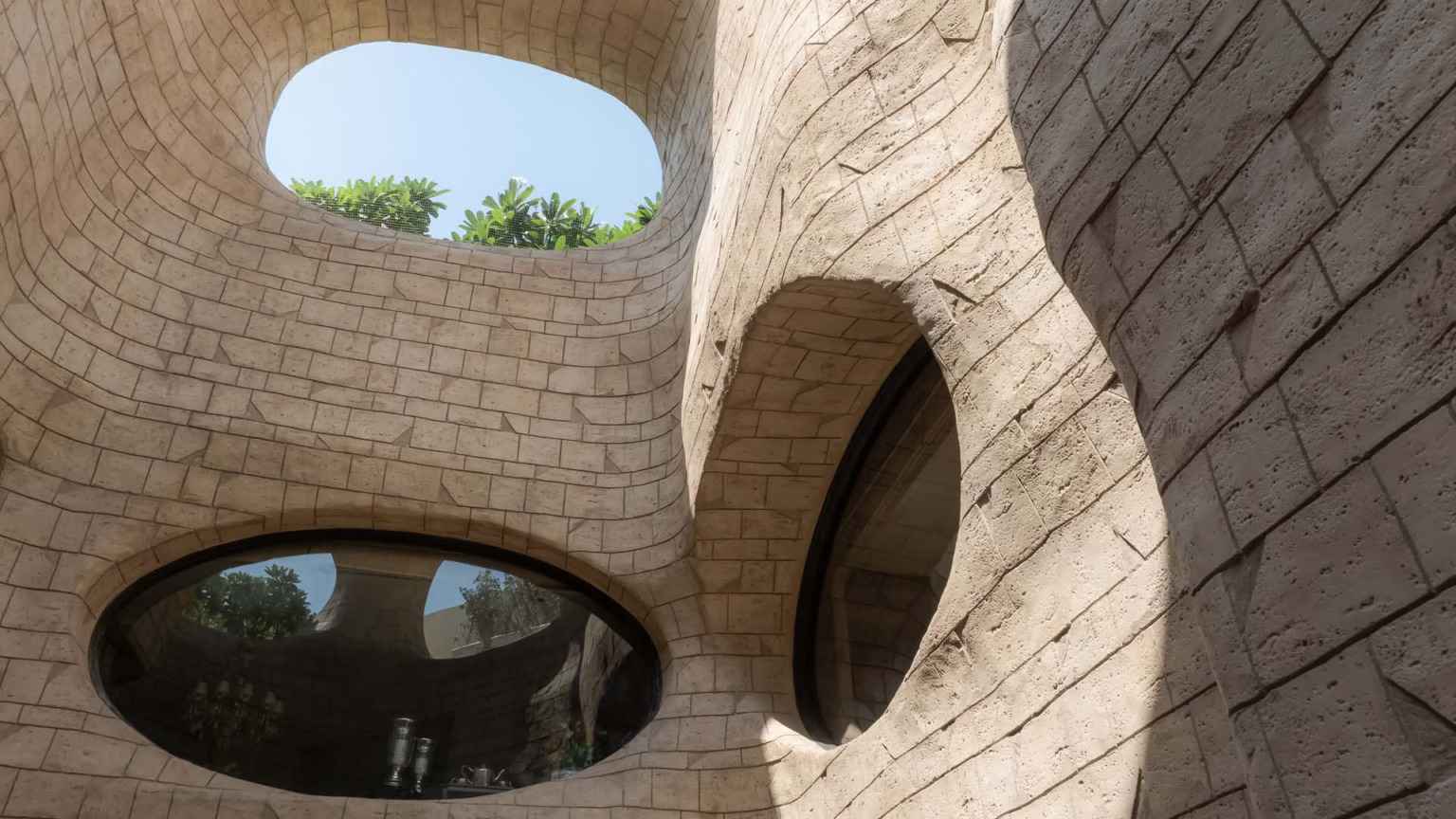
As the structure rises, this order gives way to a more free-flowing, undulating stone surface that wrap around the vertical space.
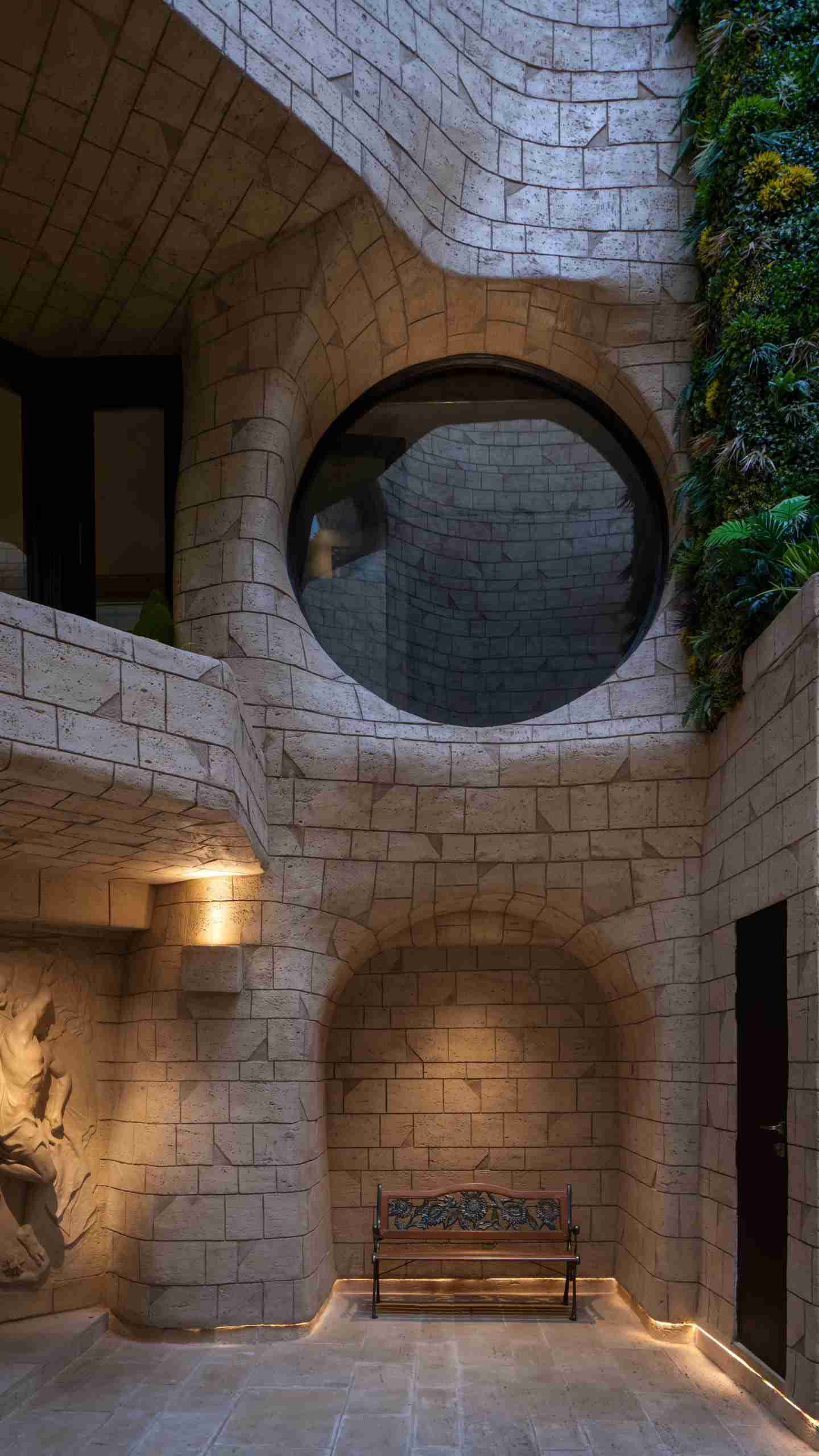
M:OFA anchored the lower level of the residence in classical symmetry, echoing traditional Renaissance courtyards that rely on proportion and balance. As the structure rises, this order gives way to a more free-flowing, undulating stone surface that wrap around the vertical space. Across three storeys, the courtyard shifts from a disciplined ground plane to increasingly sculptural volumes, connecting each level visually and spatially. Balconies on the upper floors overlook the fountain, and a set of oculi punctures the domed ceiling to compose the movement of natural light throughout the day.

Across three storeys, the courtyard shifts from a disciplined ground plane to increasingly sculptural volumes, connecting each level visually and spatially.
Early morning rays stream through the eastern skylight and highlight the fountain, while at noon, the stone surfaces pick up a soft, even luminance. And as evening approaches, the textures glow with warm, golden tones. However, night introduces a different mood entirely as subtle backlighting merges the presence of water and stone into a luminous environment.
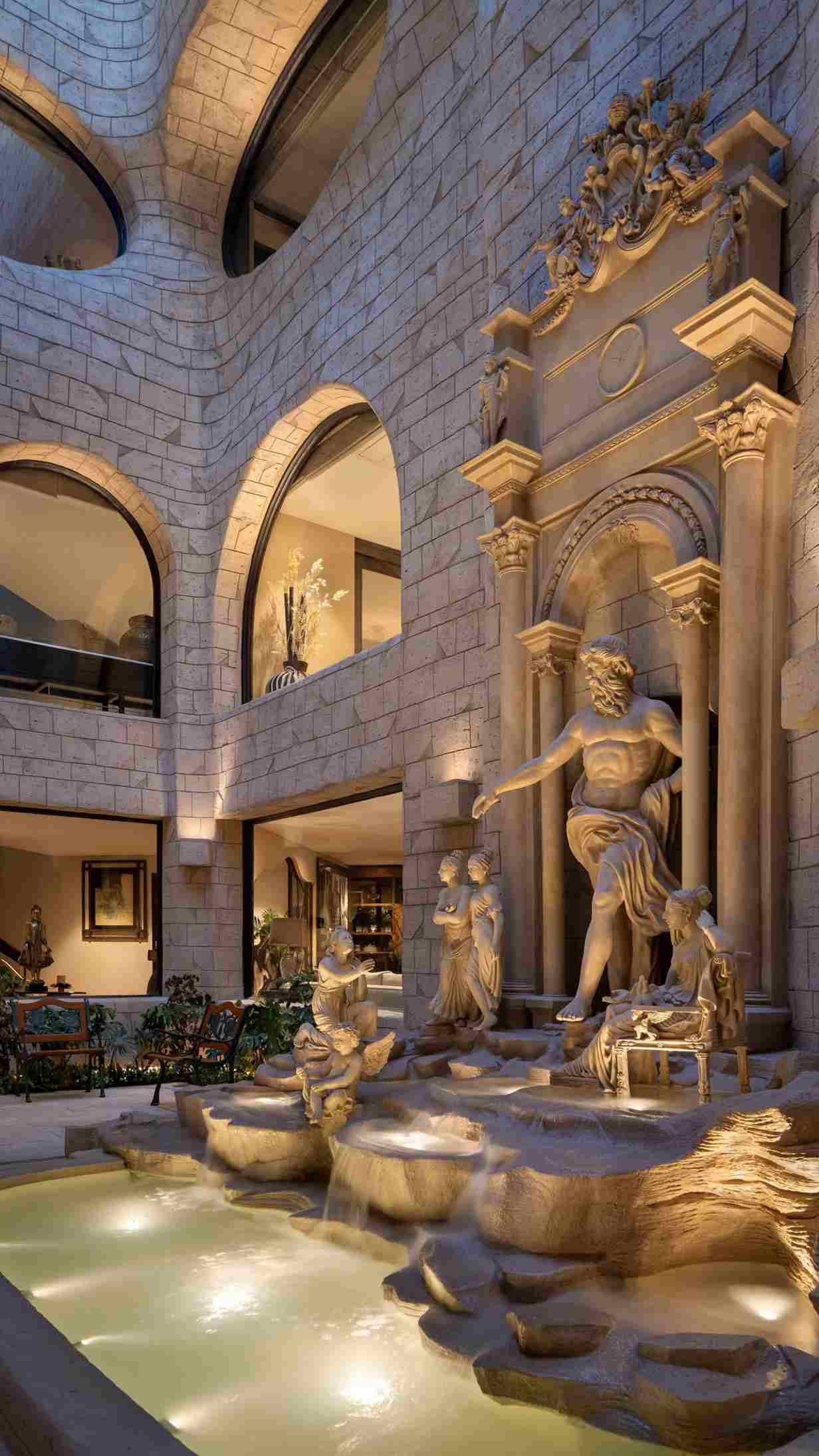
Balconies on the upper floors overlook the fountain, and a set of oculi punctures the domed ceiling to compose the movement of natural light throughout the day.
Sculptural stone courtyard
M:OFA incorporated layered planting to soften the stone architecture and create a garden-like space. Jasmine creepers climb the green walls, infusing the space with fragrance, while staggered planters on terraces bring greenery into the vertical composition. The oculi invite natural breezes into the courtyard, which blend with the fine mist rising from the fountain. This interplay creates a cooling effect that counteracts Delhi’s harsh summers, making the space not only visually compelling but genuinely habitable.
To achieve the intricate stone shaping, the team developed full-scale clay prototypes, which were scanned and refined through digital modeling.
Beneath the organic stone surfaces lies an advanced structural and technological system. A parametric steel grid shell, which is engineered using straightened segments to streamline fabrication, provides the main support. To achieve the intricate stone shaping, the team developed full-scale clay prototypes, which were scanned and refined through digital modeling. CNC-milled formwork ensured precision while retaining the handcrafted character the team intended.

M:OFA incorporated layered planting to soften the stone architecture and create a garden-like space.
Every technical component, be it mechanical systems, electrical networks, lighting conduits, plumbing lines and load-bearing elements, have been integrated discreetly into the sculptural envelope. Rapid prototyping using 3D printing allowed the architects to test acoustics, water flow patterns, air movement and ergonomic details at small scale before construction. The design also required removing decades of slow additions to restore a clean base for the new structure. Once cleared, the courtyard’s fluid skin and dome could be installed within a highly coordinated timeline. However, despite its complexity, the entire overhaul, from concept to completion, was accomplished in just six months.
Image credit: Ekansh Goel