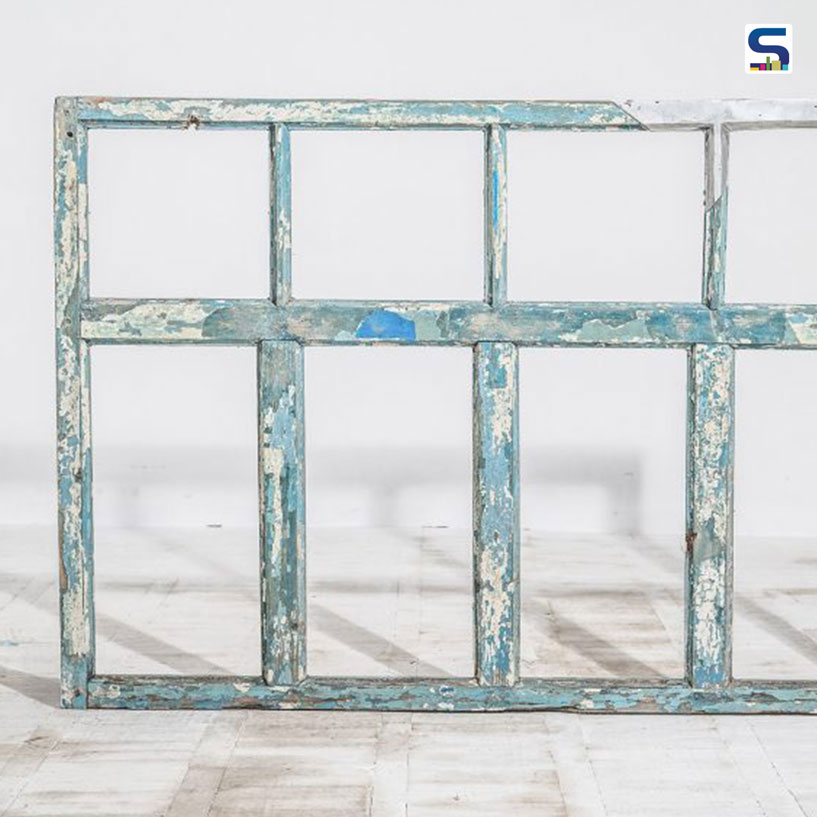
French artist Alexandre Henry developed a powerful sculptural work that transforms the physical remnants of war into symbols of survival, memory and renewal. His project, named Light Into Darkness, is rooted in objects salvaged from areas of Ukraine devastated by conflict, everyday furniture and domestic elements shattered by shelling and explosions, which Henry carefully restored using metal sourced from Russian missiles and ammunition. Through this process, he created a layered narrative in which destruction is materially and symbolically reworked into acts of repair. SURFACES REPORTER (SR) showcases how the furniture collection is mediation on endurance and reconstruction.
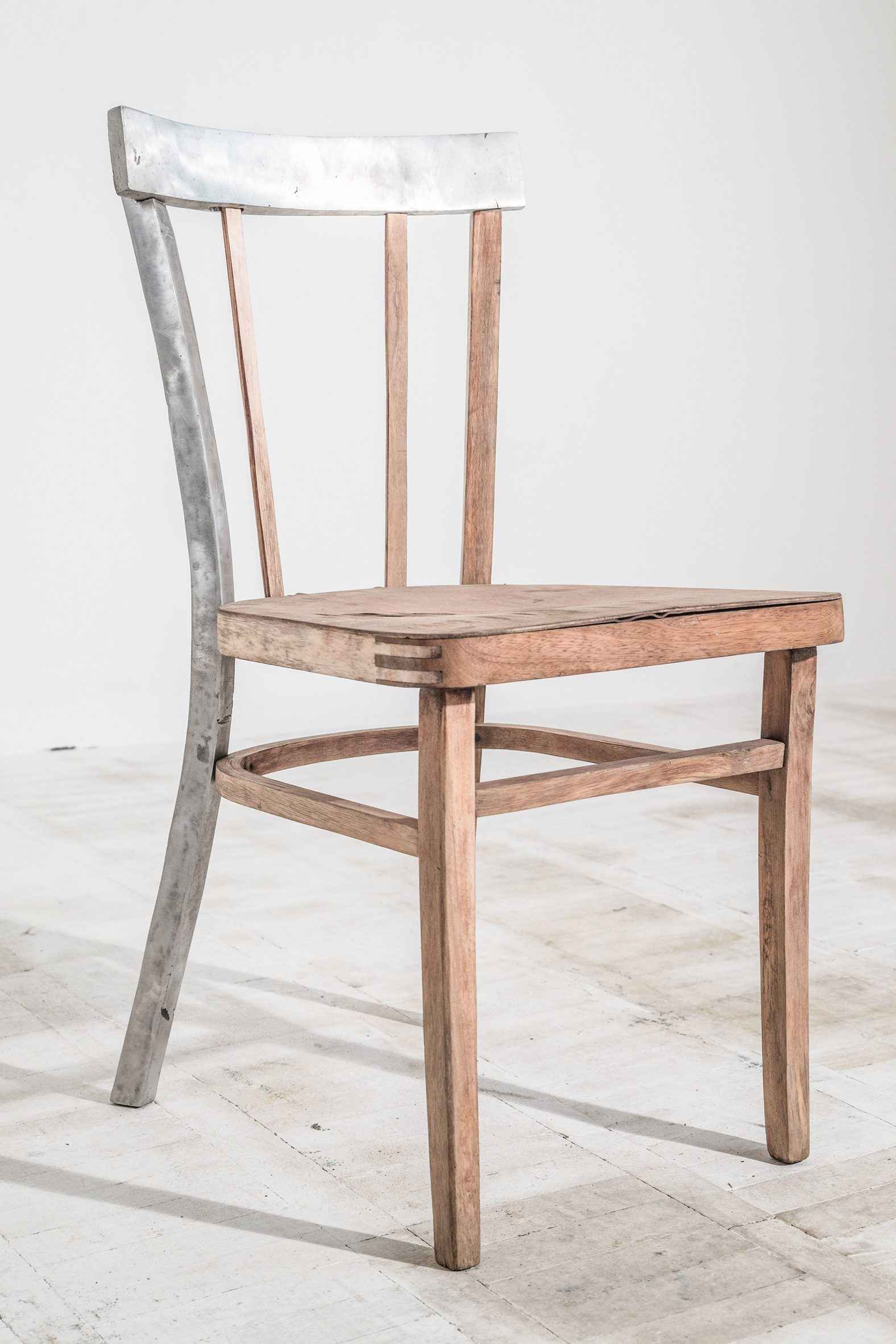
Among the pieces were two wooden dining chairs whose broken sections had been reconstructed using cast aluminium components.
Recasting war metal
The Light Into Darkness project unfolded over a two year period, during which Henry travelled repeatedly to Ukraine with Dutch Civilian Action (DCA), a non-profit organisation that delivers humanitarian aid to civilians living close to the front lines of the ongoing war. Trained in photography in Paris and Berlin, Henry had been initially invited by DCA in 2023 to document their relief efforts for communication and awareness purposes. However, his exposure to the realities of the conflict soon prompted a deeper personal and artistic inquiry. As the full-scale invasion continued, Henry found himself questioning the relevance and responsibility of artistic practice during wartime, and whether art could meaningfully contribute in the face of such devastation.
After travelling through heavily damaged cities and towns such as Izium, Kharkiv and Kherson, Henry eventually settled in Kyiv for three months. There, he gained access to a studio where he began translating his encounters and observations into sculptural form. Since his initial stay, he has returned to Ukraine twice to further develop the project. Throughout his time in the country, Henry was deeply affected by the people he met, particularly those who chose to remain in their homes despite the constant threat of violence. Rather than portraying individuals directly, Henry sought to represent them through the damaged objects that once formed part of their daily lives.
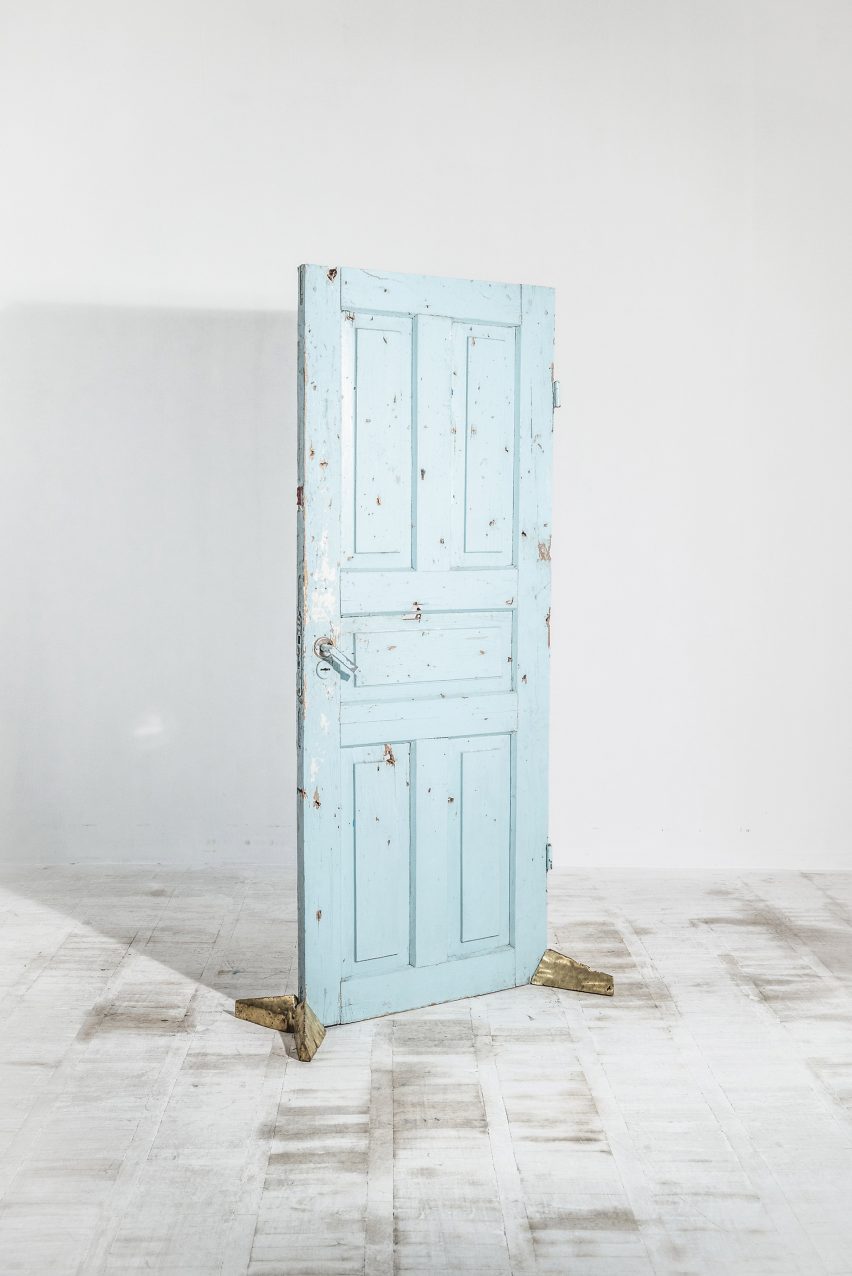
Another sculpture presented a battered door, still marked by missile impacts, supported by a pair of brass feet made from recast shell casings.
Adaptive reuse
In villages across eastern Ukraine that had been almost entirely destroyed, Henry noticed a profound connection between the residents he photographed and the remnants scattered through the rubble. Broken chairs, doors and windows, in his eyes, became objects that silently recorded the impact of war. He began to regard these artefacts as portraits in their own right, bearing the physical and emotional scars of civilians living through the conflict.
Henry gathered approximately a dozen damaged objects, many incomplete or fractured by explosions. Some were found abandoned in ruined buildings, while others were given to him directly by local residents who shared their personal stories and experiences of loss. He collected fragments of Russian missiles and shell casings that had been rendered safe. With the assistance of Ukrainian foundries, he melted this metal down and recast it into structural prostheses used to replace the missing or destroyed parts of the original objects. This act of material transformation lies at the conceptual heart of Light Into Darkness. By using the same metal that once caused destruction to enable restoration, Henry created a metaphor for the resilience of Ukrainian families rebuilding their lives amid ongoing conflict. The repaired objects do not conceal their wounds, instead, the added elements remain visibly distinct, emphasising both damage and recovery.
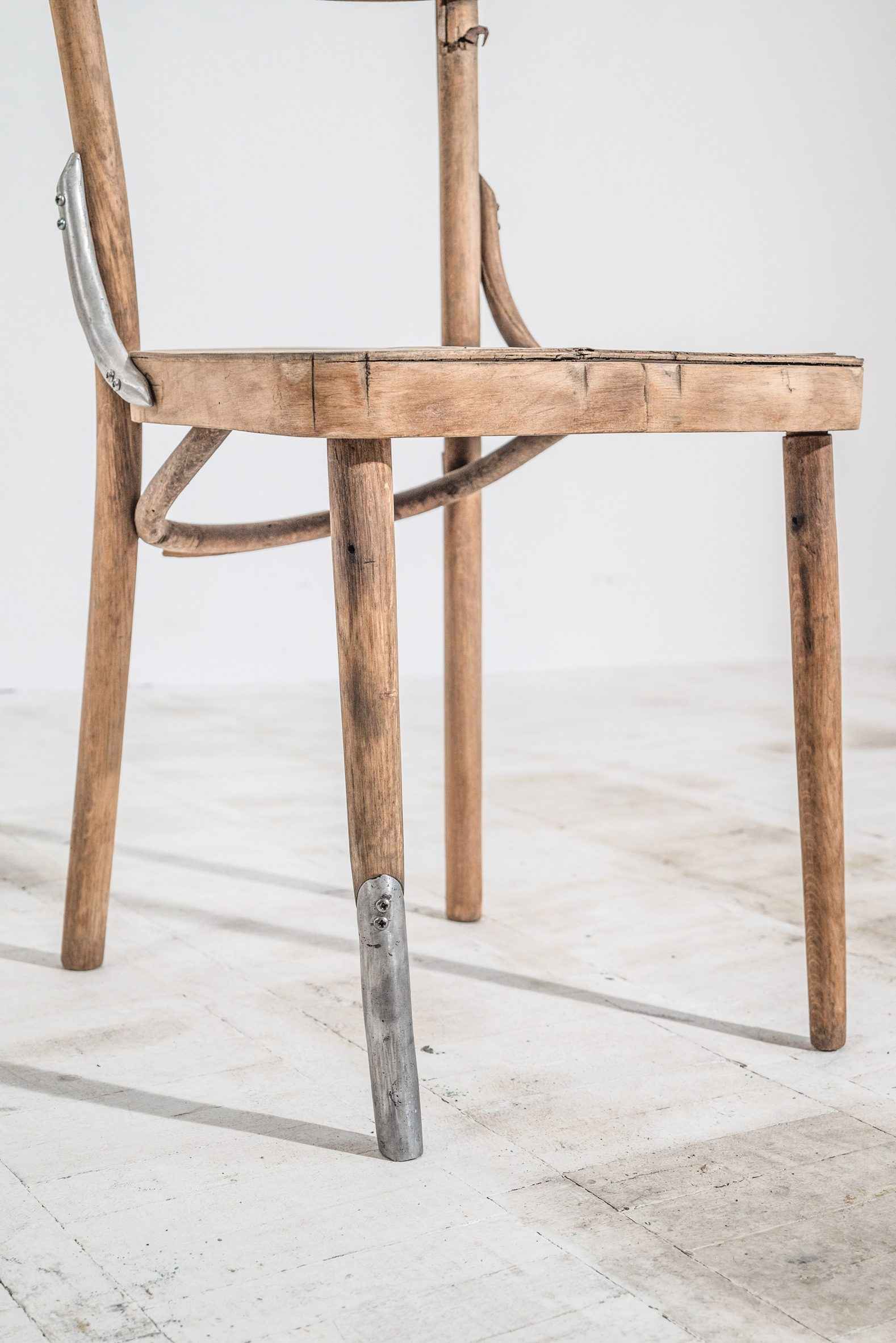
With the assistance of Ukrainian foundries, he melted this metal down and recast it into structural prostheses used to replace the missing or destroyed parts of the original objects.
The completed works were first exhibited at Dutch Design Week in 2025. Among the pieces were two wooden dining chairs whose broken sections had been reconstructed using cast aluminium components. Another sculpture presented a battered door, still marked by missile impacts, supported by a pair of brass feet made from recast shell casings. Henry also restored two window frames for an installation titled Walls Remember, which was shown alongside portraits of Ukrainian civilians printed on fragments of wall surfaces salvaged from collapsed buildings. Going forward, he plans to return to Ukraine to expand the project through direct collaboration with individuals who have sustained physical injuries, extending the concept of prosthesis from objects to the human body.
Image credit: Alexandre Henry