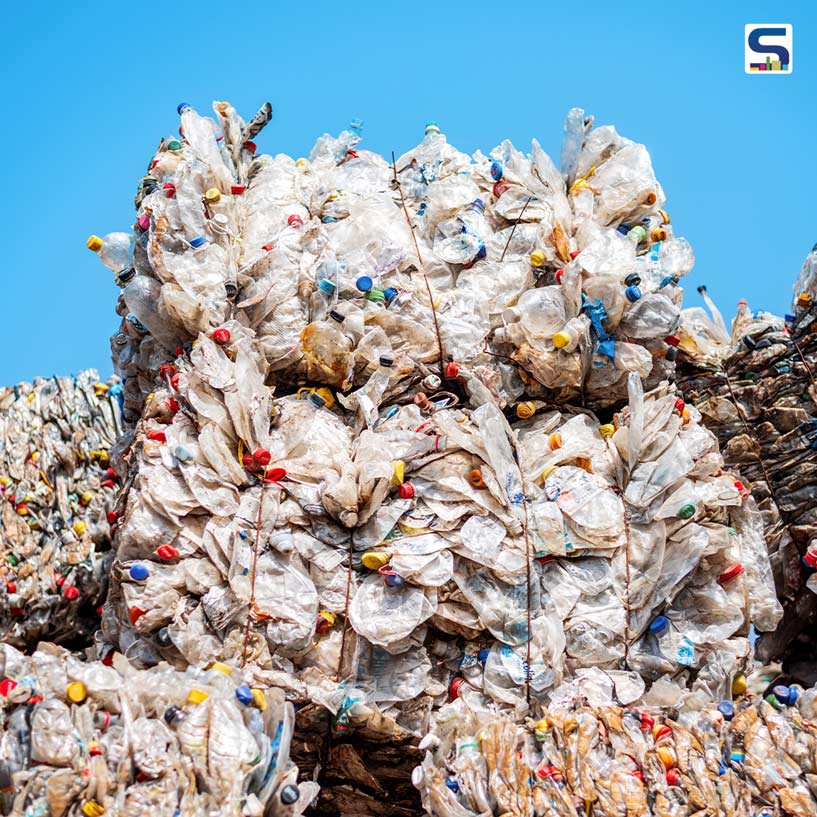
Researchers at MIT have reportedly developed a method to transform recycled plastic into structural floor trusses for housing, making the material as a viable and sustainable alternative to timber in residential construction. Here is a detailed report on SURFACES REPORTER (SR).
A timber alternative
The team 3D printed construction-grade floor trusses using a composite of recycled polyethylene terephthalate (rPET), sourced primarily from discarded drinks bottles, and reinforced with glass fibres. The printed element features an internal zigzag structure mirroring traditional wood and metal trusses. When four trusses were assembled into a plywood-topped floor frame and load-tested, they withstood over 4,000 pounds (1,814kg) before showing signs of stress, thus surpassing US building code requirements. The motivation behind the project is partly one of scale. According to project lead AJ Perez, a research scientist at MIT’s Office of Innovation, the world will need approximately one billion new homes by 2050. It is a demand that, if met using conventional timber, would require clearing forest equivalent to the Amazon three times over.
Durability is a key advantage of the material. PET takes around 450 years to break down naturally, making it one of the most resilient polymers available. Unlike some plastics, it remains non-brittle at room temperature, and field testing in New England has confirmed the composite’s performance across three full annual cycles of seasonal extremes. Perez also notes that the regions with the highest housing demand tend to have warmer climates where extreme cold is less of a concern. Perez co-founded the MIT HAUS research group alongside mechanical engineering professor David Hardt. The group is focused exclusively on large-scale additive manufacturing using recycled plastics. Beyond floor trusses, the composite has already been used to print a house foundation, with plans underway to produce stair stringers, roof trusses, wall studs and joists, all of these components together could form a near-complete structural system for homes.
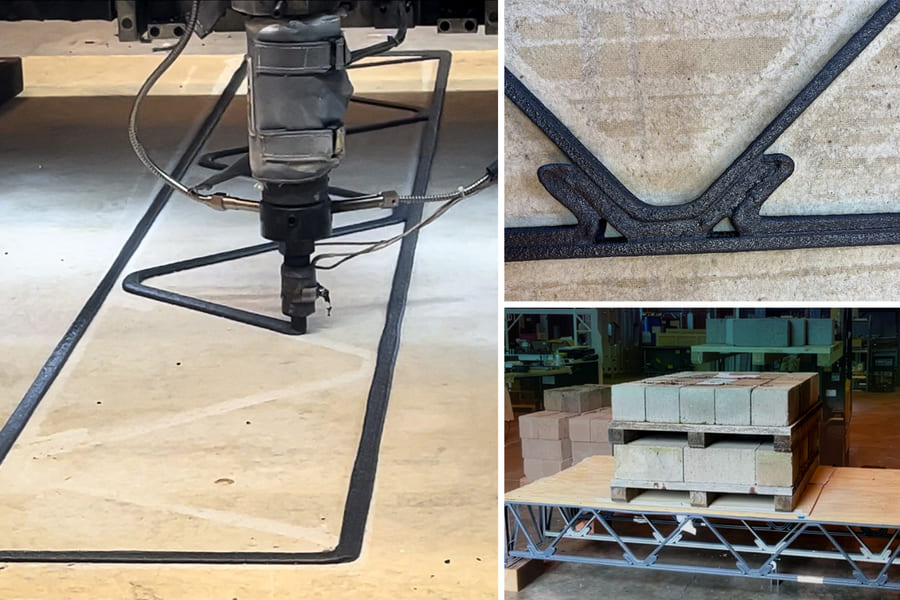
The rPET and glass composite is also fully recyclable, and its end-of-life components can be ground down and reformed into new building elements.
Reshaping construction
The team’s long term goal is to process dirty plastic, mainly unprocessed post-consumer waste fed directly into a large 3D printer, through dispersed micro-factories no larger than a shipping container. The resulting lightweight components could be transported by pickup truck or moped and assembled on-site. The rPET and glass composite is also fully recyclable, and its end-of-life components can be ground down and reformed into new building elements.
On fire safety, a concern given recent events involving timber construction, Perez draws a comparison with mass timber and plywood products, which are essentially wood-plastic composites that already meet safety codes. He expects the recycled plastic composite will reportedly in time be held to the same standard and perform accordingly, and MIT HAUS intends to investigate thoroughly. The research has been presented in a peer reviewed paper at the Solid Freeform Fabrication 2025 symposium.
Image credit: MIT