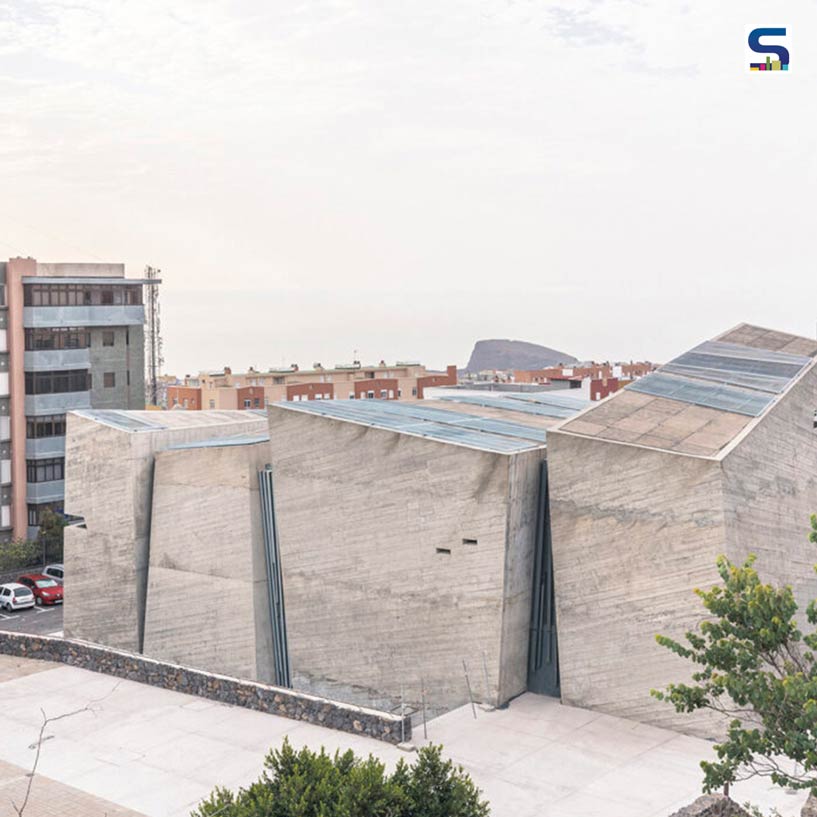
The Holy Redeemer Church and Community Centre in La Laguna, designed by Spanish architect Fernando Menis, has been awarded the prestigious title of World Building of the Year 2025 at the World Architecture Festival (WAF). This recognition, one of the highest in contemporary architecture, celebrates projects that demonstrate exceptional design quality, strong social value and genuine innovation. Menis’s work in the Las Chumberas neighbourhood stood out for its minimalist concrete forms, evocative relationship with daylight and its deep, community-centered purpose. Here is a detailed report on SURFACES REPORTER (SR).
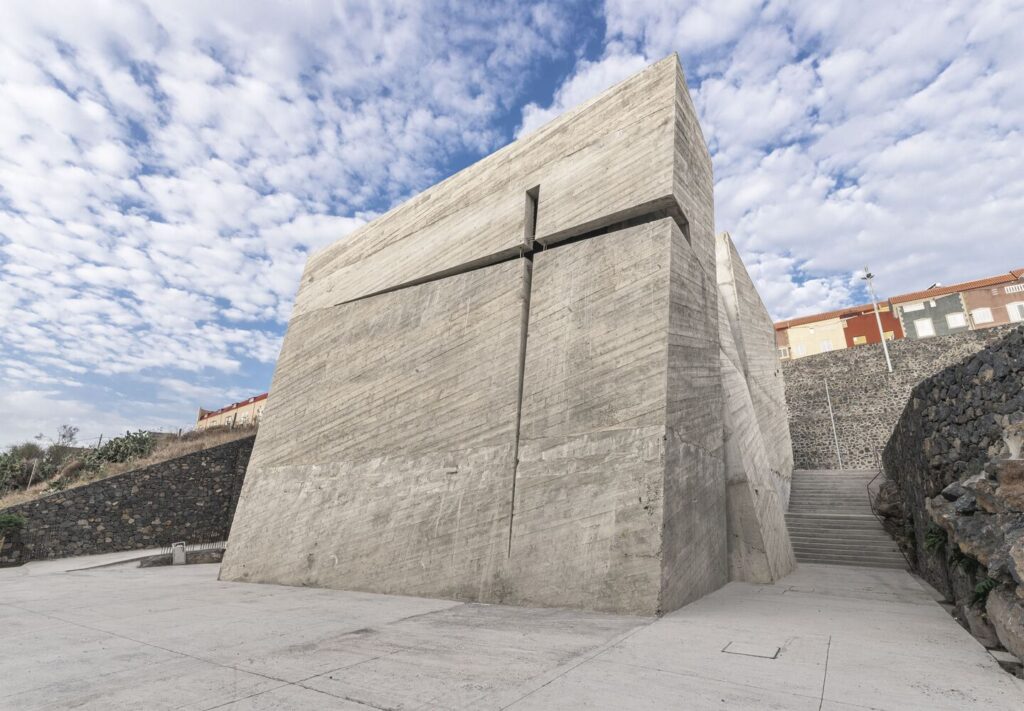
It stands as a testament to collective effort and shared vision, proving that meaningful architecture can be achieved without vast financial resources.
Minimalist design
Las Chumberas is an area long marked by neglect and under-investment, and the arrival of this project has become a symbol of renewal for local residents. Menis approached the commission with a desire to create a place where people could gather, reconnect with one another and reclaim a sense of belonging. The architecture was envisioned as a meaningful response to both physical context and social need.
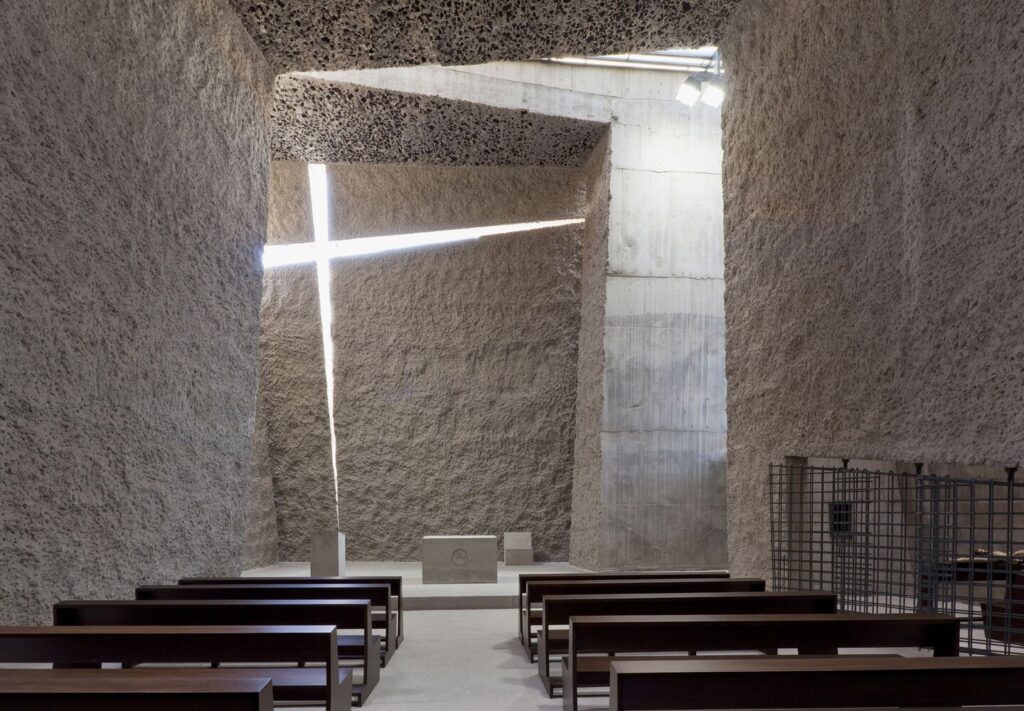
The WAF jury reportedly recognized the project for its humble yet profound architectural approach.
One of the most compelling aspects of this project is the story of how it was built. Unlike many celebrated buildings backed by large budgets or institutional funding, the Holy Redeemer Church was constructed almost entirely through small, incremental donations from parishioners. Each contribution, often modest, became part of a collective effort that stretched across years. This organic, stop and start funding pattern directly influenced the construction process and eventually shaped the final form of the building. Instead of designing a single monolithic structure, Menis developed the concept of four independent volumes, each built as funds became available. These volumes, completed in phases, function both individually and together, create a composition that feels sculptural yet unified.

The programme includes the main church, a community centre and an outdoor square that acts as a public gathering space.
The programme includes the main church, a community centre and an outdoor square that acts as a public gathering space. Together, these elements provide the neighbourhood with a flexible complex that can support worship, events, meetings and informal daily interactions. The project expands the idea of what a church can be; meaning, it operates as both a spiritual refuge and a civic anchor.

Unlike many celebrated buildings backed by large budgets or institutional funding, the Holy Redeemer Church was constructed almost entirely through small, incremental donations from parishioners.
Community centric design
Menis embraced exposed concrete in its raw, unrefined state, giving the architecture an almost geological presence. The rugged surfaces, intentionally left imperfect, allow natural light to animate the facades throughout the day. The shifting play of shadow and luminosity transforms the exterior and interior spaces, creating a dynamic atmosphere that changes with time and weather. Inside, the atmosphere remains serene and grounded. Carefully positioned openings guide daylight into the interior. The spaces feel contemporary yet deeply rooted in spiritual tradition.
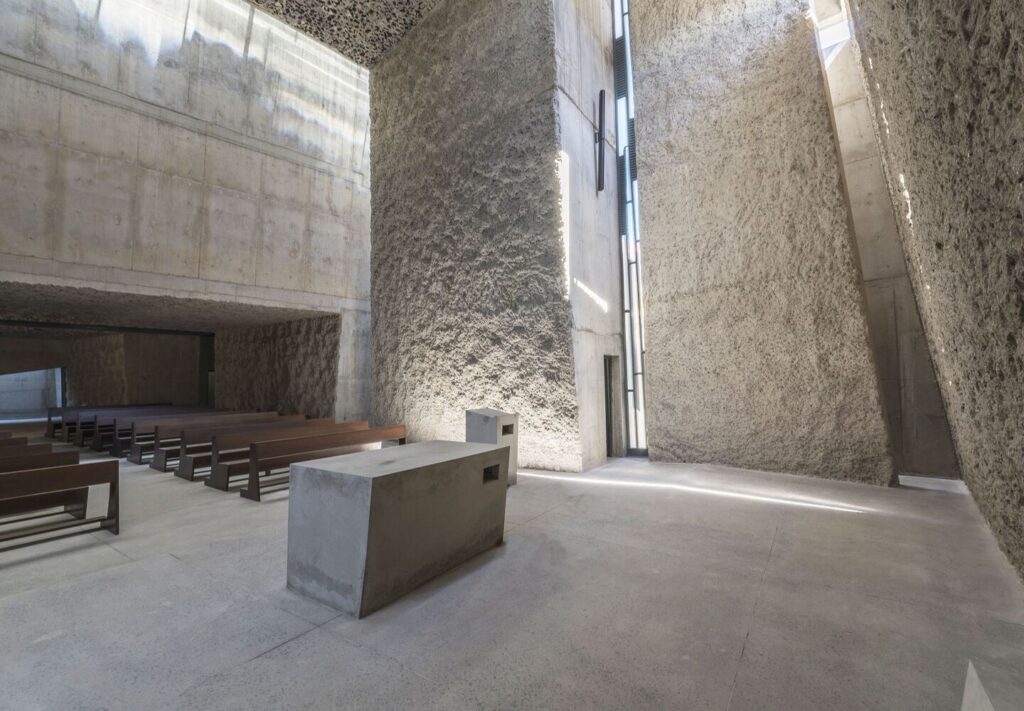
Instead of designing a single monolithic structure, Menis developed the concept of four independent volumes, each built as funds became available.
The WAF jury reportedly recognized the project for its humble yet profound architectural approach. While many award-winning buildings rely on advanced technologies or visually extravagant gestures, the Holy Redeemer Church distinguishes itself through restraint. There are no flamboyant curves or high-tech facades, only thoughtful spatial planning, natural illumination and a commitment to material authenticity. It stands as a testament to collective effort and shared vision, proving that meaningful architecture can be achieved without vast financial resources.
Image credit: Patri Campora