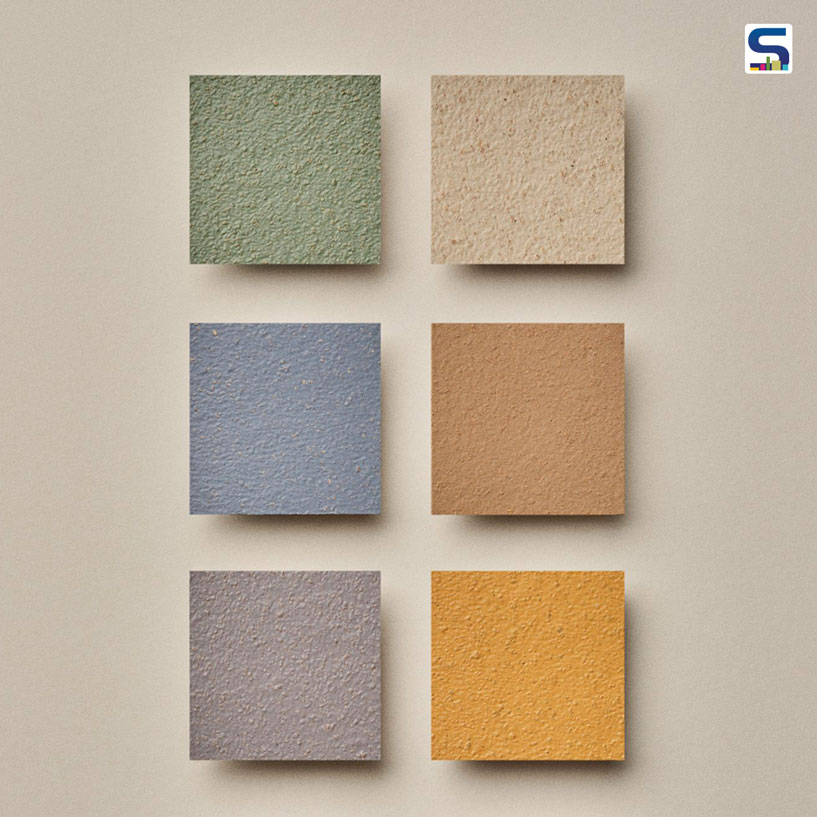
French flooring manufacturer Tarkett recently announced a major sustainability milestone where its linoleum is now carbon-negative over its entire life cycle including raw material harvesting, production, installation and recycling at end-of-life. According to the company, this does not result from altering the linoleum’s formula, which remains unchanged. Instead, Tarkett introduced a fully closed-loop system that enables permanent carbon savings, making this the world’s first linoleum to claim a negative carbon balance across its full product life span. Know more about it on SURFACES REPORTER (SR).
The closed-loop system works in three main phases. First, Tarkett produces the linoleum in its factory in Narni, Italy, using primarily materials that naturally sequester carbon dioxide as they grow, for example with cork, wood flour, pine rosin and linseed oil. In addition, the factory operates with 100 per cent recirculated industrial water and is powered entirely by renewable electricity, reducing the energy and resource footprint during manufacturing.

Tarkett recently announced a major sustainability milestone where its linoleum is now carbon-negative over its entire life cycle including raw material harvesting, production, installation and recycling at end-of-life.
It in the second phase, the manufacturing pays careful attention to what happens during installation where the leftover trimmings and offcuts are collected and sent back to the company. Rather than discarding these leftover pieces, they are reprocessed into new linoleum, closing the loop on production waste. Third and finally, once the linoleum has reached the end of its typical 30 year lifespan, Tarkett collects used material from consumers and removes it from the market. The post-consumer linoleum is returned to the Narni plant, where it is broken down and recycled into fresh flooring material.
However, one of the persistent challenges for the team is persuading customers to return their old flooring. According to the brand, landfill remains much cheaper and more convenient than recycling, creating a major barrier to full circular adoption. Therefore, tougher regulations are needed to make circular systems where other manufacturers need to be called to collaborate so that closed-loop systems become more universally available and economically viable for all.
Image credit: Tarkett