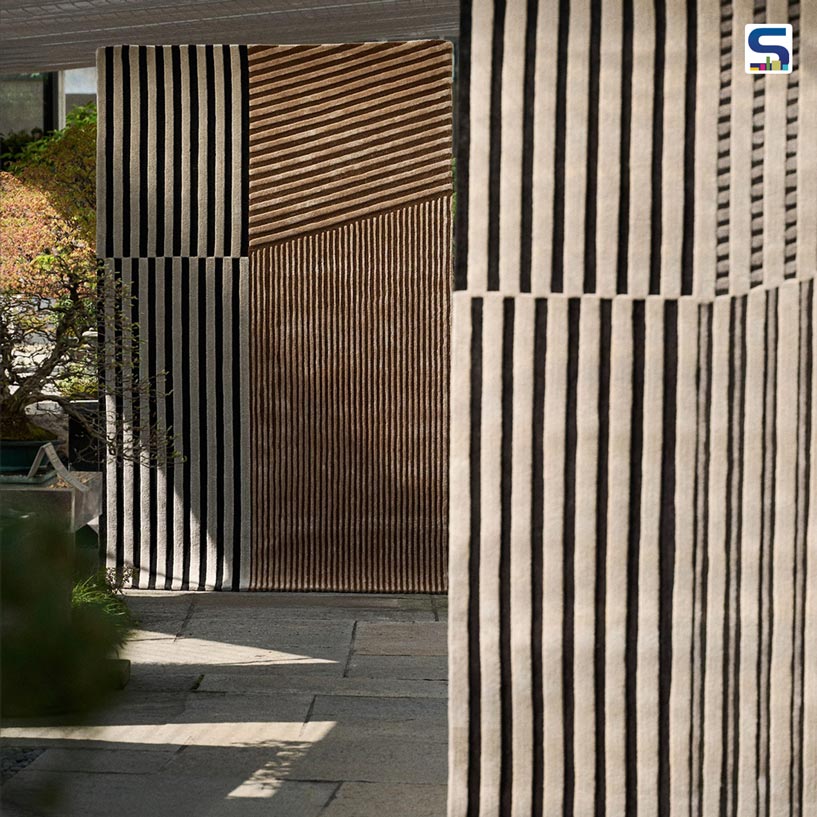
Japanese architect Kengo Kuma recently collaborated with Indian luxury carpet Jaipur Rugs for producing a collection of wool rugs titled Faces that translate the experiential and sensory qualities of his architectural work into a tactile, domestic medium. The collection, comprising 16 rugs, was reportedly exhibited during Milan Design Week at Jaipur Rugs’ showroom on Via Marco Minghetti as well as at the celebrated Crespi Bonsai Museum. Here is a detailed report on SURFACES REPORTER (SR).
The buildings that informed the collection are among the most significant in Kuma’s portfolio, developed through his studio Kengo Kuma & Associates. They include the Suntory Museum of Art in Tokyo, the Kanayama Community Centre in Gunma, the GC Prostho Museum Research Centre in Aichi and the Albert Kahn Museum in Boulogne-Billancourt, France. However, the relationship between these buildings and the resulting rugs is not one of literal translation or graphic reproduction. According to Kuma, the collection is concerned not with replicating the visual geometry of facades but with capturing the sensory memory of architecture.
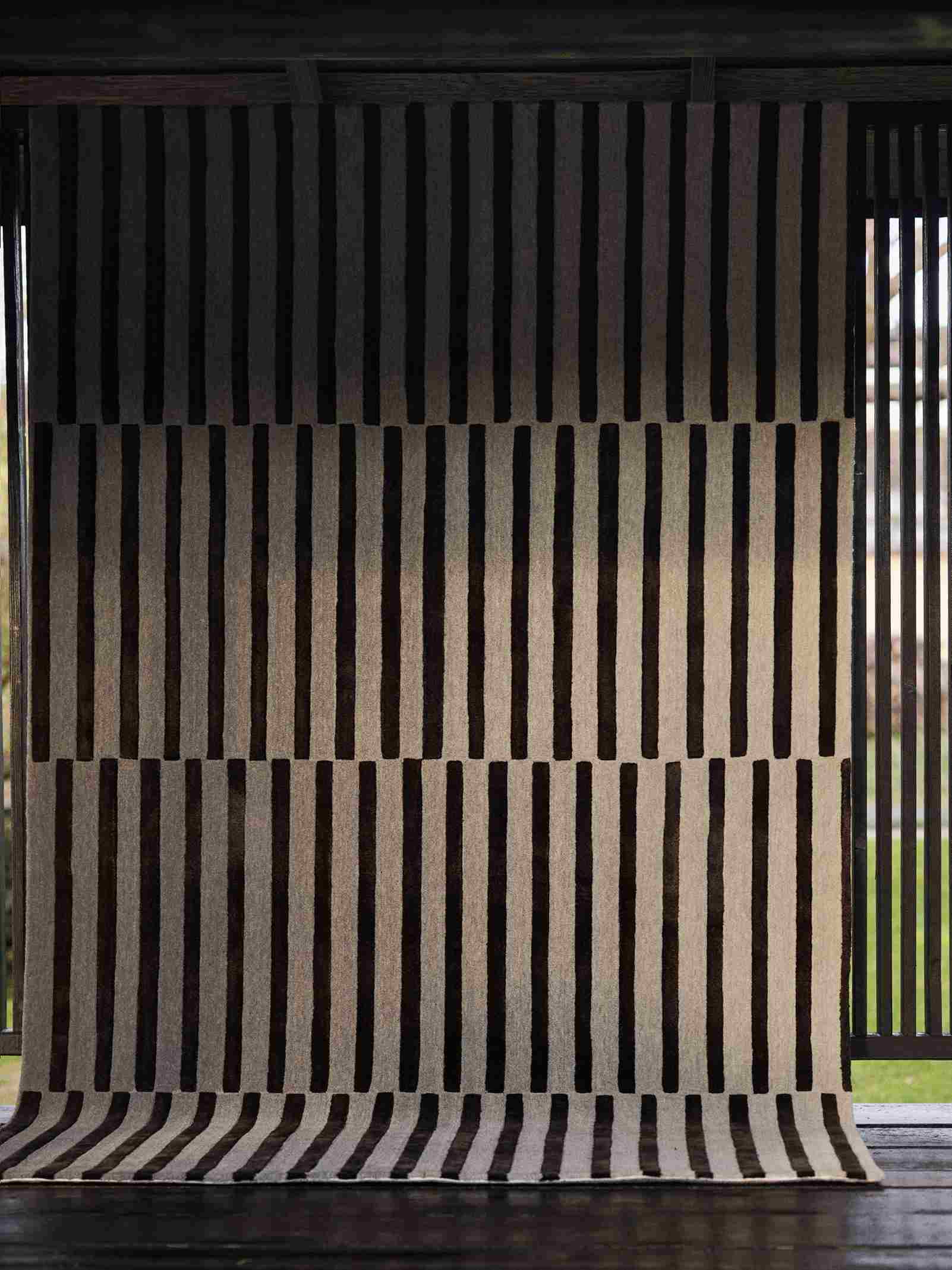
The rugs, in this sense, are not architectural portraits but rather material traces of embodied experience, where an attempt is to render feeling through texture, weave and tonal transition rather than through image or geometry. Each rug in the collection carries a name drawn from traditional Japanese construction techniques. The names, Kasane, Kigumi, Chirashi, Bokashi and Sukima, each describe a distinct spatial or material principle, and these principles are directly reflected in the visual and textural character of the rugs that bear them.
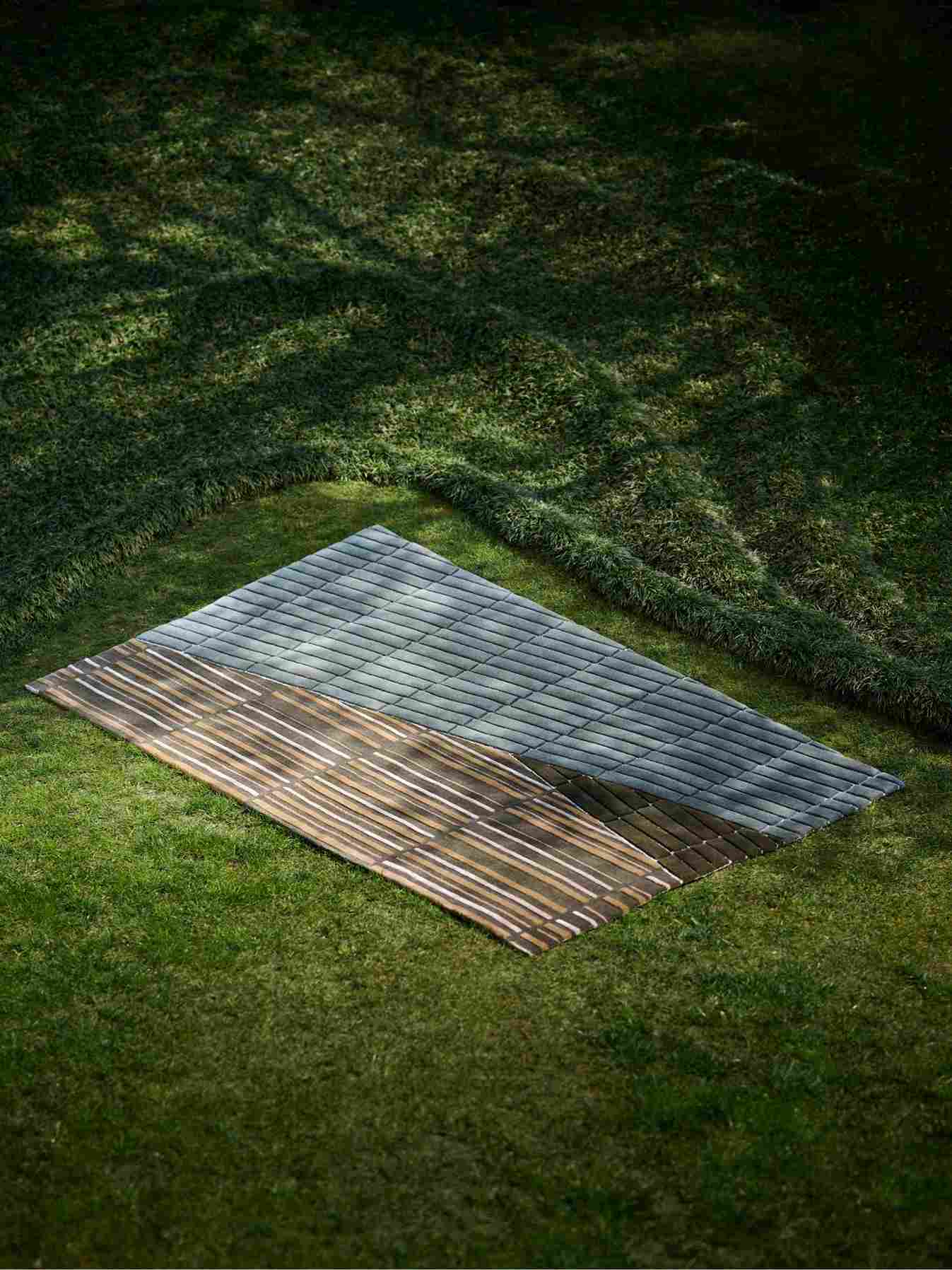
The Sukima and Bokashi rugs both draw their inspiration from the Suntory Museum of Art. Sukima, whose name references the idea of gaps or interstices, features a gridded design that evokes the quality of light filtering through the museum’s slatted facade. On the contrary, Bokashi is defined by soft gradations and blurred transitions, referencing the delicate visual effect produced by the building’s sliding screen elements. Together, the two rugs capture two distinct but complementary atmospheric qualities of the same building.
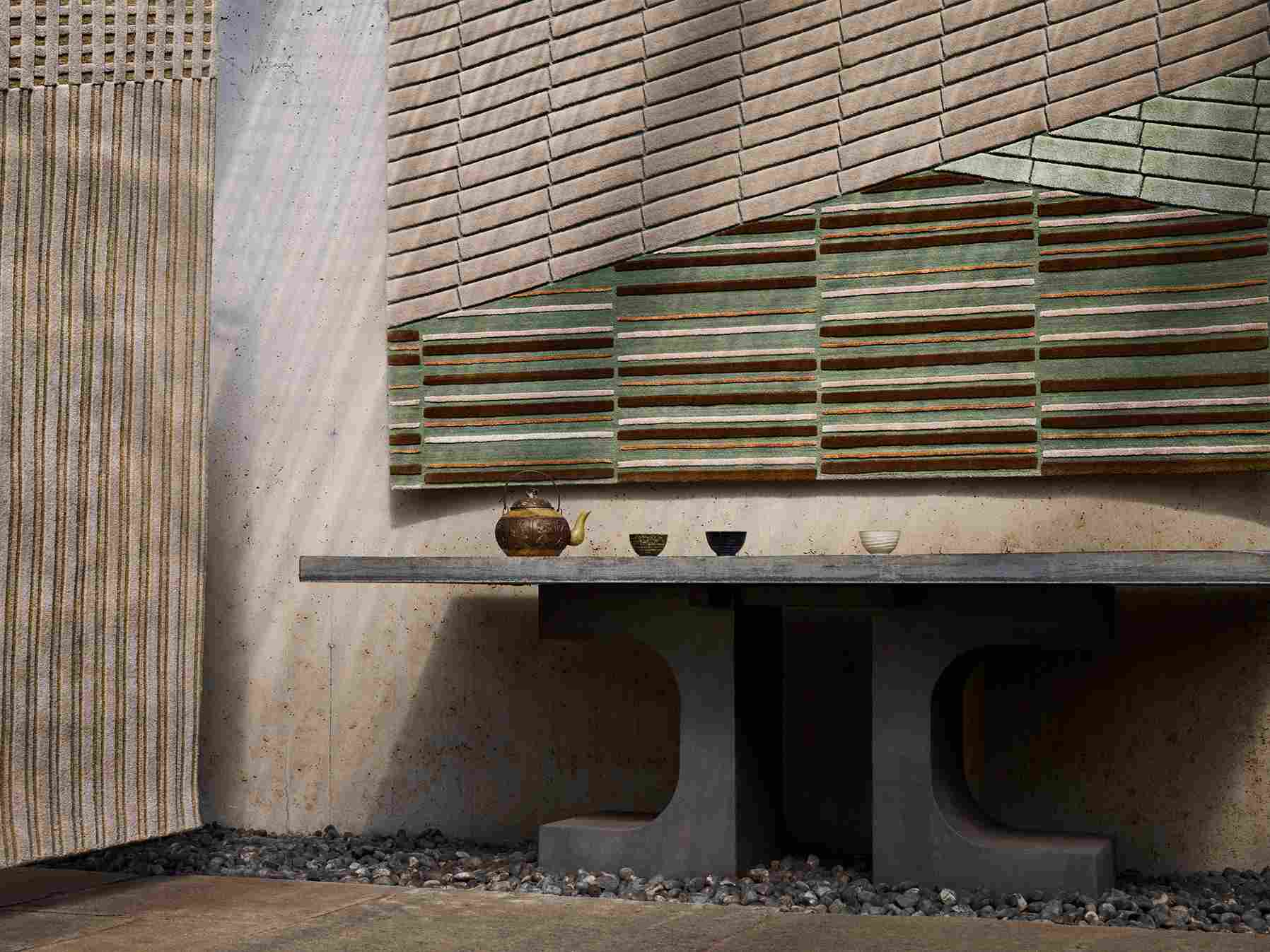
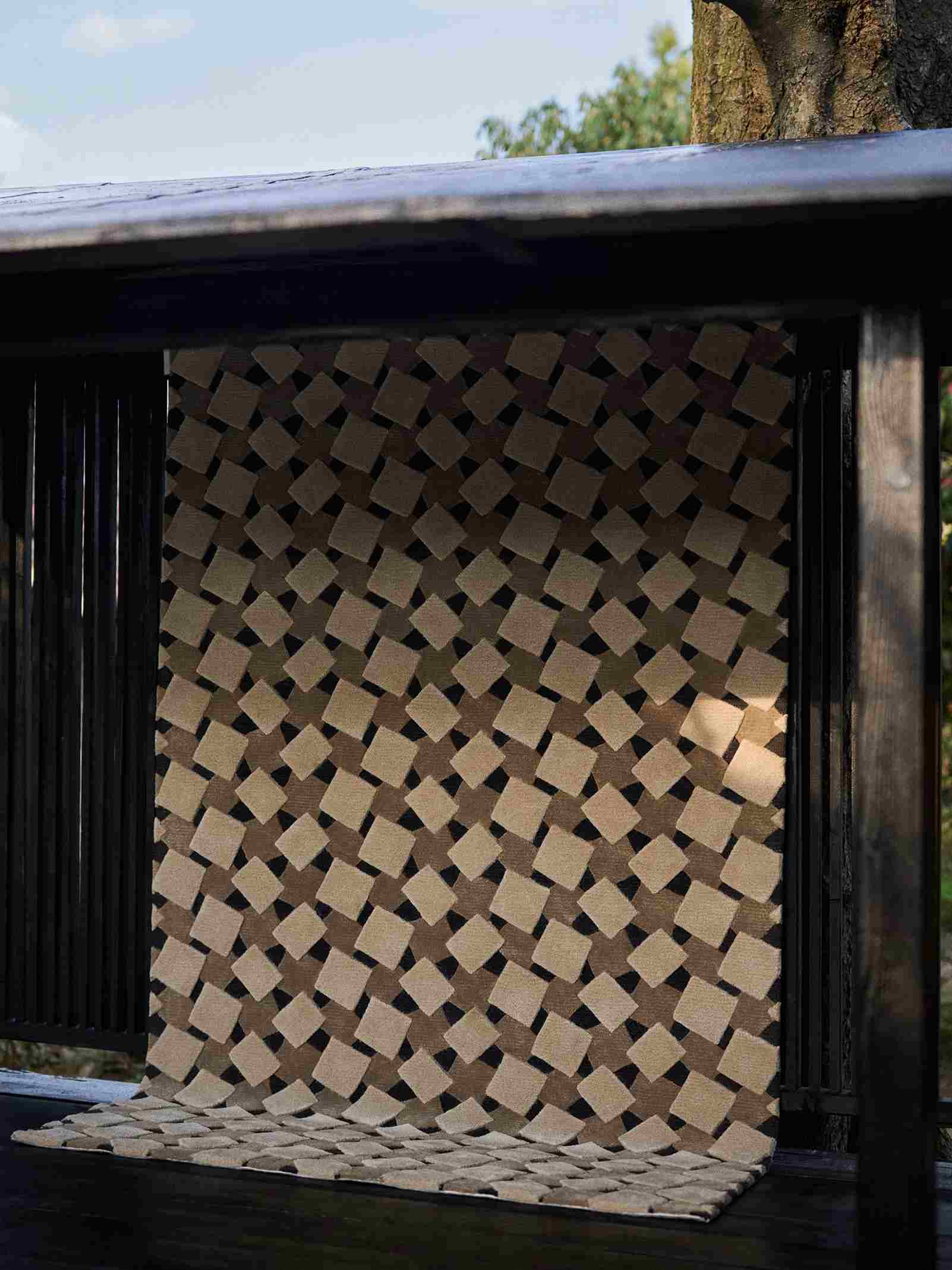
The Chirashi rug takes its cues from the Kanayama Community Centre, where its design characterised by a scattering of dispersed elements that mirrors the patterned stone facade of that building. The Kigumi rugs reference the GC Prostho Museum Research Centre, nodding to the traditional wooden joinery construction for which that project is widely admired. Rounding out the collection, the Kasane rugs are inspired by the Albert Kahn Museum, featuring a layered composition of overlapping colours and patterns that reflects the irregular, stratified quality of the museum’s facade. Kasane is also the only rug in the collection to incorporate green tones, marking a deliberate departure from the otherwise neutral palette of beige and grey that characterises the range.
The rugs are crafted from wool, with viscose introduced to provide structural rigidity, and are available in several colourways. Colour is deployed sparingly throughout, with natural, earthy shades of brown and grey forming the dominant register, punctuated occasionally by bold black and white graphic moments.
Image credit: Jaipur Rugs