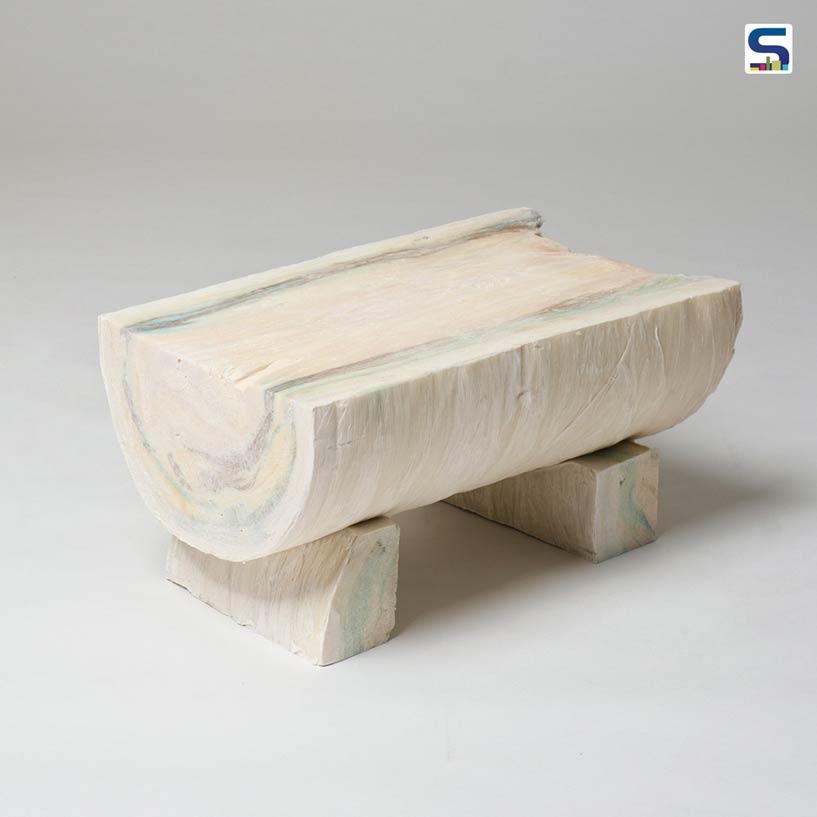
Japanese fashion house Issey Miyake recently ventured beyond the realm of clothing to present an unexpected collection of handcrafted furniture, all constructed from paper salvaged directly from its own garment production process. The pieces will be reportedly unveiled as part of an exhibition titled The Paper Log: Shell and Core, opening on April 21 at the Issey Miyake store in Milan during the city’s annual design week. Here is a detailed report on SURFACES REPORTER (SR).
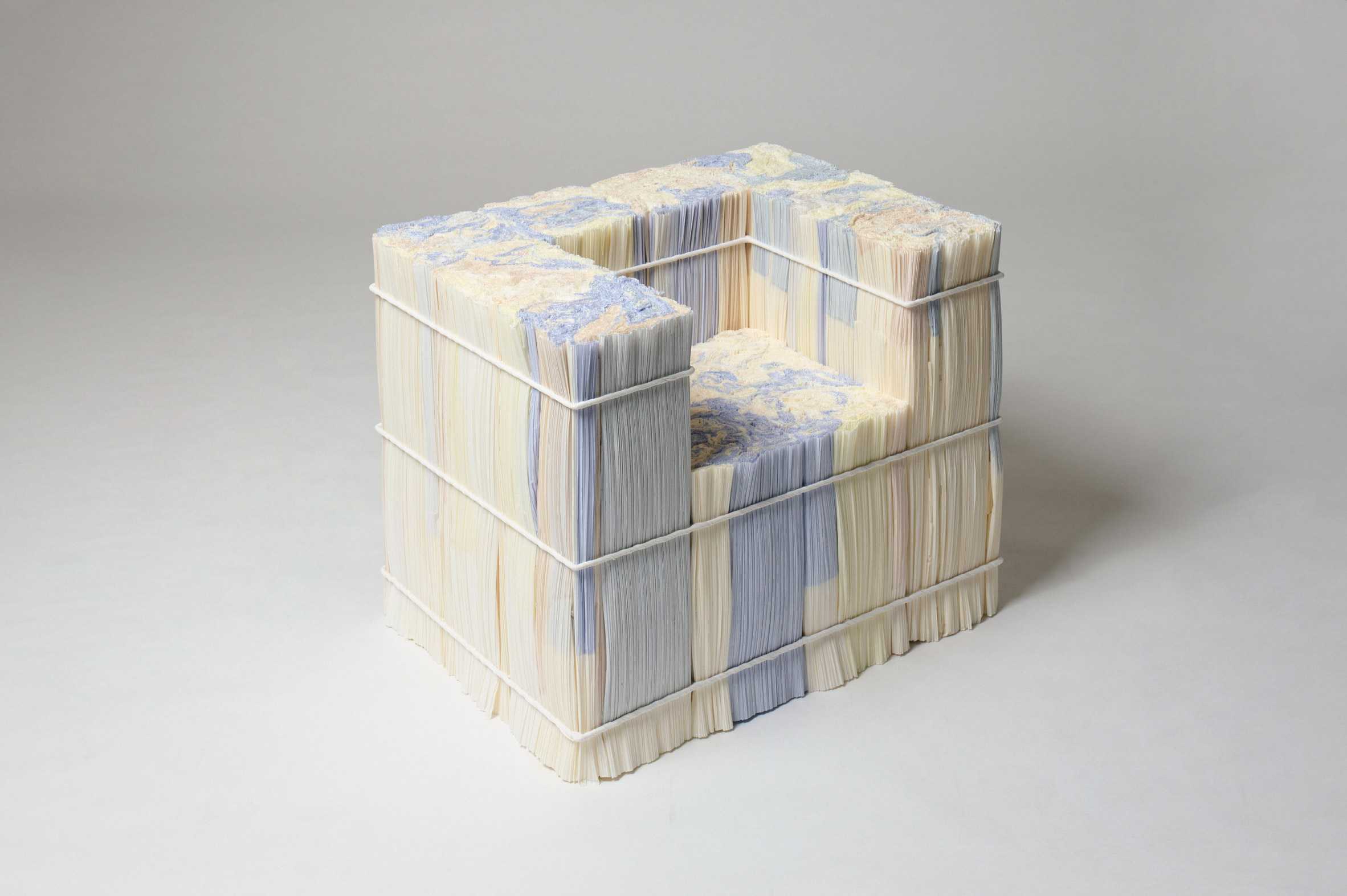
Although the raw paper is naturally neutral in tone, each item in the collection carries faint traces of colour transferred from the fabrics during the pleating process.
The collection spans a range of functional forms including stools, chairs, a dining chair, a table, a side table and a bench, each built from what the brand calls paper logs. These are tightly compressed rolls of paper that emerge as a byproduct of Issey Miyake’s signature pleating technique, a process for which the fashion house is globally recognised. During production, sheets of paper are layered between pre-cut and pre-sewn textiles before being fed through a pleating machine. Once the pleating is complete, the paper rolls are typically recycled or discarded. It was head designer Satoshi Kondo who, following a visit to the brand’s manufacturing facility, recognised their potential as a raw material for furniture-making and set about finding a way to give them new life.
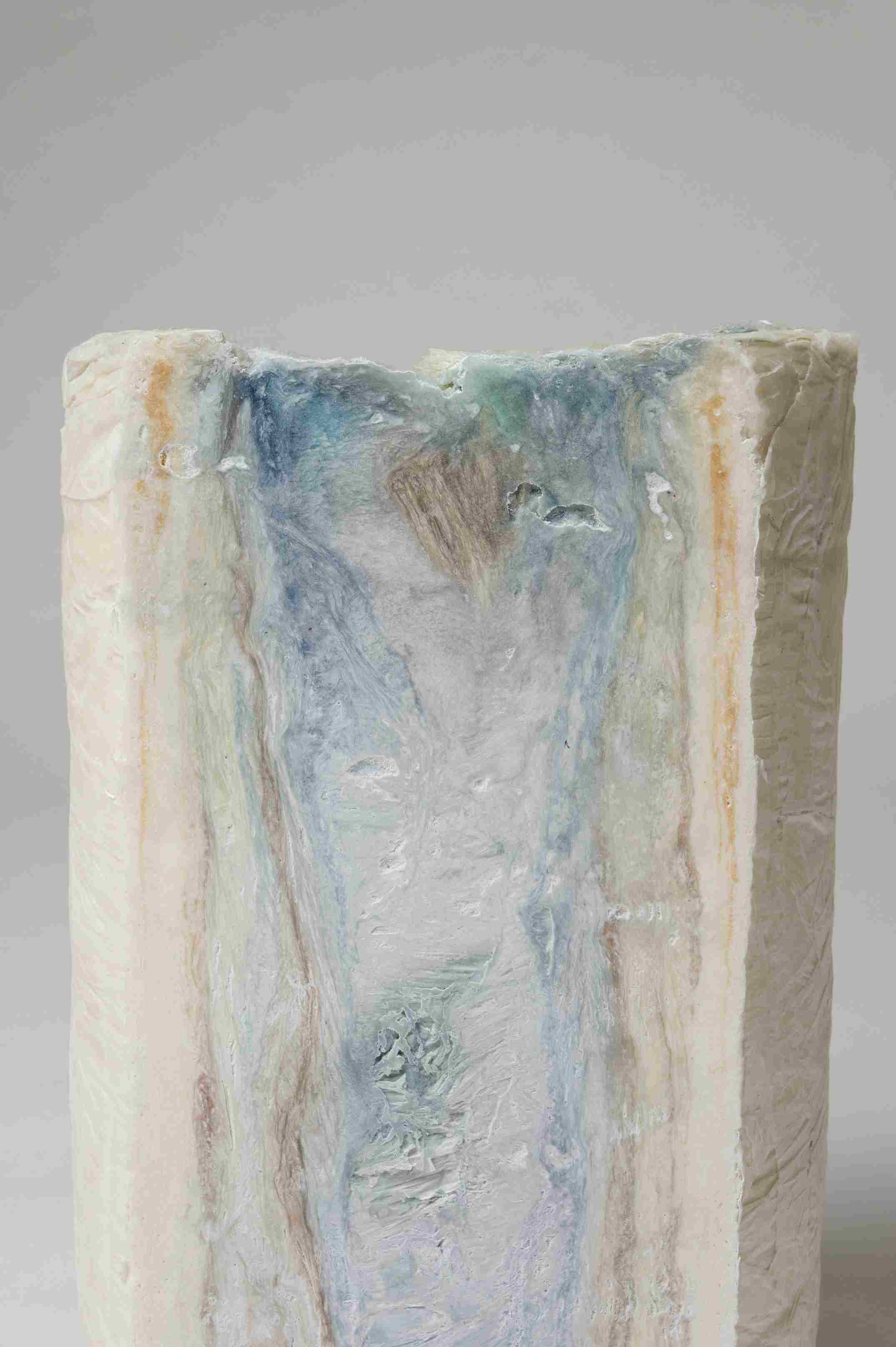
These are tightly compressed rolls of paper that emerge as a byproduct of Issey Miyake’s signature pleating technique, a process for which the fashion house is globally recognised.
The approach to working with the paper logs drew directly from traditional woodworking techniques. The rolls were carved, sawn, peeled and unrolled in much the same way a craftsperson might work with timber. Given that paper is inherently more porous and less structurally rigid than wood, the material required additional treatment to achieve durability. Hence, pieces were either soaked in wax or bound together with adhesive to consolidate and stabilise the compressed sheets.
Among the most striking pieces in the collection are two cylindrical stools that were hand-cut crosswise through the rolls, exposing a swirling, marbled pattern at each end reminiscent of wood grain or geological strata. These same stools made their first appearance as seating at the Issey Miyake Spring/Summer 2025 show in Paris. The collection also features a substantial blocky armchair, constructed from sheets of waste paper arranged to produce fluted sides and a mottled cross-section. A metal frame holds the assembly together, providing structural integrity while allowing the raw material character of the paper to remain visually prominent.
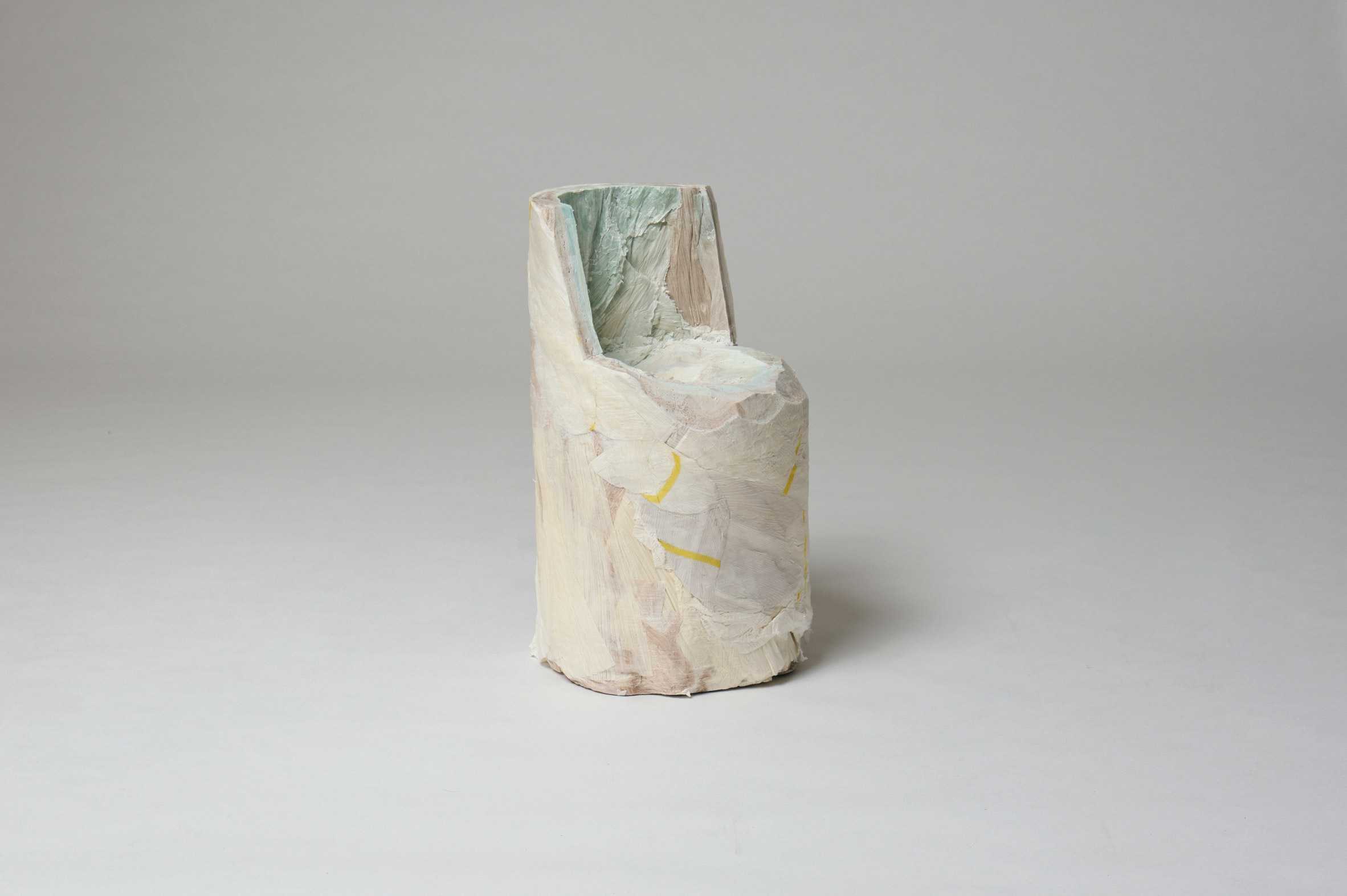 The collection also features a substantial blocky armchair, constructed from sheets of waste paper arranged to produce fluted sides and a mottled cross-section.
One of the most quietly remarkable qualities of the resulting pieces is their colouration. Although the raw paper is naturally neutral in tone, each item in the collection carries faint traces of colour transferred from the fabrics during the pleating process. The heat and pressure of the pleating machine cause pigments from the textiles, along with the faint silhouettes of the garments themselves, to migrate onto the paper sheets, leaving pale, ghost like imprints. The result is a surface that carries an unintentional but evocative visual record of its origins. Far from being disguised or refined away, these incidental marks are treated as intrinsic to the character of each piece. Because the compression of the paper rolls is inherently irregular, no two finished objects are alike, giving the collection a genuinely organic quality despite its industrial origins.
Image credit: Issey Miyake