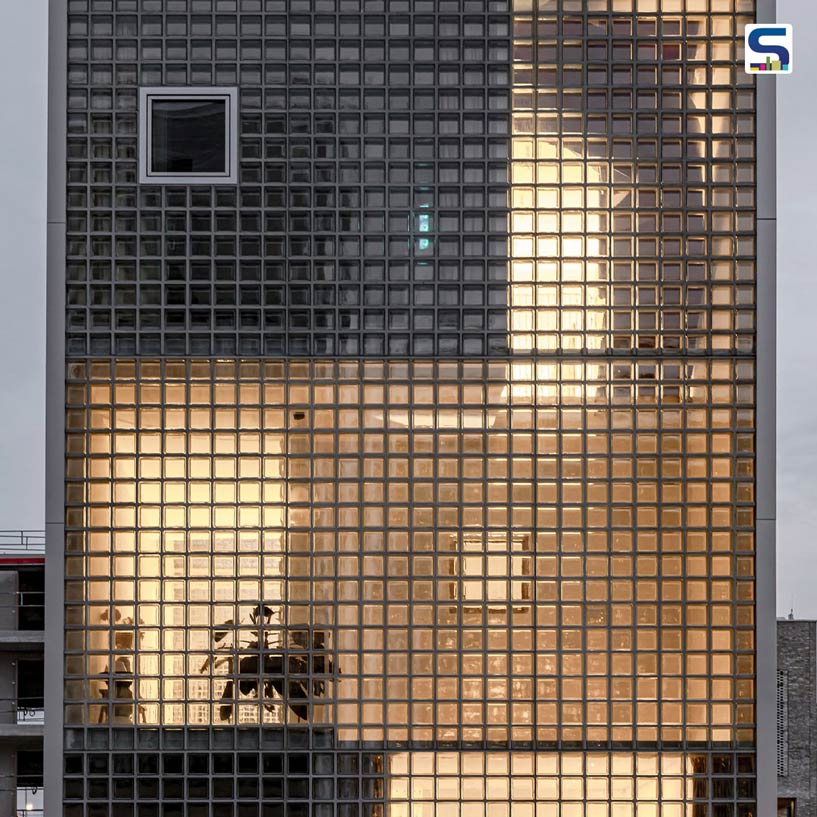
Situated in Centrumeiland, a newly developed neighbourhood in Amsterdam, Light House is a five storey family residence that balances privacy with togetherness through a carefully stack of different volumes. Designed by Dutch architecture studio Studioninedots, the tall and slender home had been conceived in direct response to its clients’ desire for a dwelling in which each family member could inhabit in the space in their own way, while also sharing moments of connection. Know more about it on SURFACES REPORTER (SR).
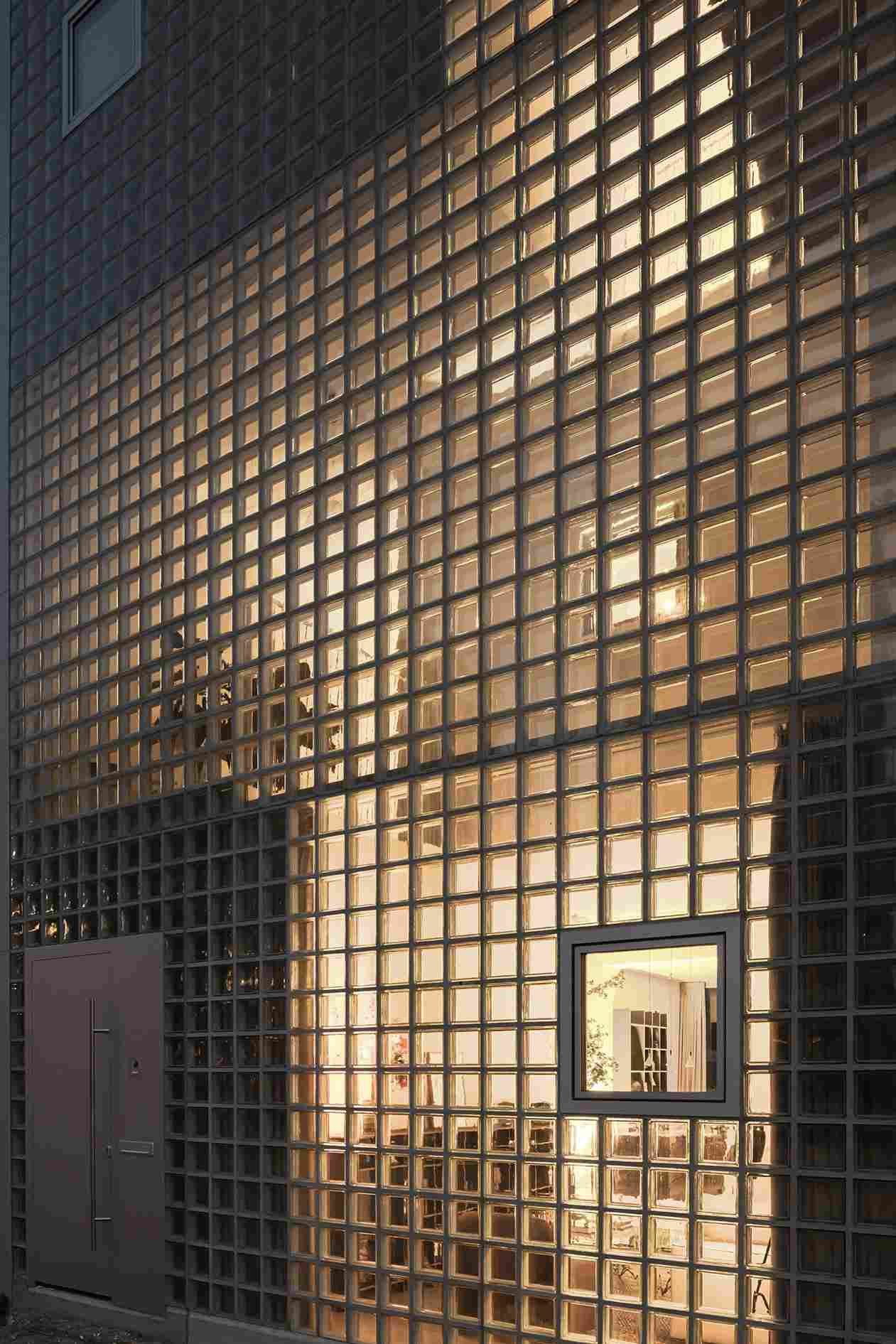
The lower levels of the facade are clad in glass brickwork, while the upper levels are finished in metal cladding, and the bedroom terraces at the rear are enclosed by metal grilles.
The brief presented Studioninedots with a spatial challenge on how to create a sense of individual autonomy and retreat within a compact, vertical footprint without sacrificing the conditions for spontaneous interaction between the home’s four occupants. The outcome was that of a house that distributes programmatic elements across multiple levels, creating several distinct places throughout the day in which to sit, work, rest and experience the home differently.
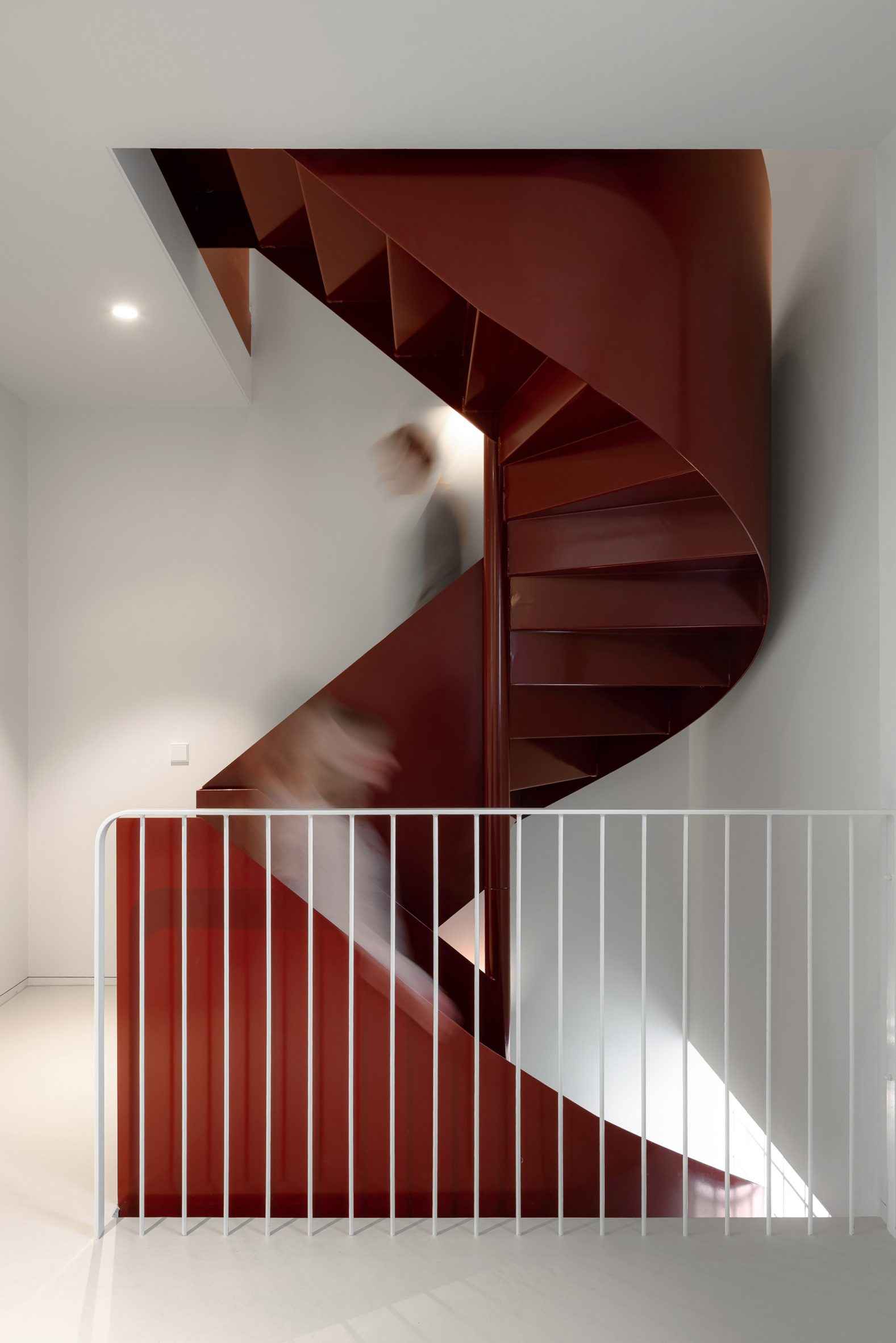
A long timber staircase connects the first three levels of the house, before giving way on the second floor to a spiral staircase in deep-red painted metal that ascends to the upper two storeys.
These volumes make up the Light House not stacked seamlessly but separated by deliberate voids, such as gaps wrapped in glass bricks and metal grilles that allow light and air to permeate through the interiors. These transitional zones are central to the spatial character of the home, acting simultaneously as filters, thresholds and luminous membranes that connect the levels visually even as they define them as distinct territories. The result is a home that breathes vertically, with natural light travelling through its section in ways that shift throughout the day.
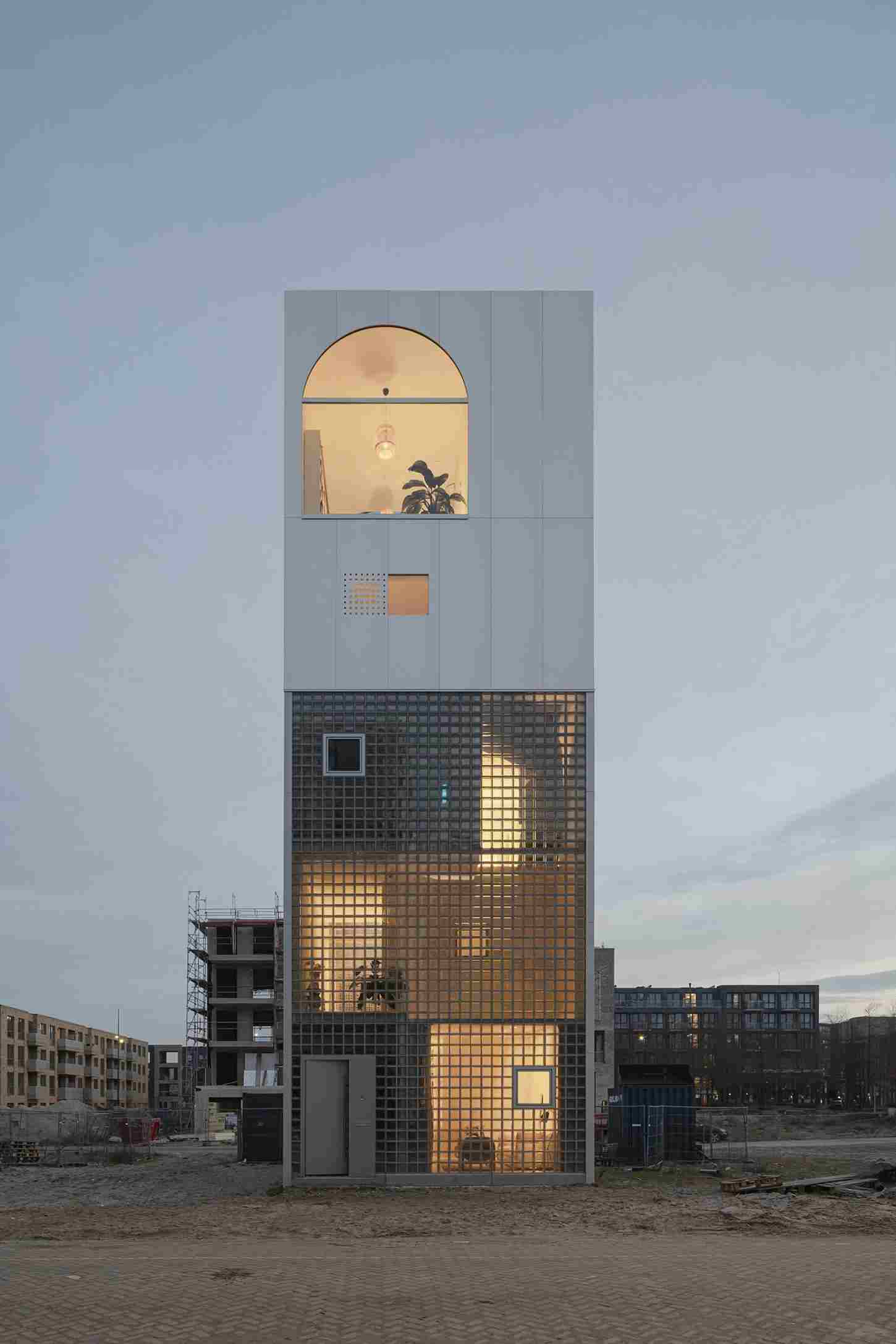
The home reaches a height of 15m, culminating in a secondary living space on the uppermost floor.
Entry to the house is through a glass-brick facade that immediately establishes the material tone of the project. The ground floor opens into a generous double-height living, dining and kitchen space organised around a tree. From this central space, the intersecting rectilinear volumes of the rooms above are visible overhead, giving occupants an immediate legibility of the home’s vertical organisation. Sliding glass doors at the rear draw a direct visual and physical axis through the living area and out into the garden, while expansive glass brickwork at both the front and back of the home floods the interior with diffused natural light.
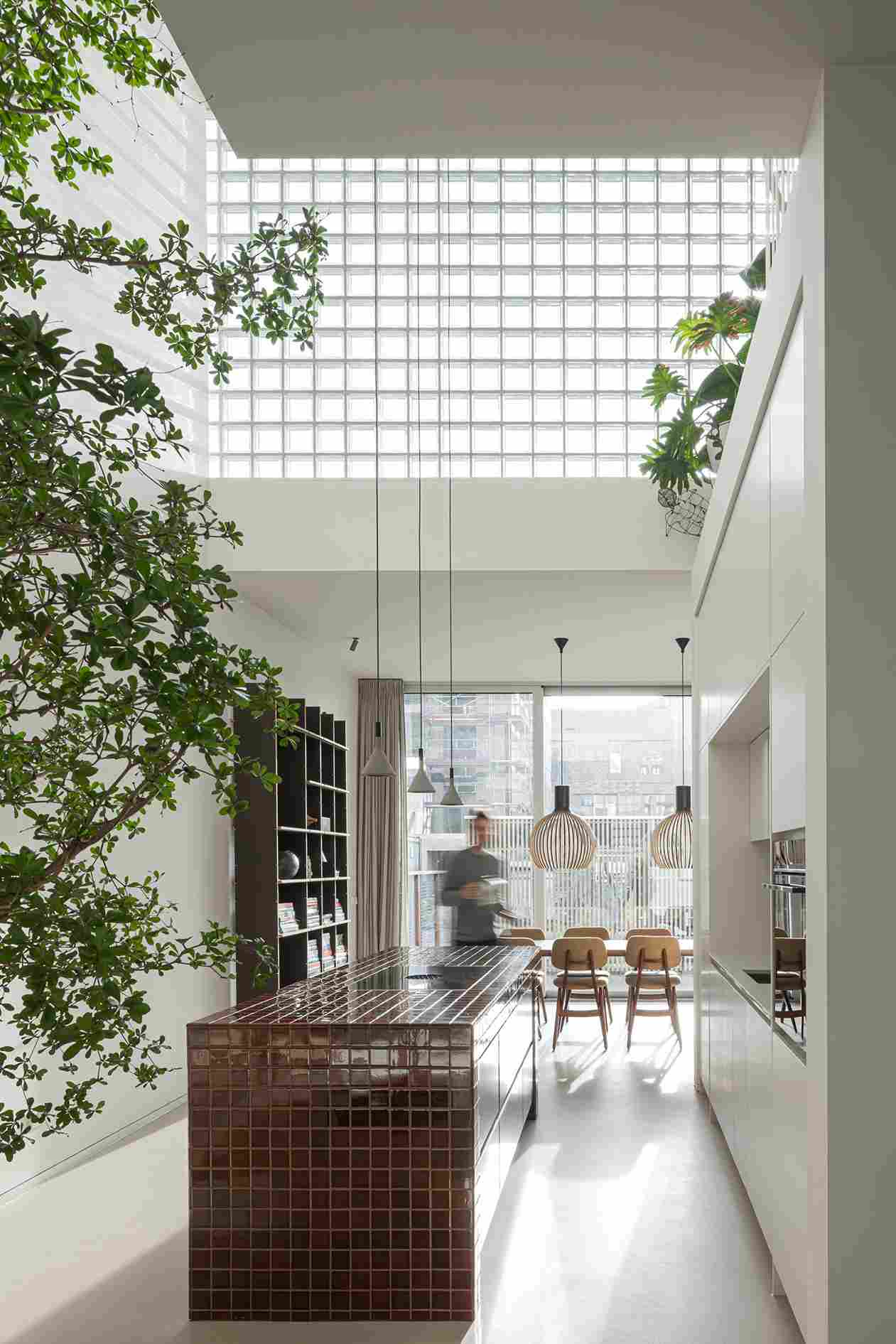
Timber doors appear throughout, and the kitchen island is finished in glossy, deep-red tiles make a bold material choice that anchors the heart of the home with colour.
Right above the main living space is a small, intimate retreat room intended for film-watching, relaxation and yoga. Adjacent to this is a compact mezzanine positioned atop the entrance porch and bathroom, overlooking the ground floor and offering yet another vantage point from which to experience the home’s internal landscape. The geometric clarity of the intersecting volumes is reinforced throughout the interior by minimalist white finishes that emphasise the clean lines and angles of the architecture. Against this neutral backdrop, carefully chosen warm elements introduce tactile richness and intimacy. Timber doors appear throughout, and the kitchen island is finished in glossy, deep-red tiles make a bold material choice that anchors the heart of the home with colour. A long timber staircase connects the first three levels of the house, before giving way on the second floor to a spiral staircase in deep-red painted metal that ascends to the upper two storeys.
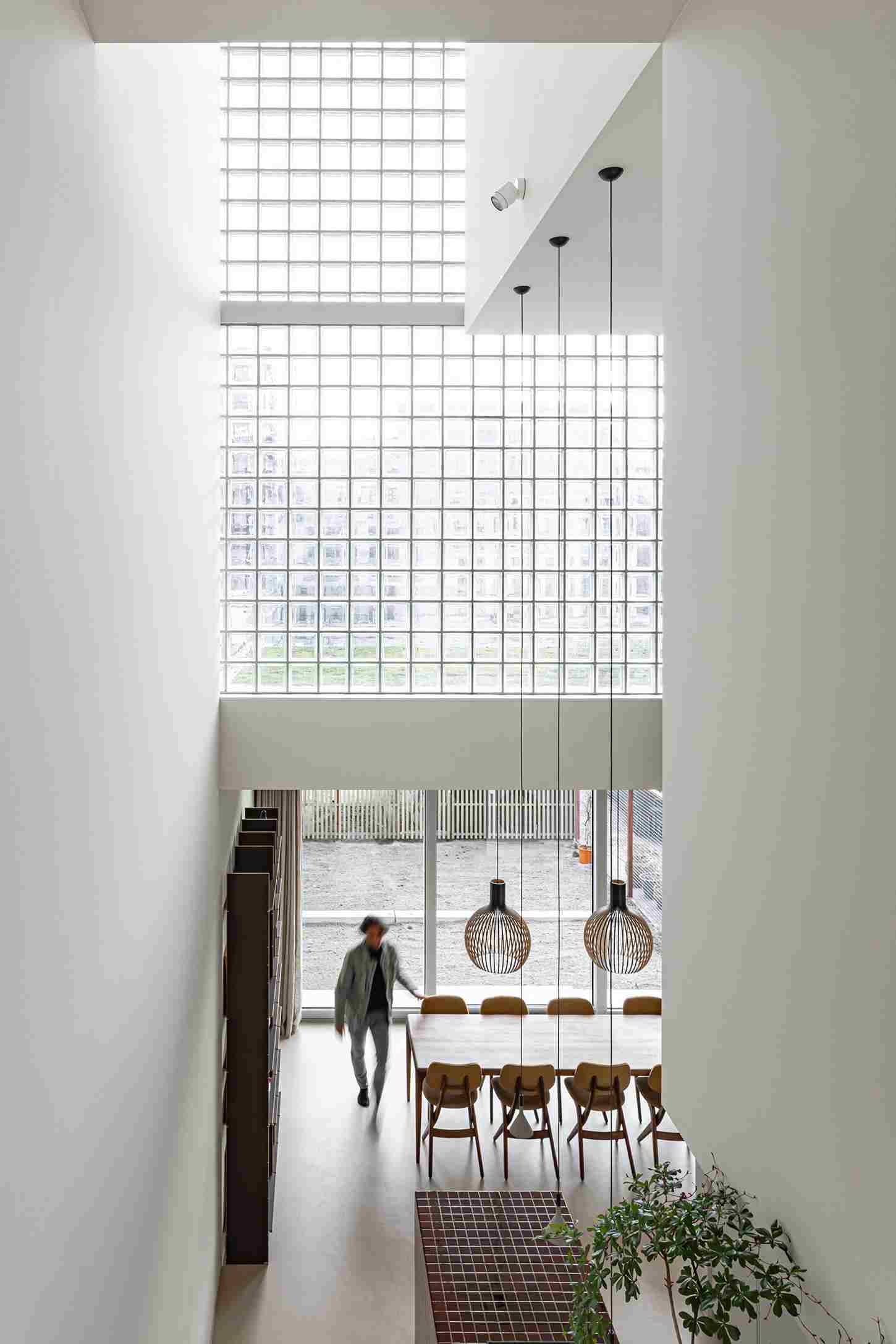
The ground floor opens into a generous double-height living, dining and kitchen space organised around a tree.
Externally, the material palette shifts. The lower levels of the facade are clad in glass brickwork, while the upper levels are finished in metal cladding, and the bedroom terraces at the rear are enclosed by metal grilles. The home reaches a height of 15m, culminating in a secondary living space on the uppermost floor. This top-level room is flanked by large arched windows that sllow generous light and frame views outward, and opens directly onto a terrace.
Image credit: Sebastian van Damme