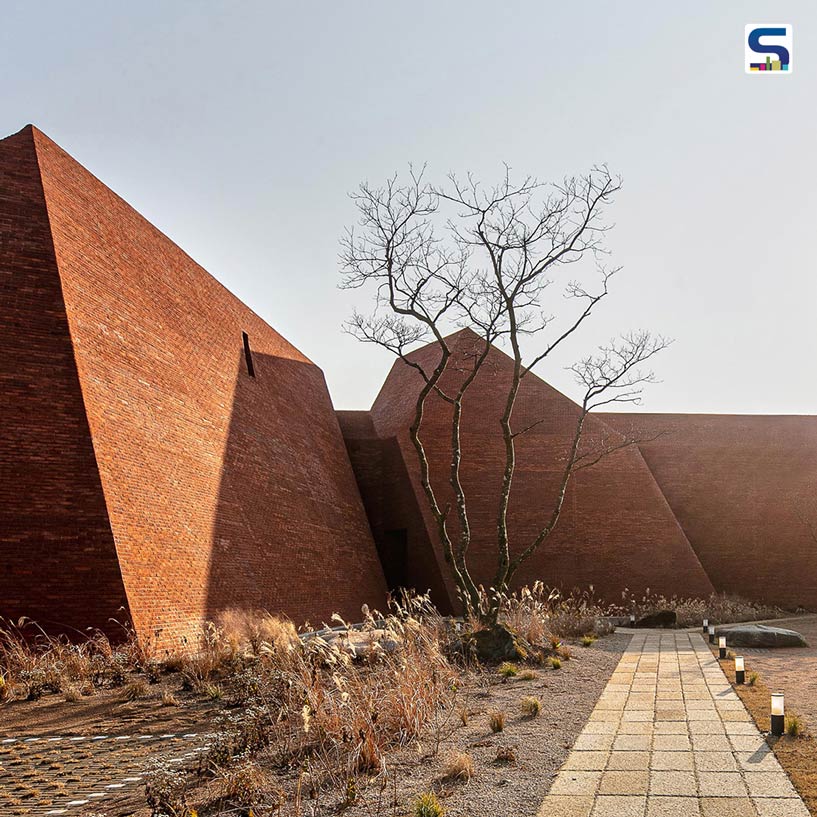
Nestled alongside the Han River on the outskirts of Gimpo in South Korea’s Gyeonggi Province, Abogoga is a cafe and bakery that presents itself as a cluster of monolithic red-brick volumes, mimicking the weathered remnants of a long-lost civilisation. The project was designed by Seoul-based architecture and interior design studio Sosokki Anac, founded in 2004 and operating under the broader Sosokki Group, a culture and arts conglomerate. The structure was envisioned as the ruins of an undiscovered ancient civilization, one buried beneath Alaskan glaciers, as if the traces of a forgotten world had resurfaced long after the reset of human history. Here is a detailed report on SURFACES REPORTER (SR).
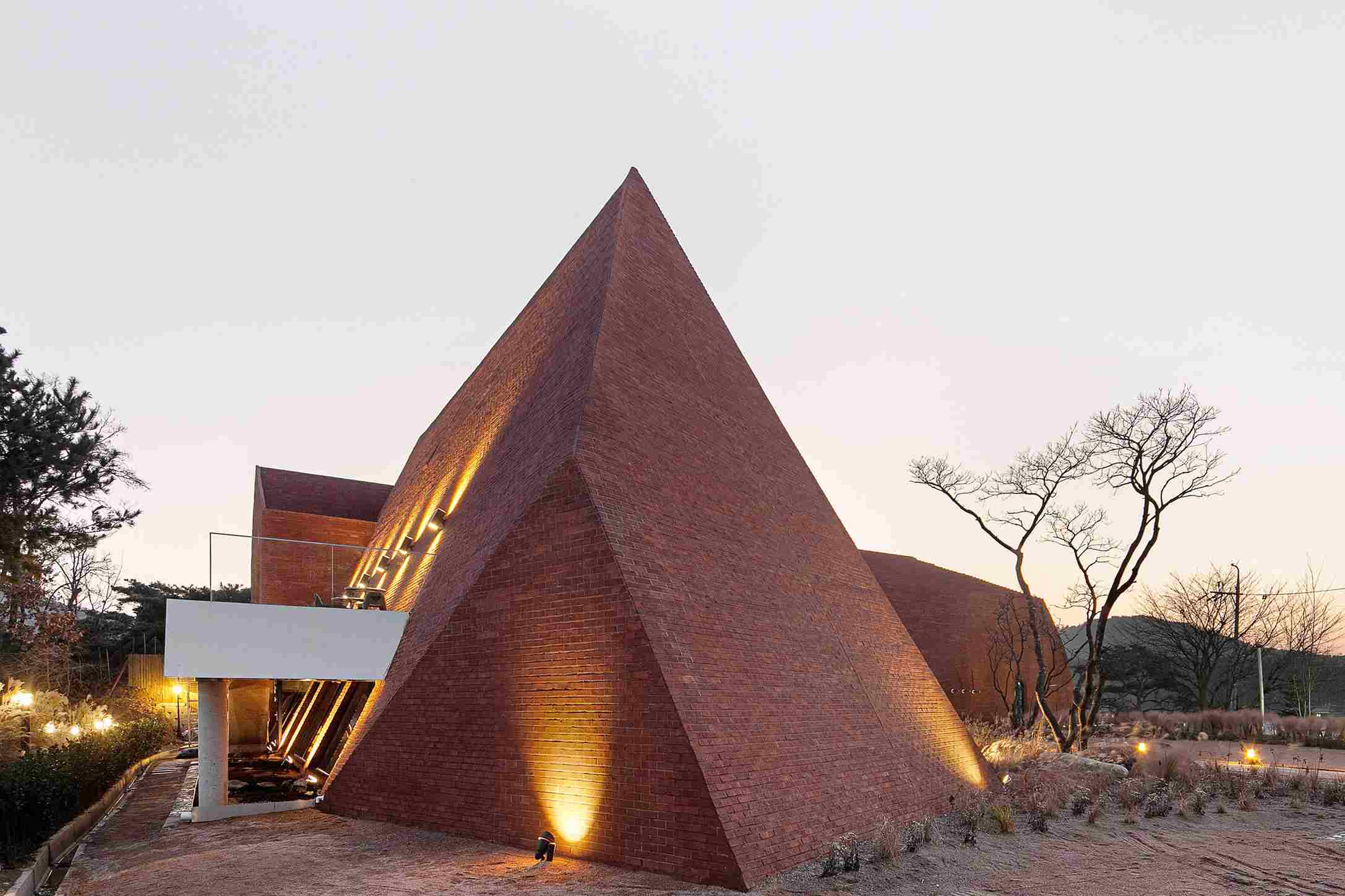
The structure was envisioned as the ruins of an undiscovered ancient civilization, one buried beneath Alaskan glaciers, as if the traces of a forgotten world had resurfaced long after the reset of human history.
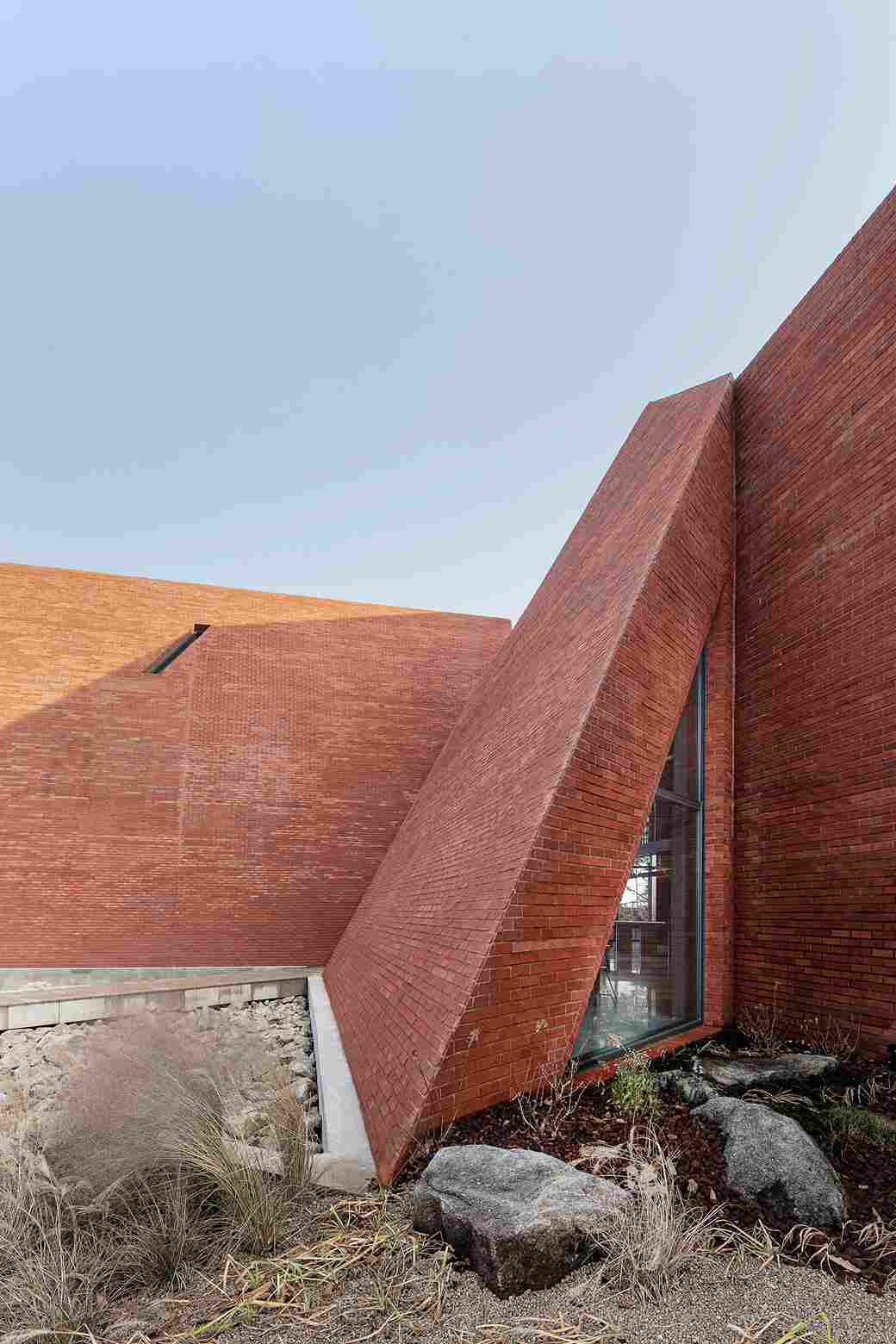
This fictional narrative was not merely a poetic stance but a generative force that shaped every spatial and material decision in the project. According to the studio, the intention was to produce a dreamlike atmosphere that blends the universally familiar with something altogether strange and unplaceable by creating an environment that feels both ancient and imagined simultaneously. Red brick was selected as the primary building material with clear intentionality. According to the studio, it represents one of humanity’s most primordial construction materials which is ancient, tactile and carries a deep cultural resonance that transcends geography. Its use lends the exterior volumes a sense of weight and temporal depth, reinforcing the illusion that the building might have existed long before its actual construction.
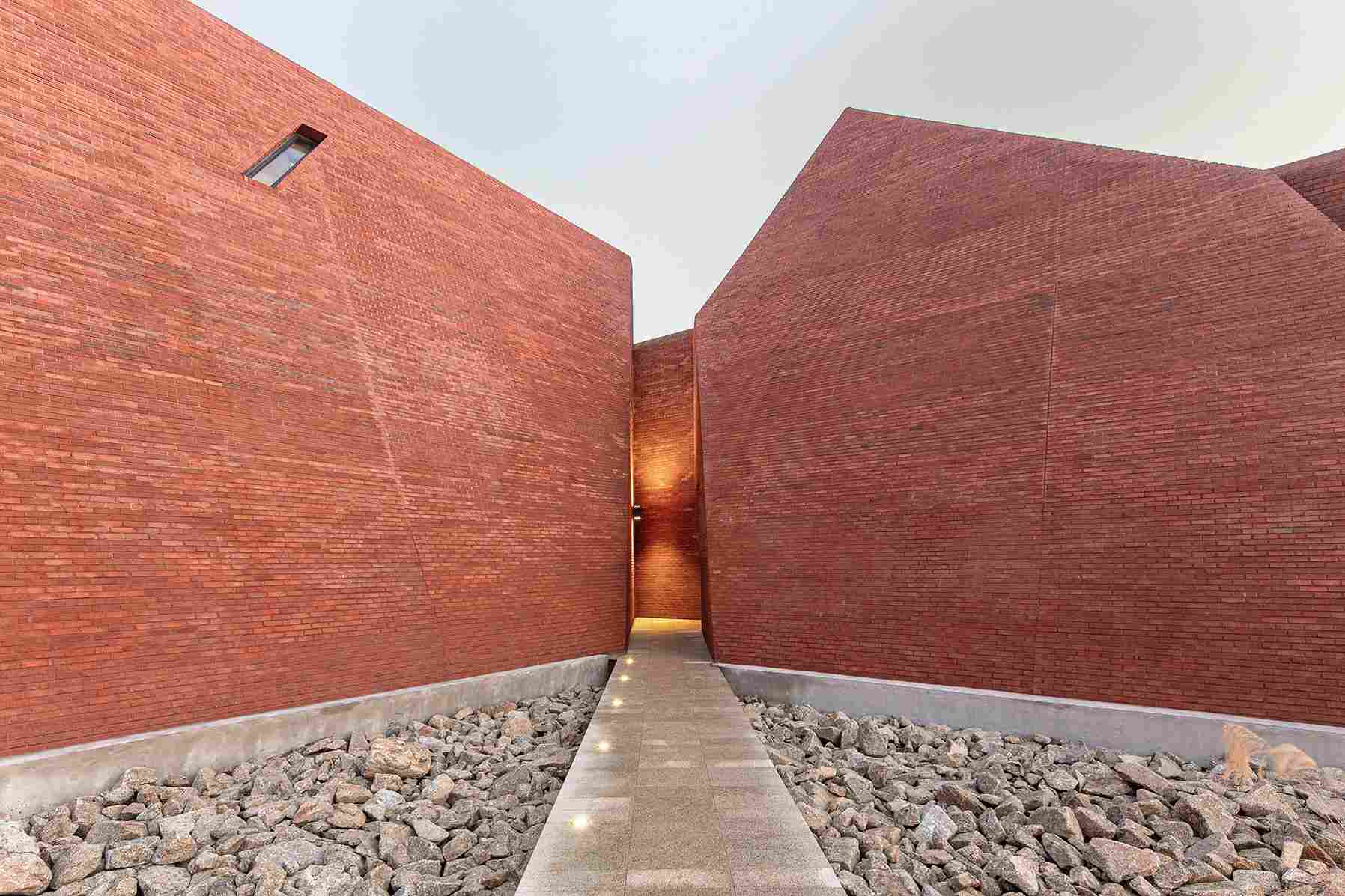
Red brick was selected as the primary building material with clear intentionality.
From the outside, Abogoga presents itself as three distinct brick forms that appear entirely separate from one another. The experience of entering the building is carefully choreographed to sustain and deepen this atmosphere. Visitors enter through a short bridge spanning a rocky patio before arriving at the elbow of an L-shaped plan, which is a configuration created deliberately to withhold the full interior from view upon entry. This strategy of concealment is central to the design as it creates a sense of exploration so that the spatial experience unfolds progressively rather than being consumed in a single glance.
Visitors enter through a short bridge spanning a rocky patio before arriving at the elbow of an L-shaped plan, which is a configuration created deliberately to withhold the full interior from view upon entry.
Passing through the narrow entrance, visitors find themselves in a double-height hall that forms the social and commercial heart of the cafe. A large counter dedicated to baked goods occupies the centre of this space, while a coffee bar runs along its southern edge. Both are finished in stainless steel, a material whose cool, industrial precision creates a deliberate and striking contrast against the raw exposed concrete of the ceilings above. The interplay between the warm, ancient associations of brick on the exterior and the sharp, contemporary finishes within the interiors reinforces the building’s dual identity.
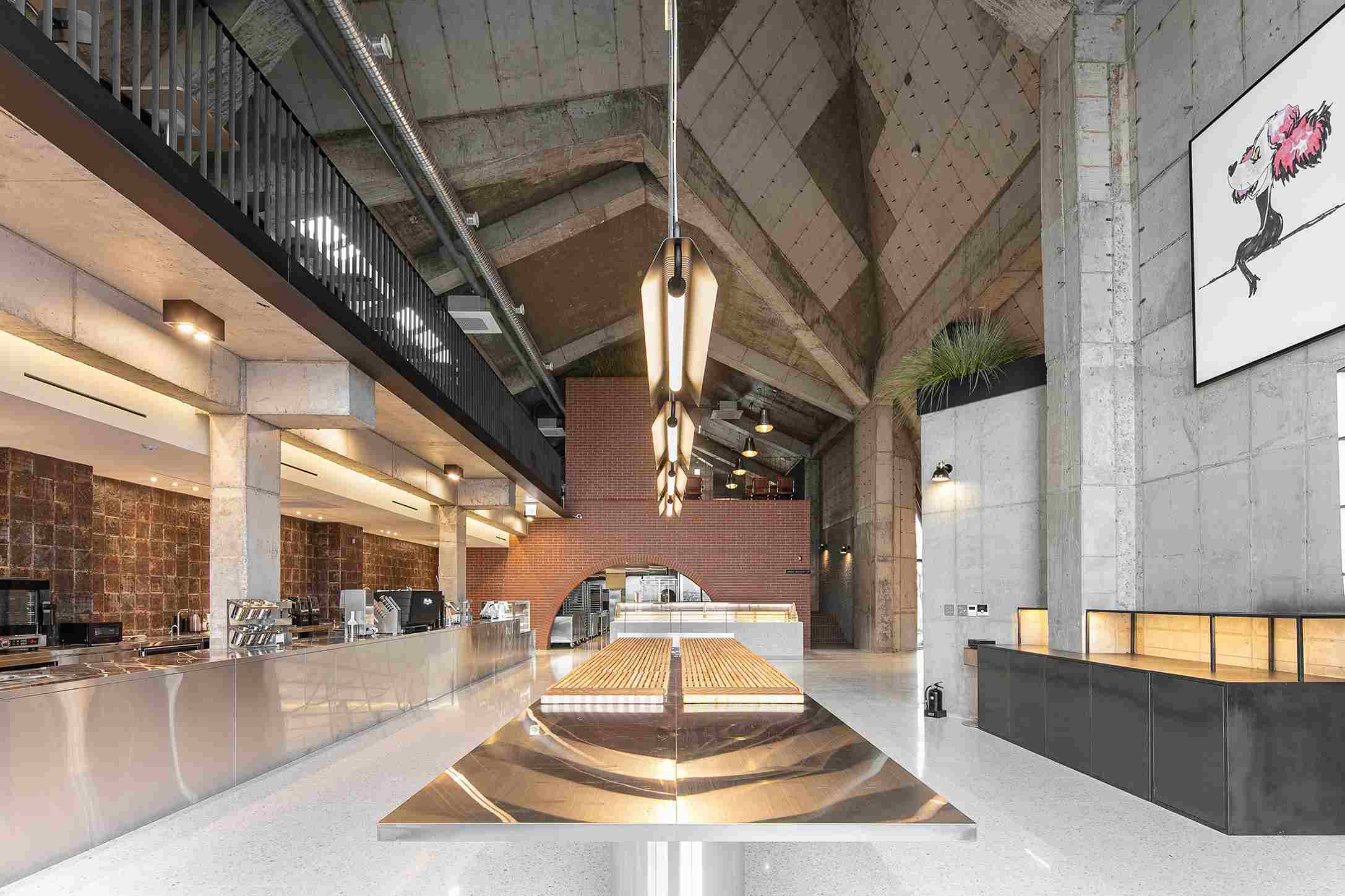
The interplay between the warm, ancient associations of brick on the exterior and the sharp, contemporary finishes within the interiors reinforces the building’s dual identity.
Despite appearing as three separate structures from outside, the three brick volumes are unified internally by a continuous high, angular concrete interior that draws the spaces together. Within the narrower eastern wing, low-level windows frame views toward the river, positioned alongside a rectilinear brick structure whose arched openings at the base shelter additional seating. Planted greenery sits atop this inner structure, softening the hard material palette. Concrete and steel walkways thread through the plan, connecting a series of seating mezzanines and terraces, while bathrooms are positioned above a ground floor kitchen framed by a brick arch.
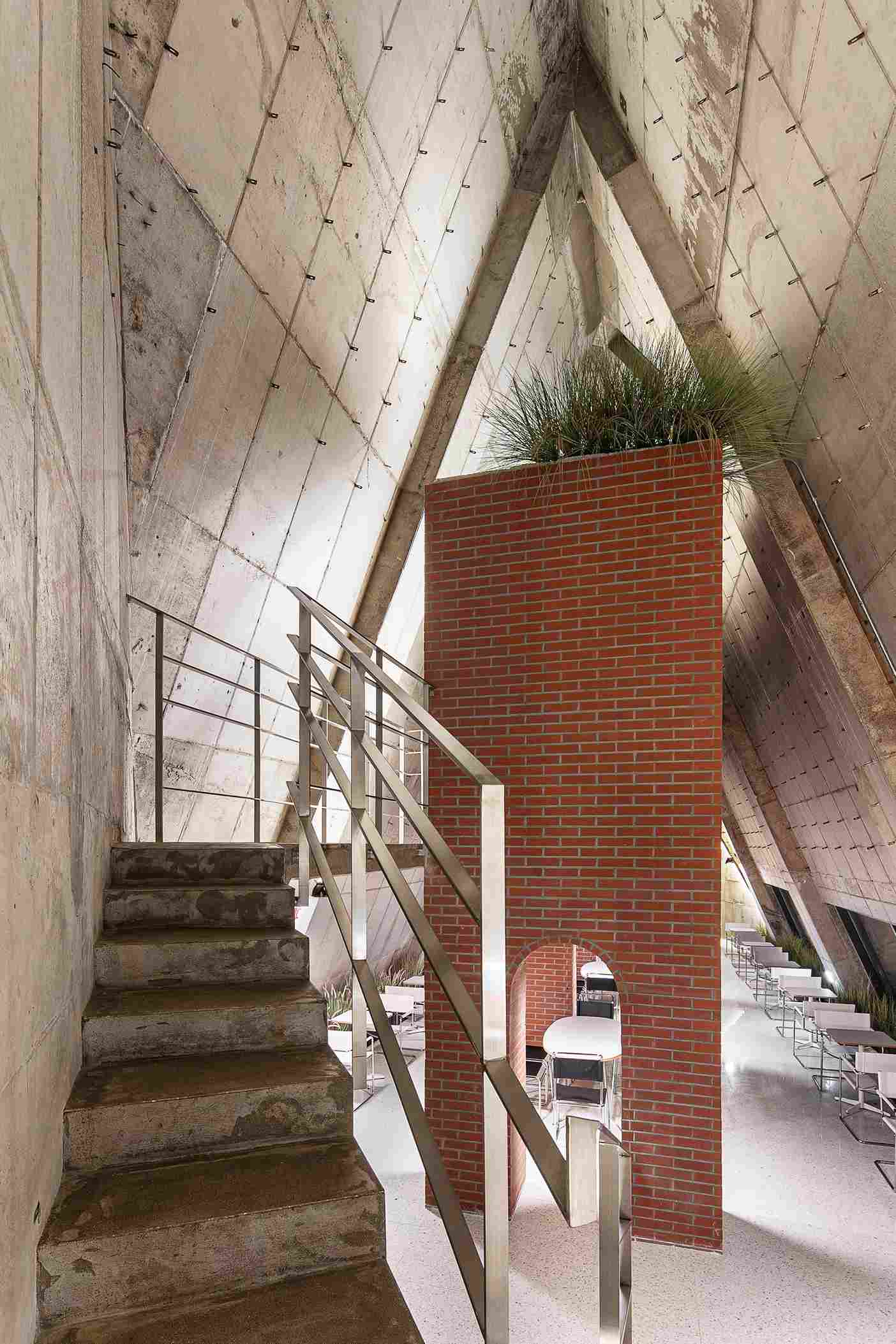
Despite appearing as three separate structures from outside, the three brick volumes are unified internally by a continuous high, angular concrete interior that draws the spaces together.
Rather than orienting the building to exploit its riverside setting, a conventional instinct in cafe design, the studio concluded that the view from this particular stretch of the Han River lacked drama. In response, the design turns deliberately inward on approach, presenting a closed, introverted mass that actively conceals the river from arriving visitors. Upon entering and moving through the interior, the view suddenly reveals itself, creating a maze-like circulation with layered volumes. This sequenced, narrative approach to spatial experience is at the core of Abogoga’s design philosophy.
Image credit: Jung-gyu Kim