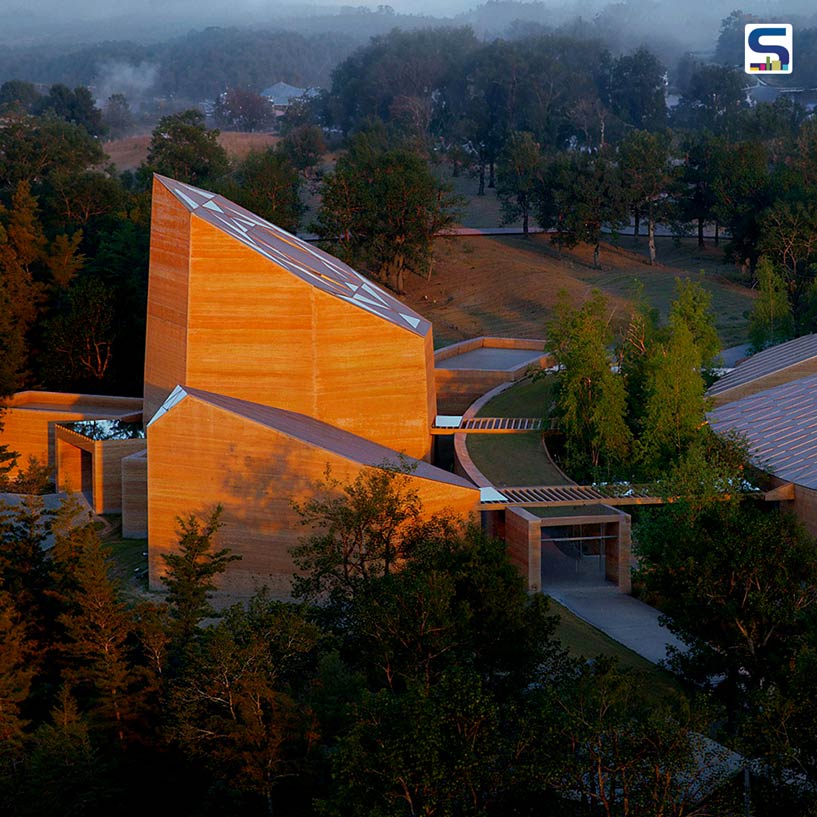
American architecture firm Safdie Architects recently unveiled its visionary designs for the Cherokee Heritage Centre, a culturally significant campus set to be built in Tahlequah, the capital of the Cherokee Nation in eastern Oklahoma. The project envisions a series of thoughtfully interconnected pavilions that will serve as a living tribute to the history, identity and legacy of the Cherokee people. Know more about it on SURFACES REPORTER (SR).
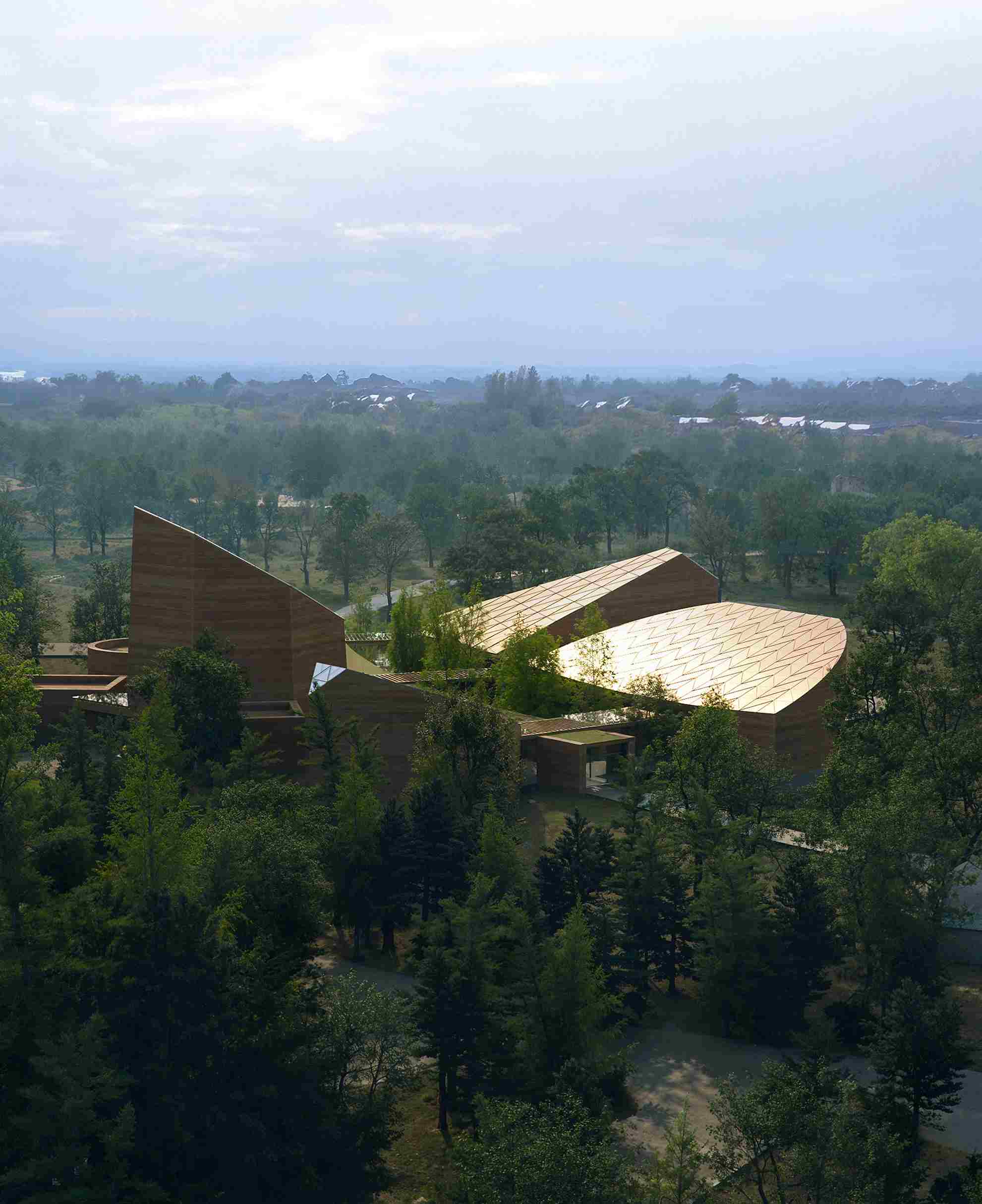
The initial phase of construction represents just the beginning of a far-reaching development plan that will eventually extend across the entire 43 acre site.
At the heart of the design is a carefully considered architectural language that is rooted in the natural and cultural landscape of the region. The pavilion walls of the Cherokee Heritage Centre are conceived to echo the visual texture of layered earthen materials, rising organically from within and above a grove of trees. This deliberate integration of built form and natural environment ensures that the structures feel not imposed upon the land, rather grown from it. The most prominent of the pavilions is the Great Hall, which stands as a landmark among the trees with its presence announced from a distance.
From this central promenade, bridges extend across a creek, connecting to two expansive gallery pavilions, where one is triangular and the other is semicircular in plan.
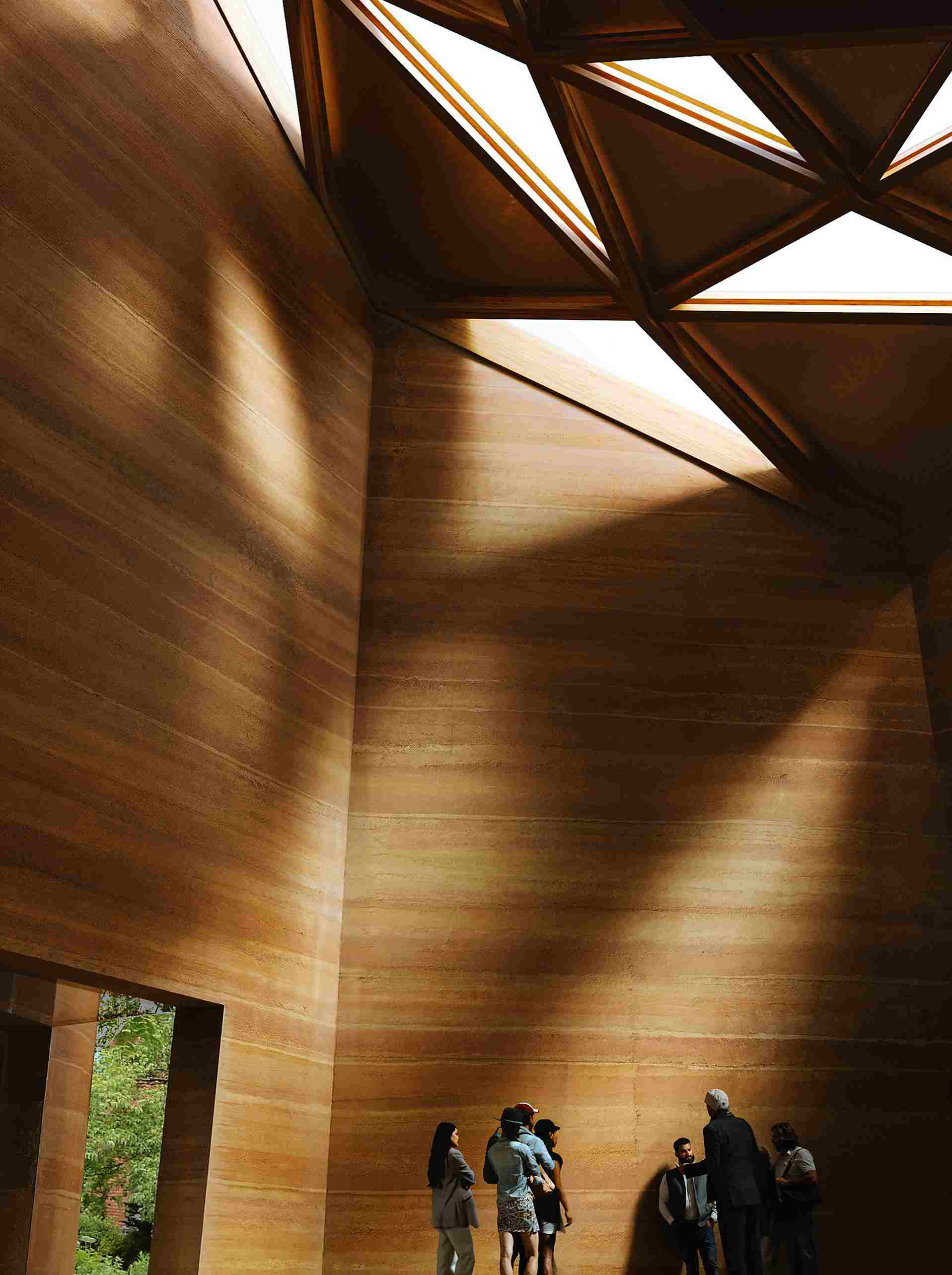
Crowning this structure is a striking geometric metallic roof inspired by the Cherokee seven-pointed star, a deeply meaningful symbol in Cherokee culture. The roof’s flower-like form features glass panels between its metallic points allowing natural light to filter into the vast interior spaces below, thus creating an atmosphere that is both grand and contemplative. The remaining pavilions will reportedly feature similarly metal roofing, each distinguished by its own unique patterning.
The roof’s flower-like form features glass panels between its metallic points allowing natural light to filter into the vast interior spaces below, thus creating an atmosphere that is both grand and contemplative.
Radiating outward from the Great Hall, these smaller structures are linked by a curved, bow-shaped covered walkway that runs through the heart of the campus, aligned with a tree-lined allee stretching in both directions. From this central promenade, bridges extend across a creek, connecting to two expansive gallery pavilions, where one is triangular and the other is semicircular in plan. Both structures slope upward and outward from the central path, mirroring the Great Hall on the opposite side and together producing the dramatic spatial effect of a canyon.
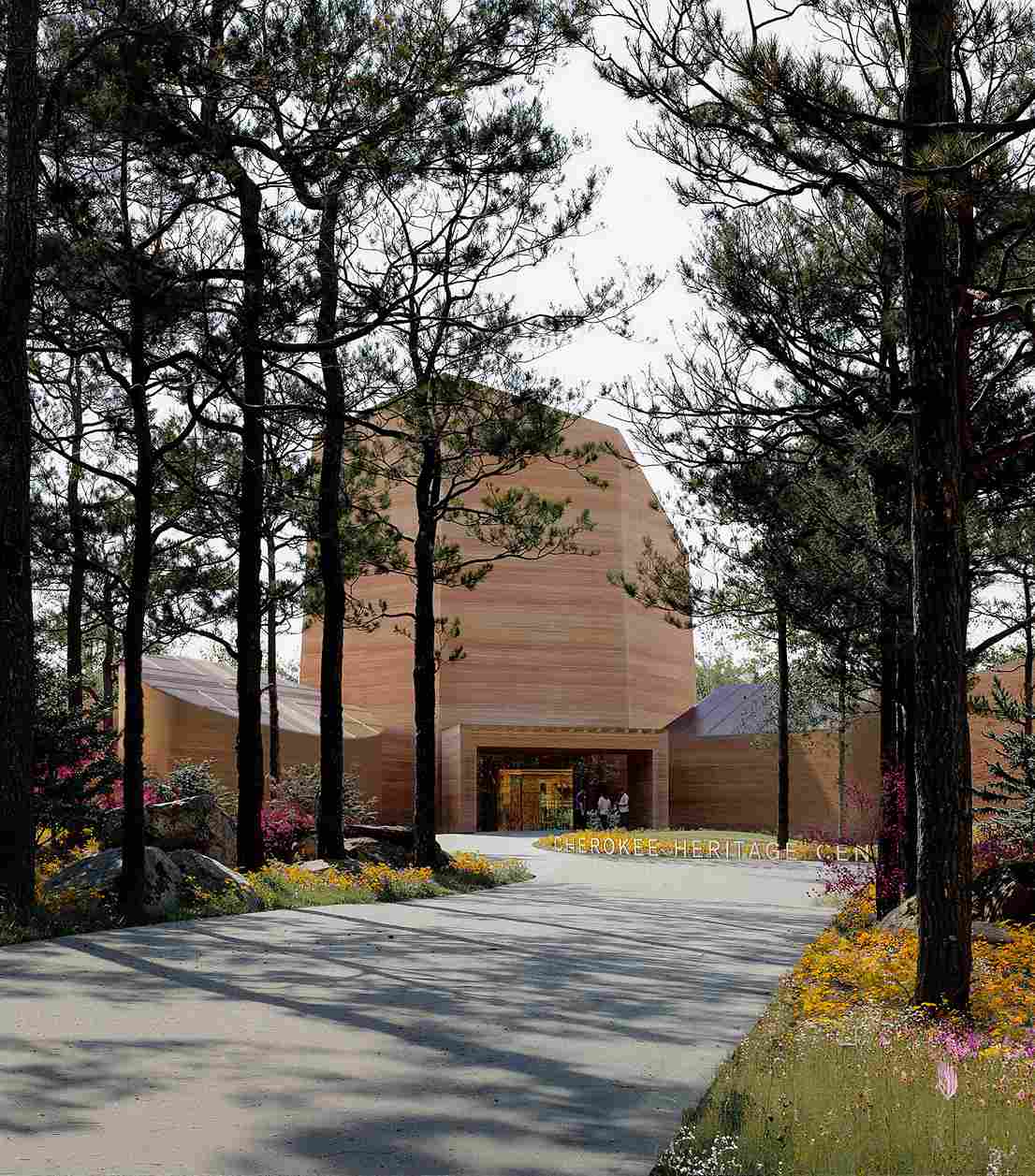
The most prominent of the pavilions is the Great Hall, which stands as a landmark among the trees with its presence announced from a distance.
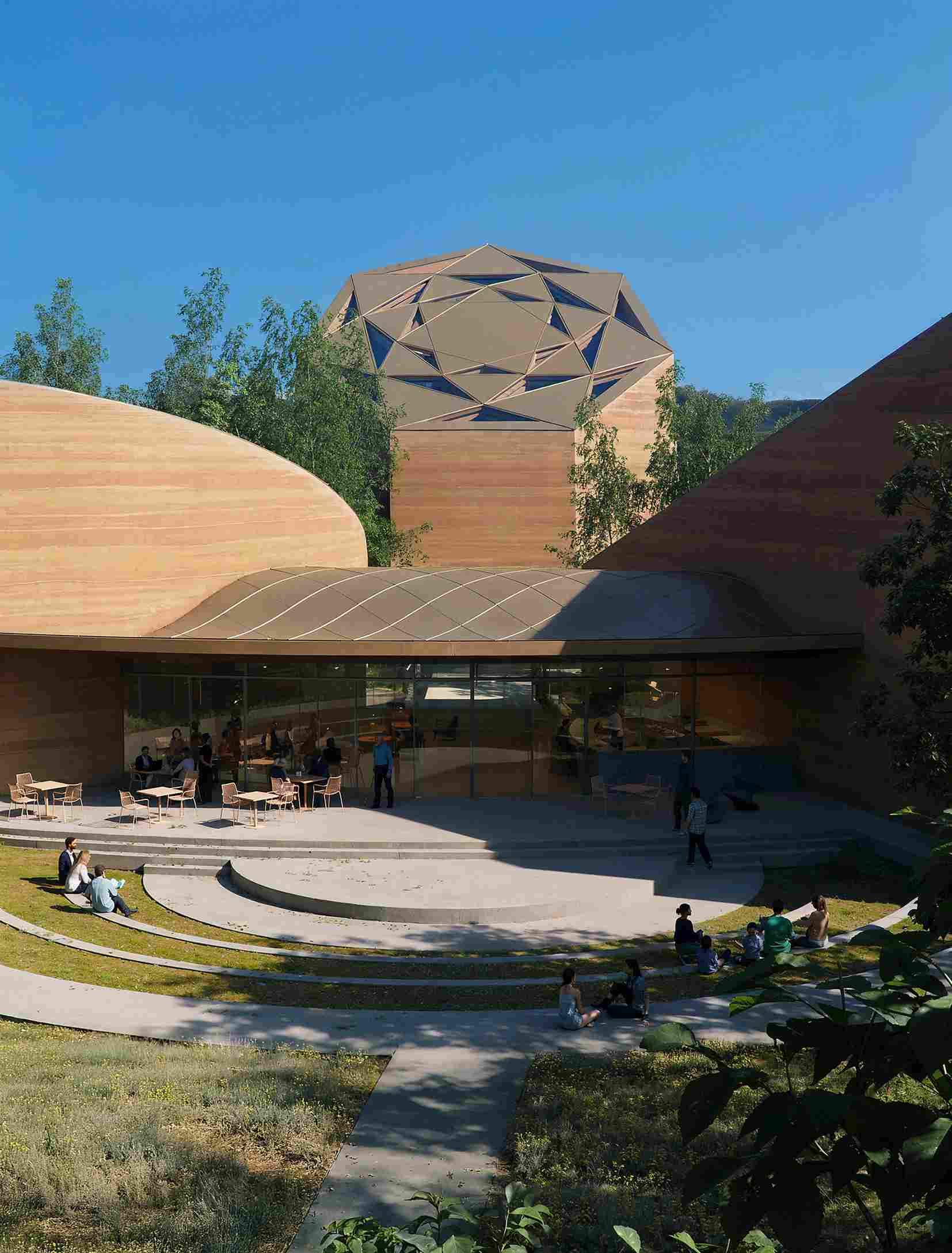
Positioned between these two gallery buildings is an axe head shaped structure set at a lower elevation. This volume features a gently undulating roof and a transparent glass wall that forms the scenic backdrop for an outdoor landscaped amphitheatre, providing a gathering space for community events and public life. The initial phase of construction represents just the beginning of a far-reaching development plan that will eventually extend across the entire 43 acre site.
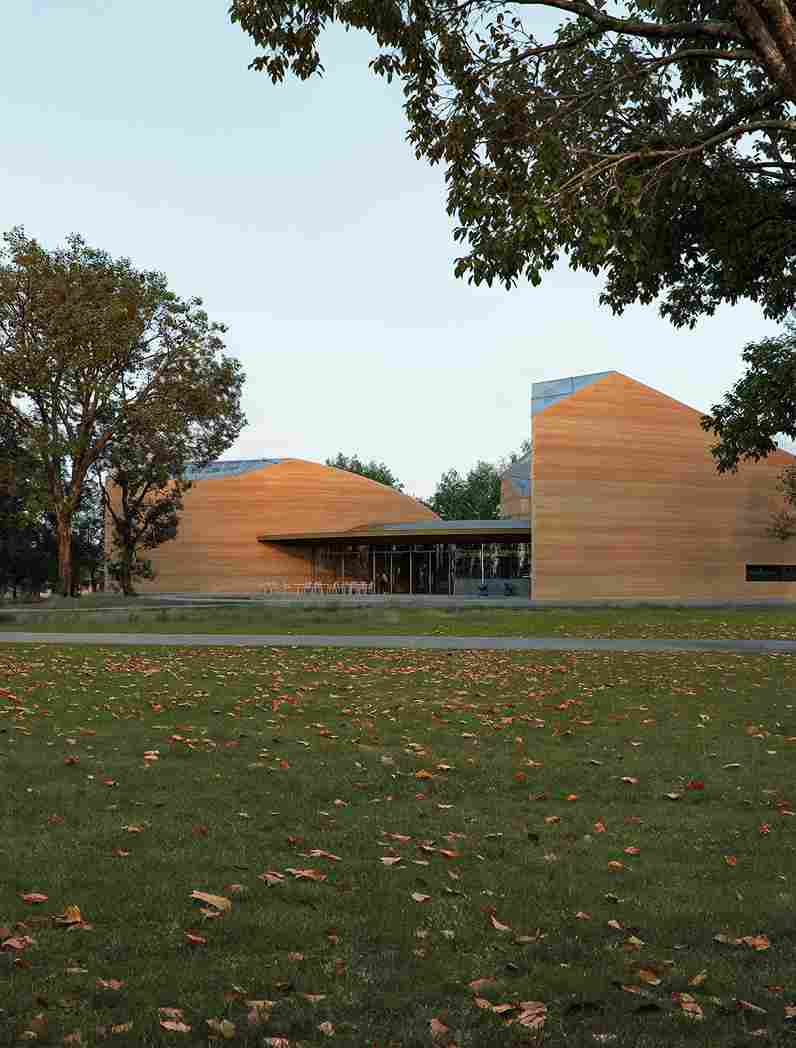
The pavilion walls of the Cherokee Heritage Centre are conceived to echo the visual texture of layered earthen materials, rising organically from within and above a grove of trees.
Central to the wider scheme are the preserved pillars of the first Female Seminary of the Cherokee Nation, which will serve as a historical anchor for the broader project. Reportedly, Safdie Architects is collaborating with Indigenous-led local firm Anishinabe Design Inc, while PWP Landscape Architecture has been engaged to design an extensive landscape framework that will knit the various elements of the site together both internally and with the surrounding environment. Beyond the new pavilions, the landscaping strategy will draw connections to a reconstructed traditional Cherokee village and the historic Tsa-La-Gi amphitheatre, having been designed by Charles Chief Boyd, the first architect of Cherokee heritage to receive formal recognition from the American Institute of Architects.
Image credit: Mir