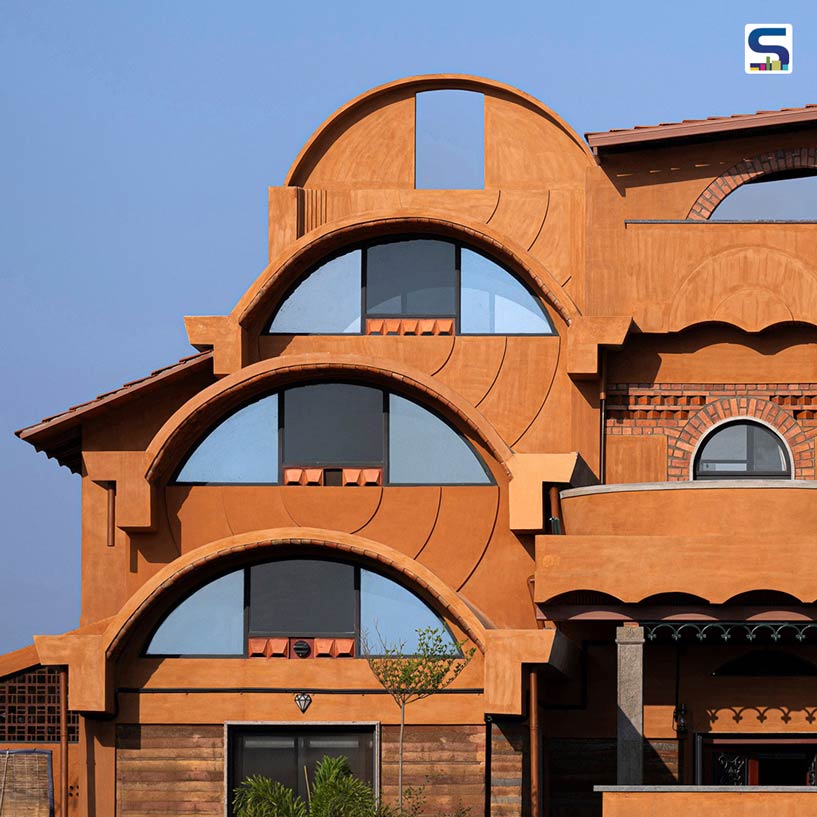
Nestled on the outskirts of Hyderabad, Aurva Illam is a private residence that draws its identity entirely from the ancient, geological character of the Deccan Plateau. Designed by local architecture studio Iki Builds, the home takes its name from two languages, one is the Sanskrit word Aurva, meaning of the earth, and second is from the Tamil word Illam, meaning home. Know more about it on SURFACES REPORTER (SR).
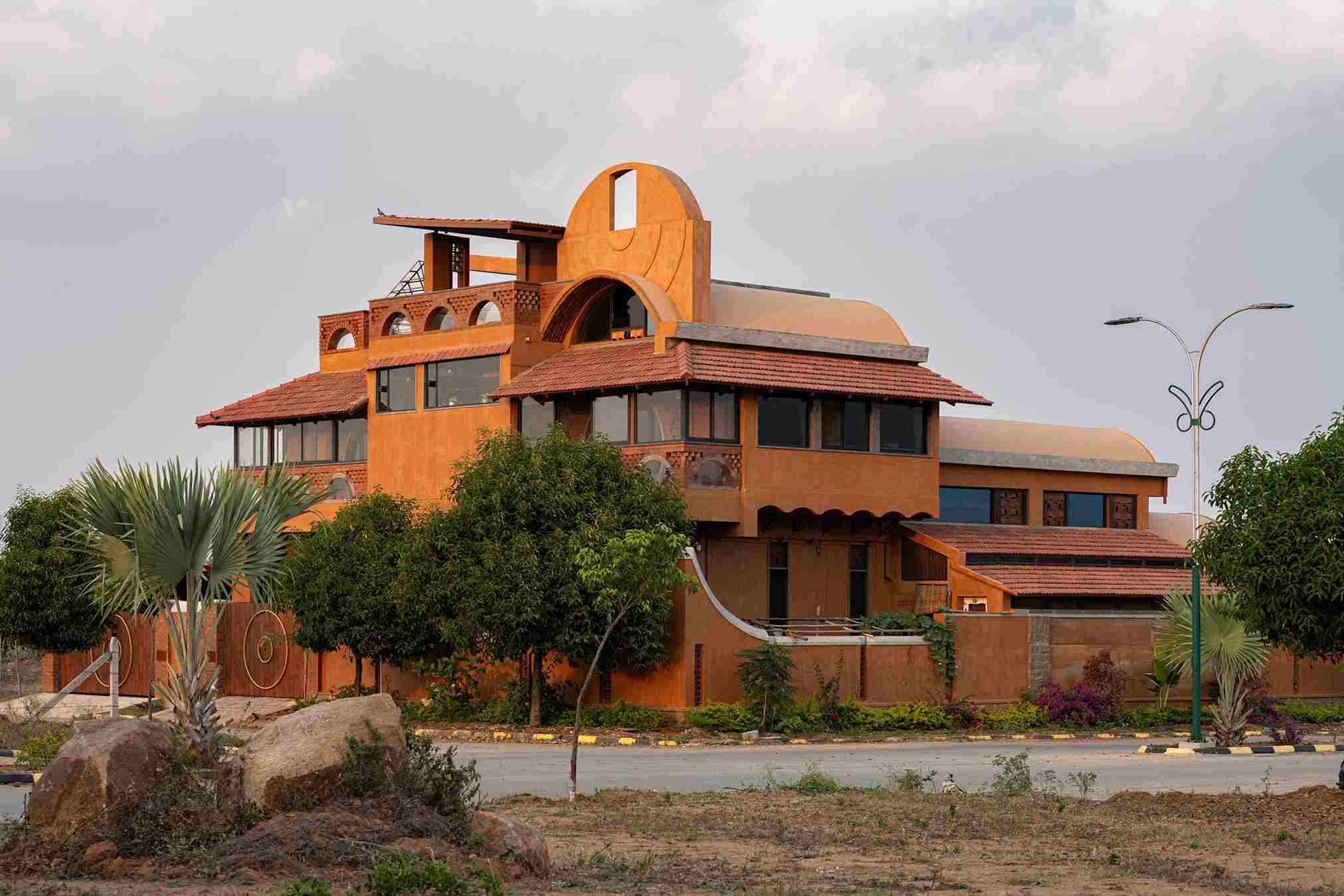
The idea for the architecture of the residence was to function as a physical extension of the Deccan Plateau itself.
Iki Builds approached the project as a deliberate rethinking of what modern luxury could mean in this context. Rather than following the prevailing aesthetic of villas in the area, which were typically characterised by imported glass and marble finishes that bear little relationship to their surroundings, the studio decided to create a home that was materially and spatially rooted in the landscape it inhabits. The idea for the architecture of the residence was to function as a physical extension of the Deccan Plateau itself.
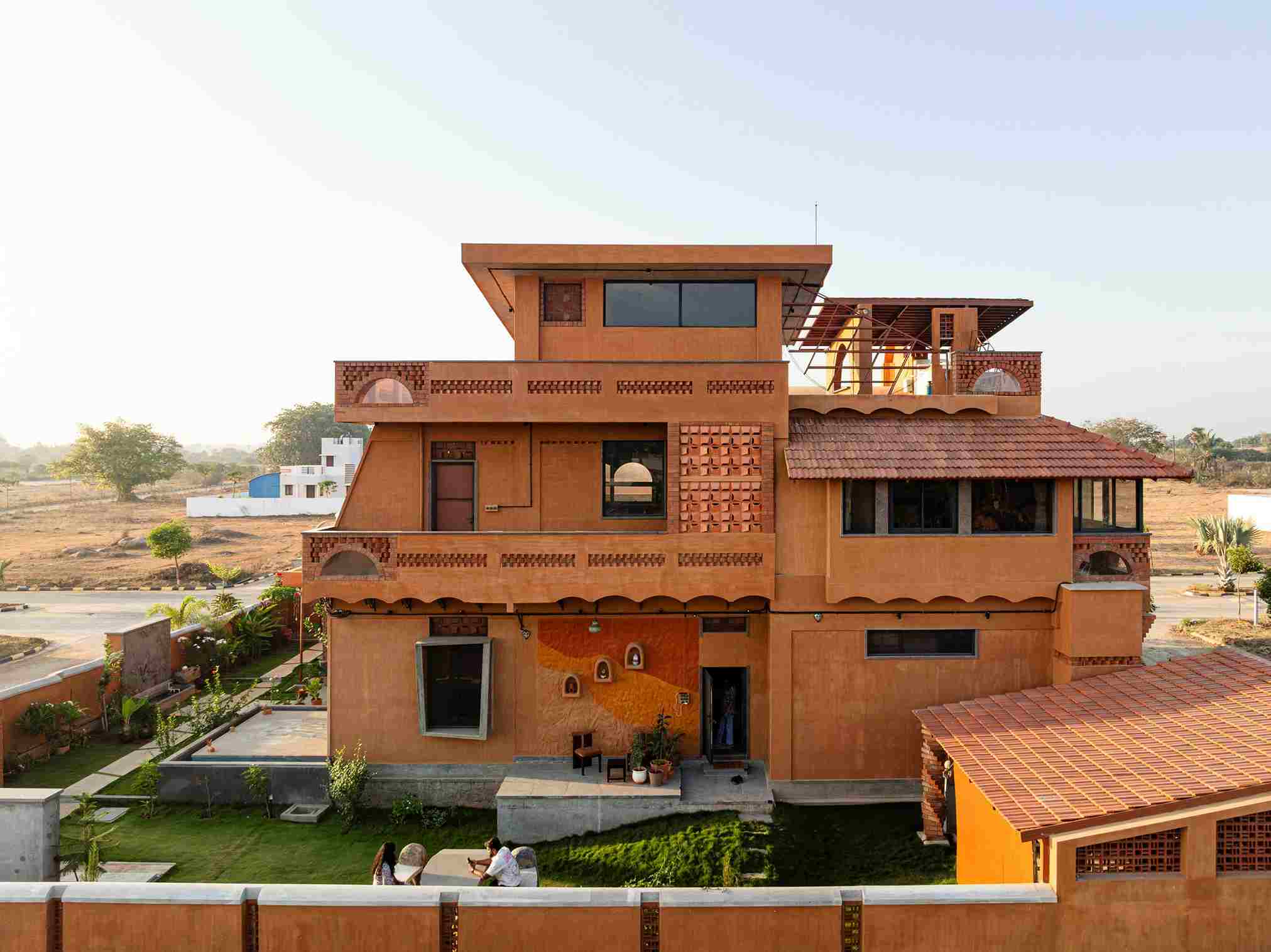
Instead, the home is conceived as a stepped series of vaulted forms in which more private spaces such as studies and bedrooms occupy the upper levels, while communal living areas anchor the ground floor.
To achieve this, the studio turned to a geological palette of materials drawn directly from the region. Rammed earth, local stone and terracotta tiles form the primary material vocabulary of the house, each chosen for its resonance with the rugged, rocky terrain of the plateau. The rammed earth used in the thick boundary walls was composed of a mixture of soil excavated during construction and waste material sourced from a nearby quarry. At ground level, these walls were left exposed, their raw, striated surfaces celebrating the natural compression of layers that echoes the geological formations of the plateau above. On the upper exterior and across large areas of the interior, the surfaces are finished in a terracotta-toned earth plaster that harmonises with areas of red brickwork and tiled vaults, creating a warm, cohesive material continuity throughout.
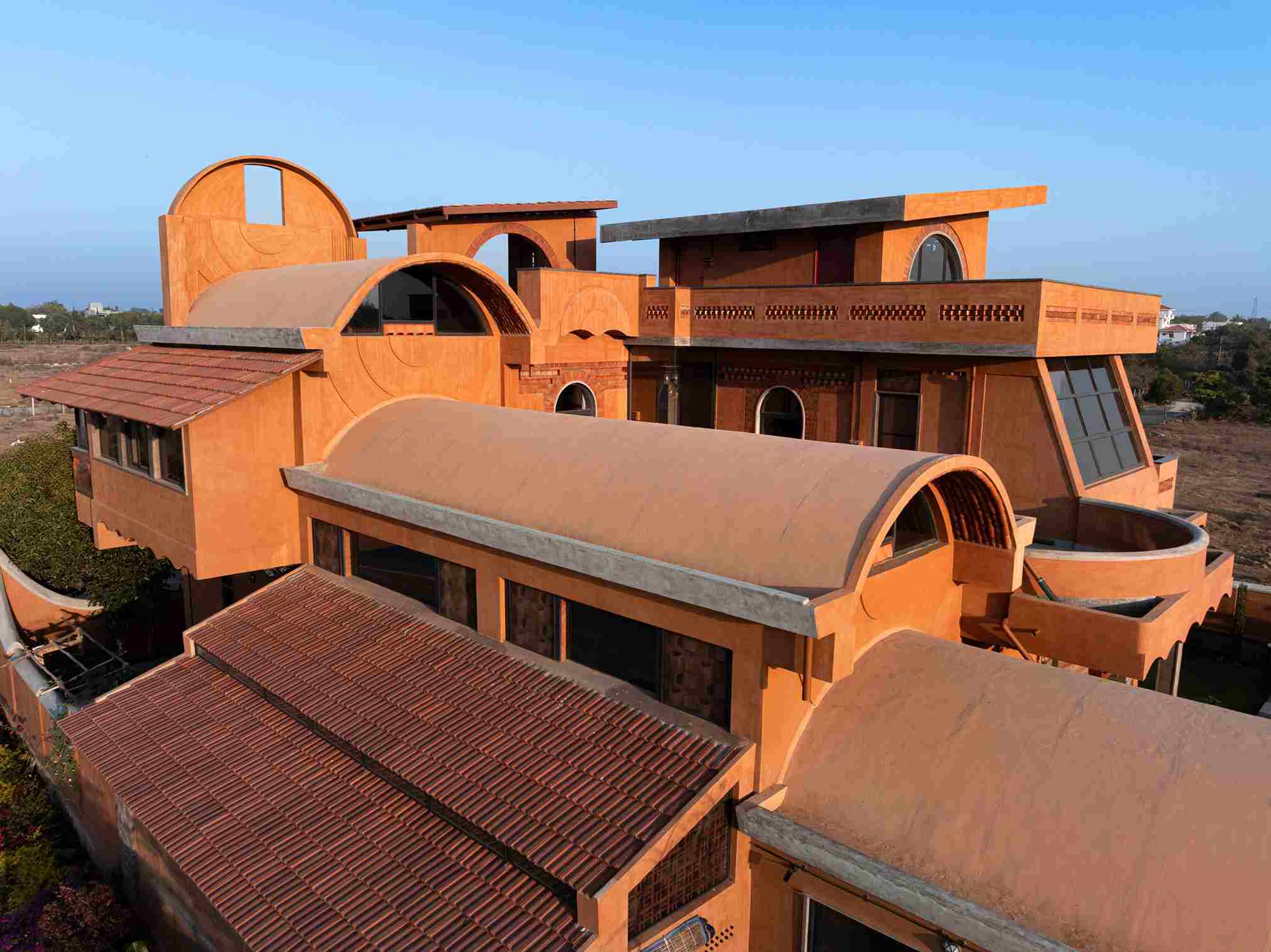
Rammed earth, local stone and terracotta tiles form the primary material vocabulary of the house, each chosen for its resonance with the rugged, rocky terrain of the plateau.
Spatially, Aurva Illam departs from the more enclosed, defensive character typical of villas in the region. Instead, the home is conceived as a stepped series of vaulted forms in which more private spaces such as studies and bedrooms occupy the upper levels, while communal living areas anchor the ground floor. This cascading configuration is not merely formal; it also serves a functional purpose, enabling natural stack ventilation through the building and facilitating rainwater collection through large ferrocement gutters integrated into the stepped profile.
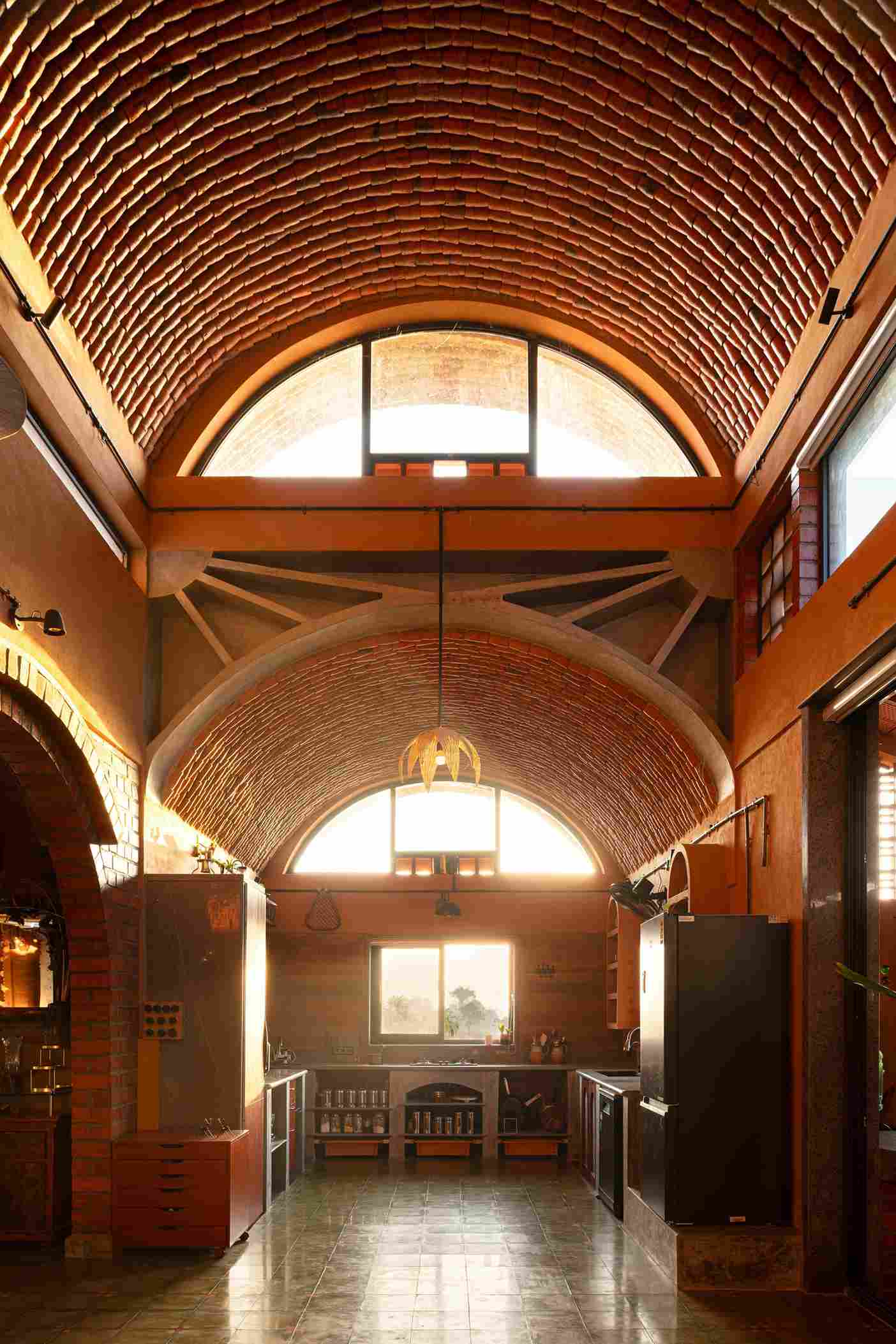
At the heart of the ground floor is a central courtyard modelled on the traditional mutram, a typology deeply embedded in the domestic architecture of the region.
At the heart of the ground floor is a central courtyard modelled on the traditional mutram, a typology deeply embedded in the domestic architecture of the region. Opening off an entrance foyer to the south is a generously proportioned, double-height living, kitchen and dining area, whose vaulted ceiling soars above and whose clerestory windows draw daylight deep into the interior.
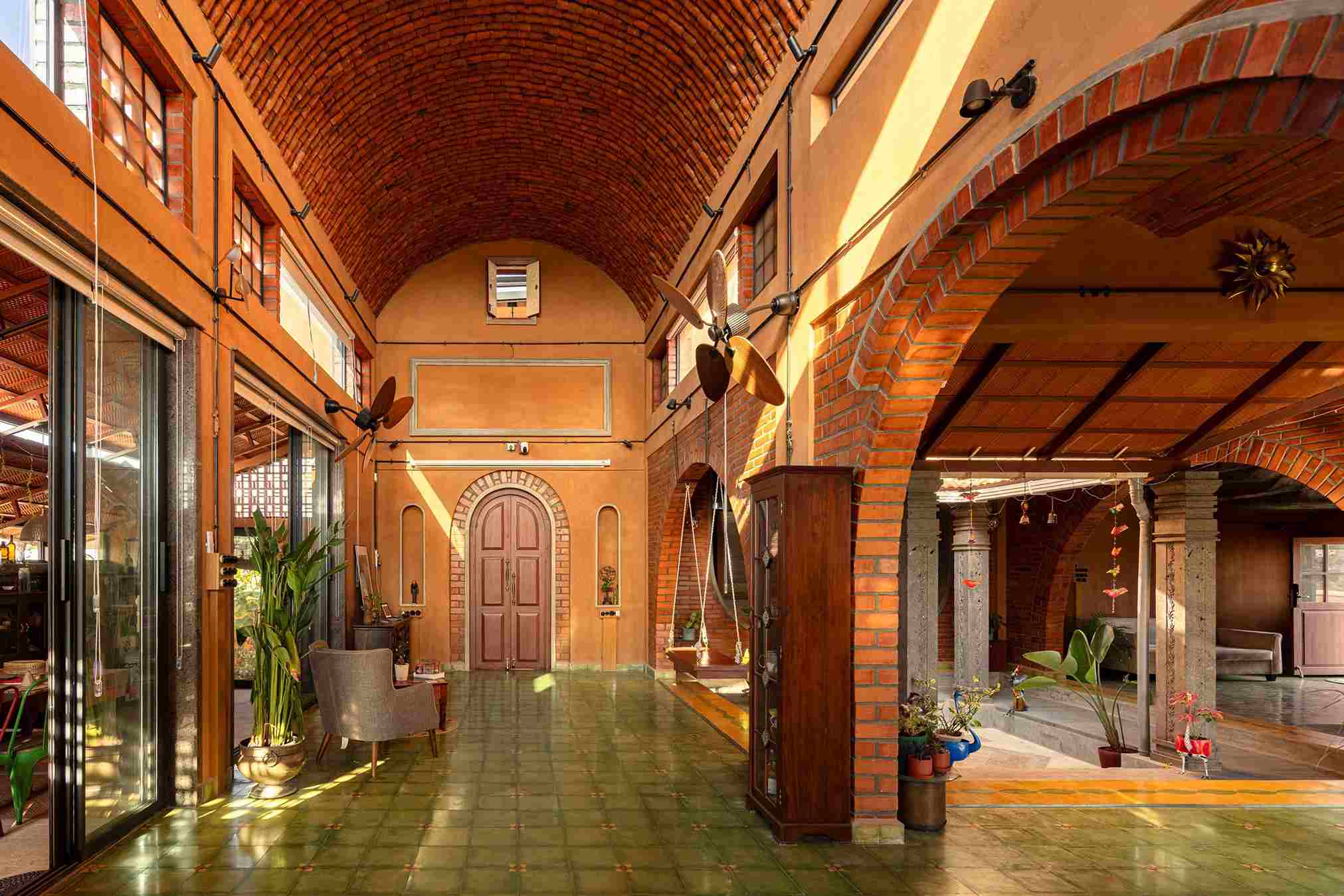
Opening off an entrance foyer to the south is a generously proportioned, double-height living, kitchen and dining area, whose vaulted ceiling soars above and whose clerestory windows draw daylight deep into the interior.
Connecting the ground floor to the upper levels is one of the most sculpturally compelling elements of the house comprising of a cantilevered stone staircase constructed from rough-cut salvaged granite boulders. The upper surfaces of the treads were polished smooth, while their undersides were deliberately left in their raw, unfinished state to create a contrast that would make visible the dual nature of the stone as both geological matter and crafted object. According to the studio, the staircase pays the ultimate homage to the Deccan Plateau by creating the visual act of ascending it as an experience of moving through the raw geological strata of Hyderabad itself.
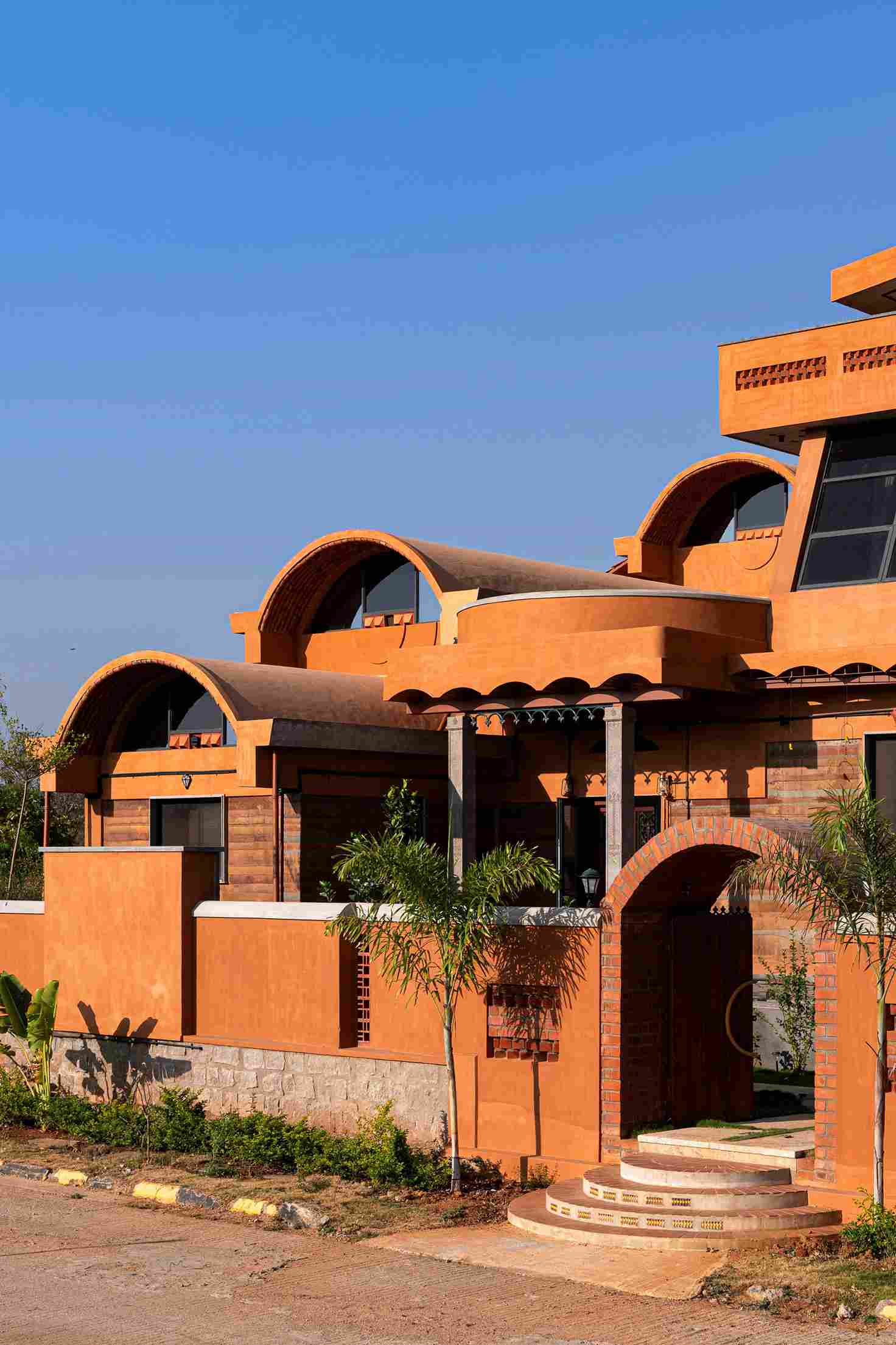
The rammed earth used in the thick boundary walls was composed of a mixture of soil excavated during construction and waste material sourced from a nearby quarry.
The entrance is intimate and grounded, flanked by exposed rammed earth walls, before opening dramatically into the double-height living hall. From there, the journey continues upward through the eastern wing, where twin studies are stacked vertically to form what the studio envisions as a library, before arriving finally at the master suite positioned at the apex of the home. This uppermost space is the most privileged in the house capturing the best natural cross-breezes and offering views over a neighbouring park.
Image credit: Vivek Eadara