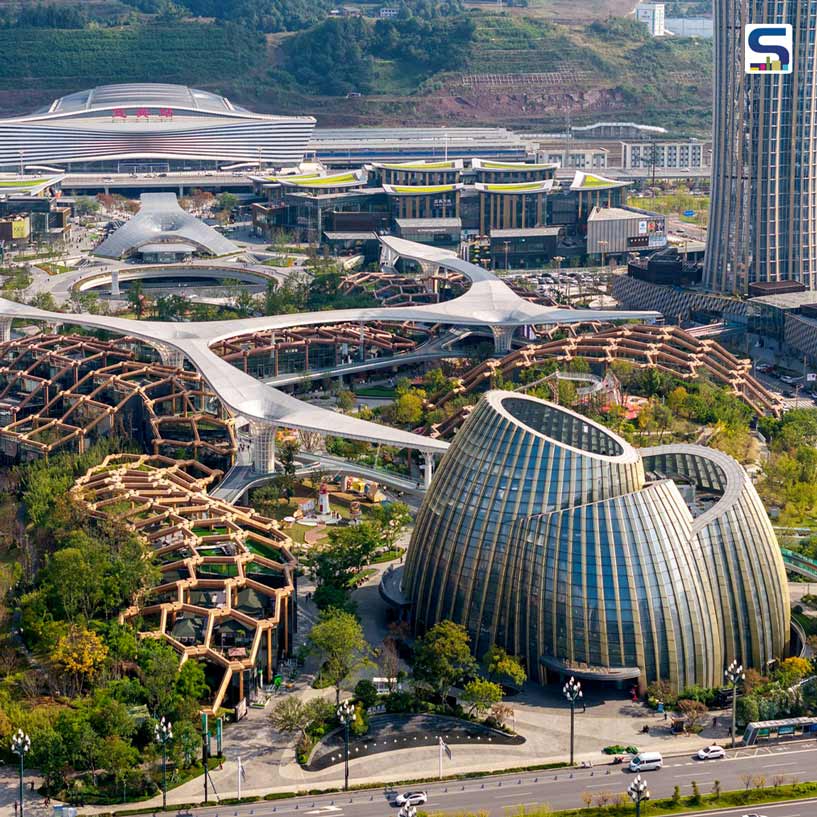
American architecture practice Pelli Clarke & Partners recently completed an expansive urban district in Yibin, a city in southern China’s Sichuan Province, drawing deeply on the region’s natural landscape and cultural identity. Positioned to the west of the recently inaugurated Yibin high-speed railway station, the car-free district spans an impressive 836,000 sqm and brings together a major shopping complex, a digital art museum and four mixed-use towers, all arranged around a generous central park. Know more about it on SURFACES REPORTER (SR).
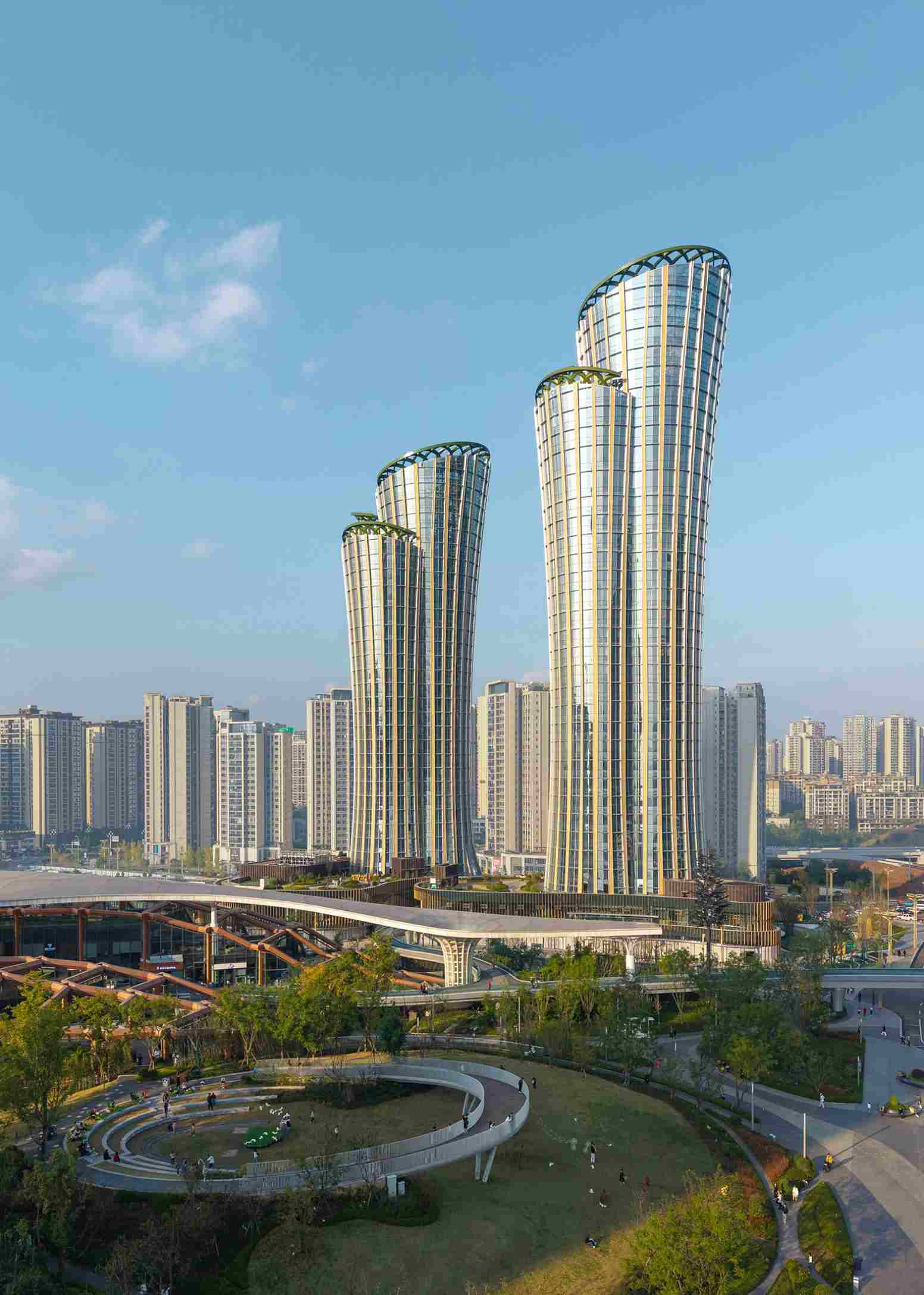
Flanking the park on either side are two symmetrical pairs of towers, one set rising to 23 storeys and the other to 33.
A new cultural and commercial hub
The masterplan for the city was reportedly conceived as a direct response to the distinctive character of its surroundings. Yibin’s rolling, hilly terrain and its proximity to the Shunan Bamboo Forest, which is recognised as China’s largest and oldest bamboo national park, provided the foundational inspiration for the design. Pelli Clarke & Partners translated these natural references into architectural language throughout the development, from the broad strokes of the masterplan down to the finer details of individual structures.
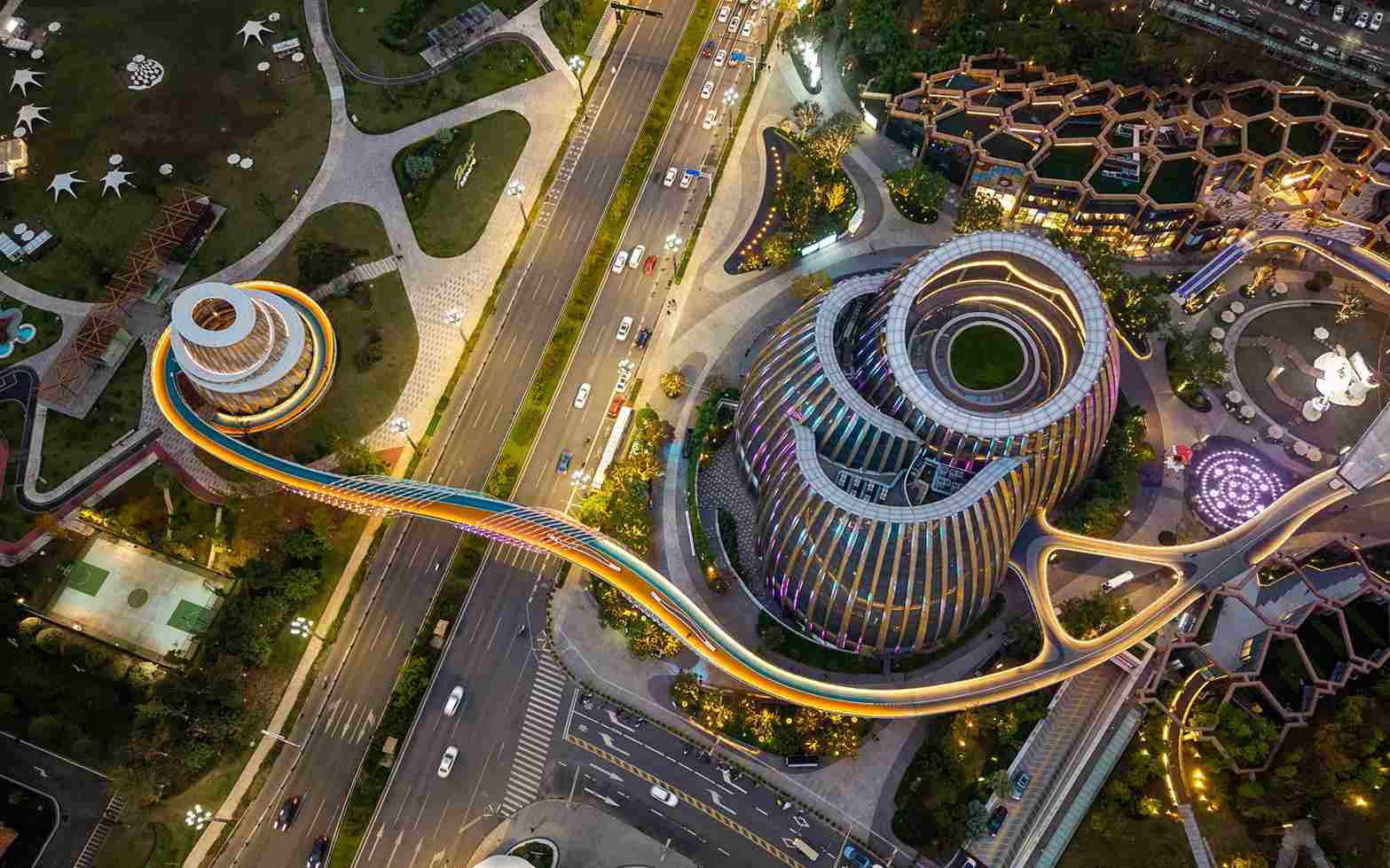
Yibin’s rolling, hilly terrain and its proximity to the Shunan Bamboo Forest, which is recognised as China’s largest and oldest bamboo national park, provided the foundational inspiration for the design.
This philosophy is expressed most vividly in the central park, which serves as the connective spine of the entire district and unfolds across three distinct levels. At ground level, pedestrian paths weave alongside waterways, creating a calm and navigable base for the development. An elevated walkway system occupies the first level above, offering a secondary layer of movement through the district. Crowning both of these is an elaborate canopy structure, which appears in a sweeping web of white, belt-like forms that provide the much-needed shade to pedestrians during the intense heat of summer. These canopies extend well beyond the boundaries of the park itself, reaching out to connect the primary shopping areas and the towers that anchor the edges of the district. Across the tops of the retail pavilions within the park, a series of undulating trellis structures follow the natural contours of the land, their horizontal, interconnected design drawn directly from the behaviour of bamboo root systems as they spread beneath the surface to link groves above ground.
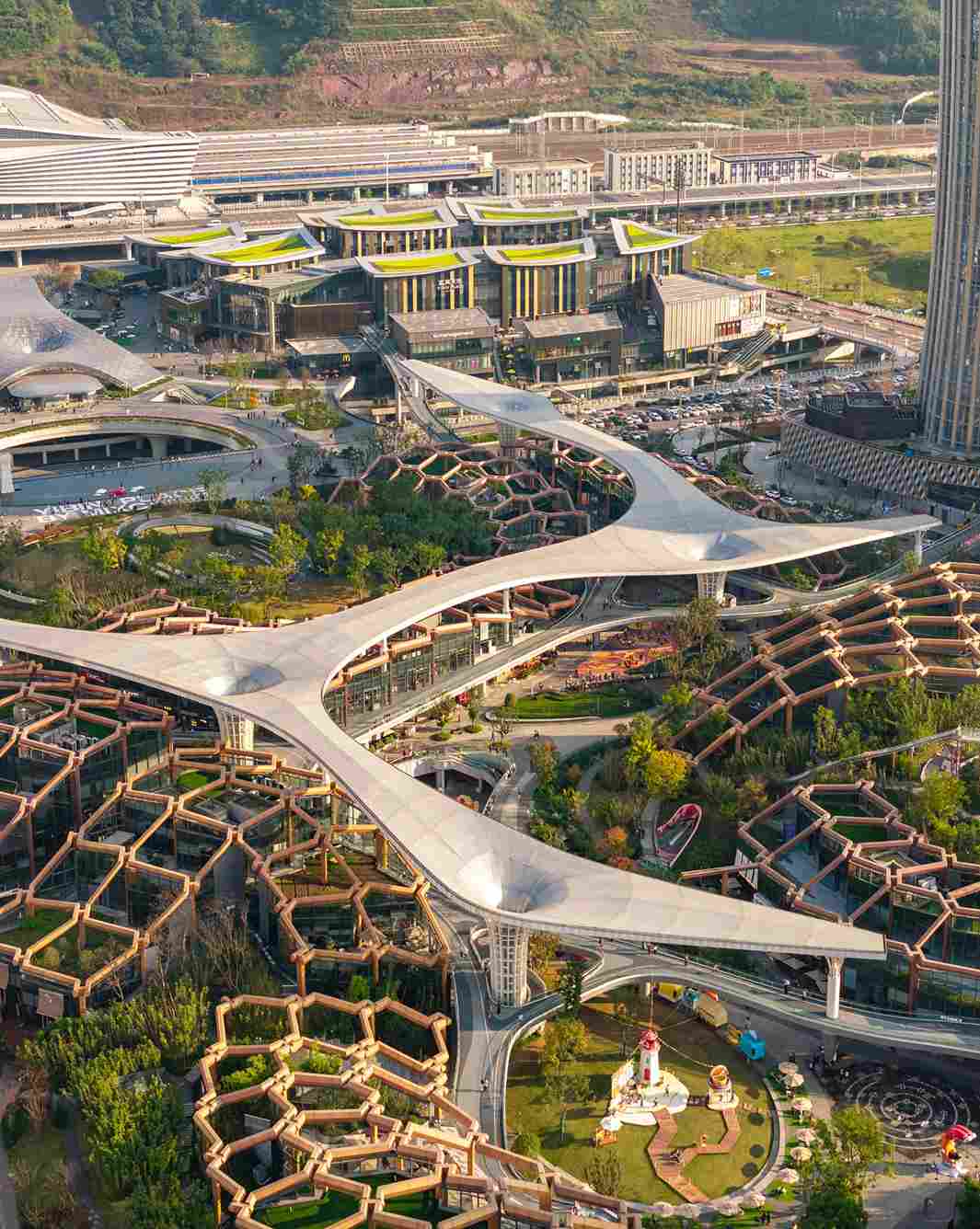
Positioned to the west of the recently inaugurated Yibin high-speed railway station, the car-free district spans an impressive 836,000 sqm and brings together a major shopping complex, a digital art museum and four mixed-use towers, all arranged around a generous central park.
Culturally rooted urban district
At the eastern end of the park, positioned immediately in front of the railway station, stands Yibin Place by MIXC, the development’s principal retail destination. This shopping complex integrates an enclosed indoor mall with a collection of freestanding pavilions arranged to recreate the experience of strolling through a traditional street-level shopping environment alongside the park. The pavilions are distinguished by their sweeping green roofs, a design choice inspired by the organic, curvilinear form of fallen bamboo leaves, thus reinforcing the botanical thread that runs through the entire project.
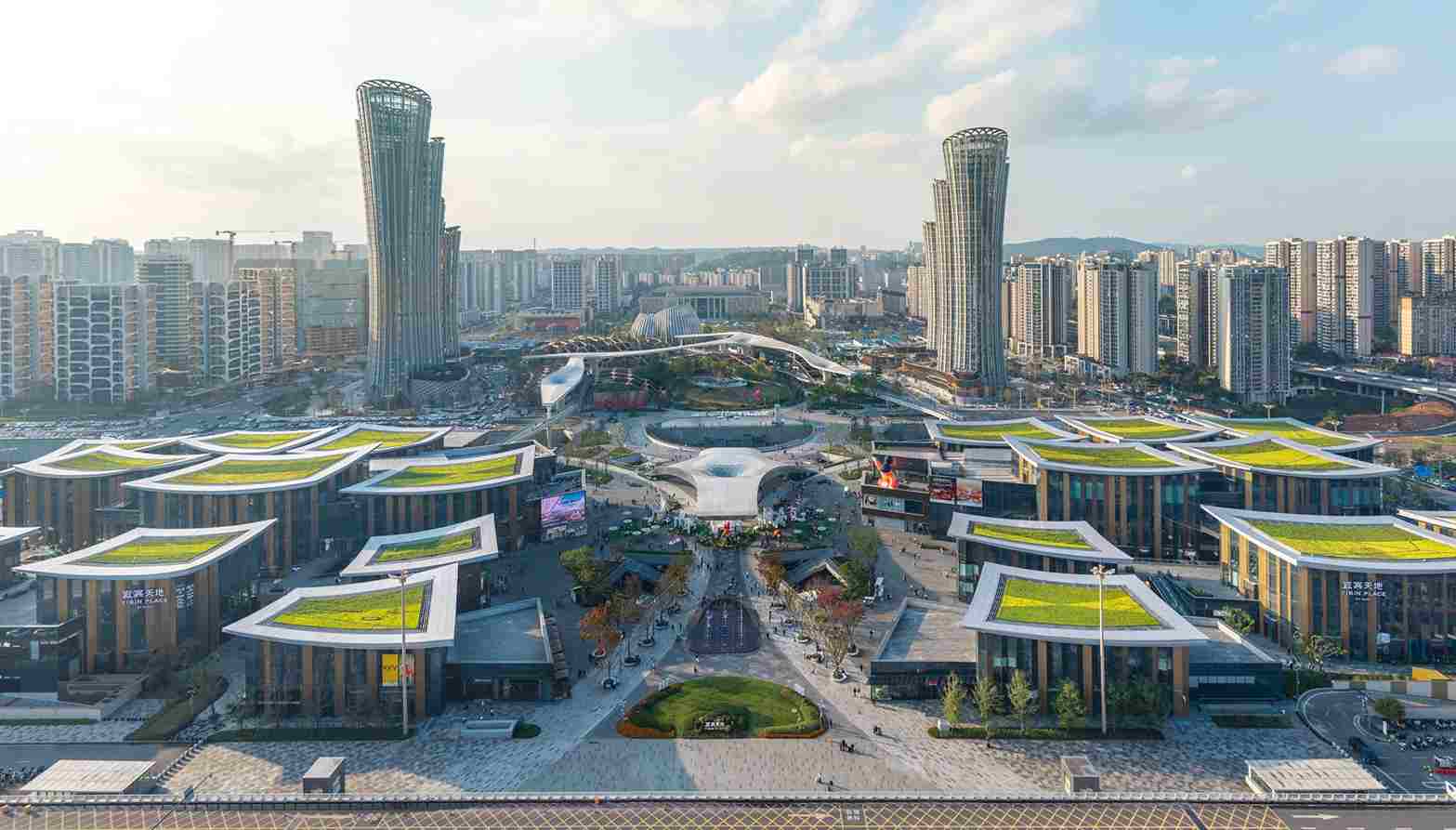
The pavilions are distinguished by their sweeping green roofs, a design choice inspired by the organic, curvilinear form of fallen bamboo leaves, thus reinforcing the botanical thread that runs through the entire project.
At the far end of the park, a digital art museum anchors the western terminus of the development. Designed in collaboration with the Sichuan Provincial Architectural Design and Research Institute, the museum is defined by its dramatic sculptural exterior, which is clad entirely in aluminium panels. This shell-like facade encloses large, column-free exhibition spaces within, giving curators and artists the freedom to configure the interior in whatever manner the programming demands.
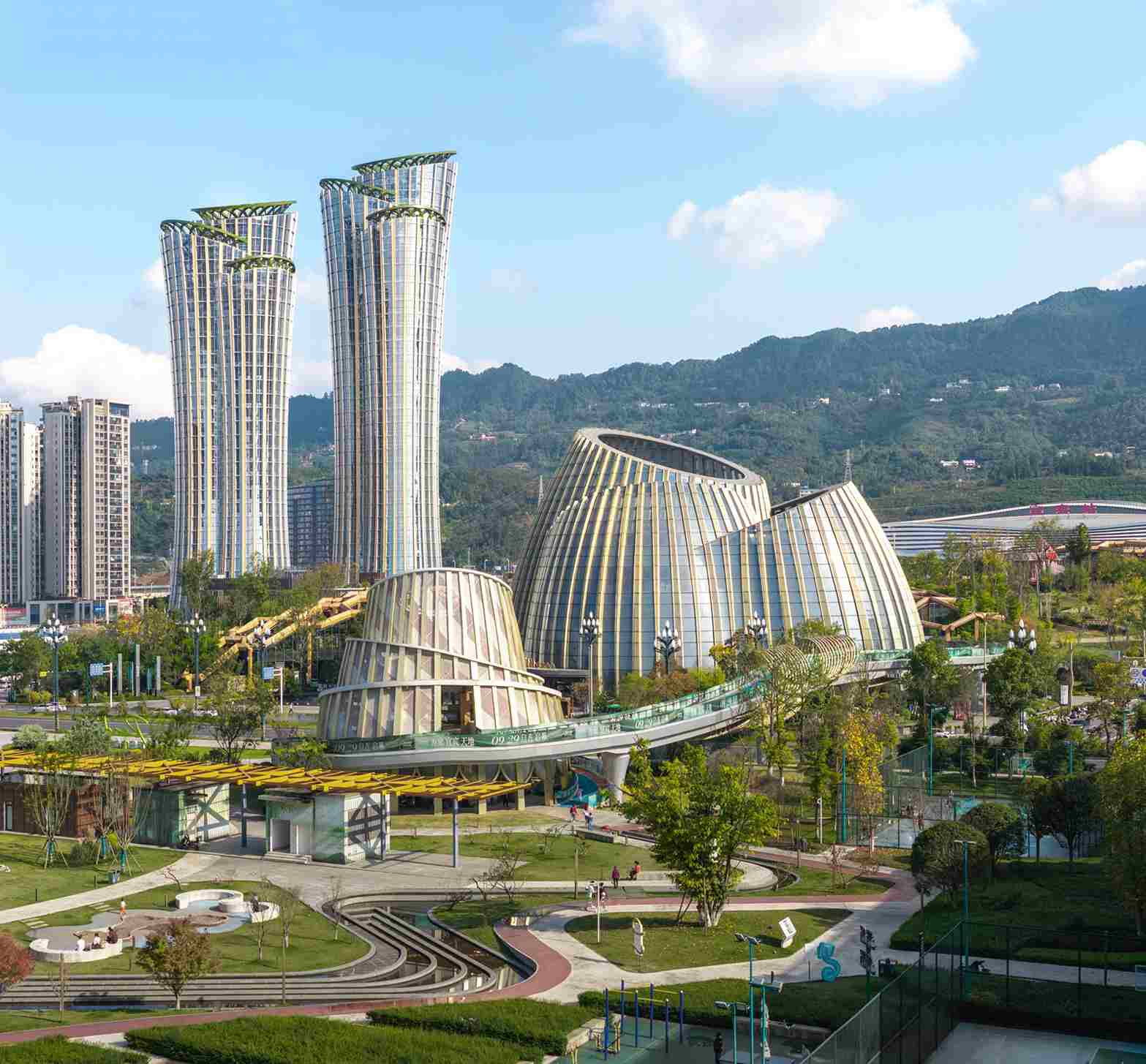
This shell-like facade encloses large, column-free exhibition spaces within, giving curators and artists the freedom to configure the interior in whatever manner the programming demands.
Flanking the park on either side are two symmetrical pairs of towers, one set rising to 23 storeys and the other to 33. The facades of these towers were designed with curvature and vertical articulation intended to evoke the fluid, expressive strokes of bamboo-style calligraphy, thereby bringing a layer of cultural symbolism to the skyline of the district.
Image credit: Zhang Chao