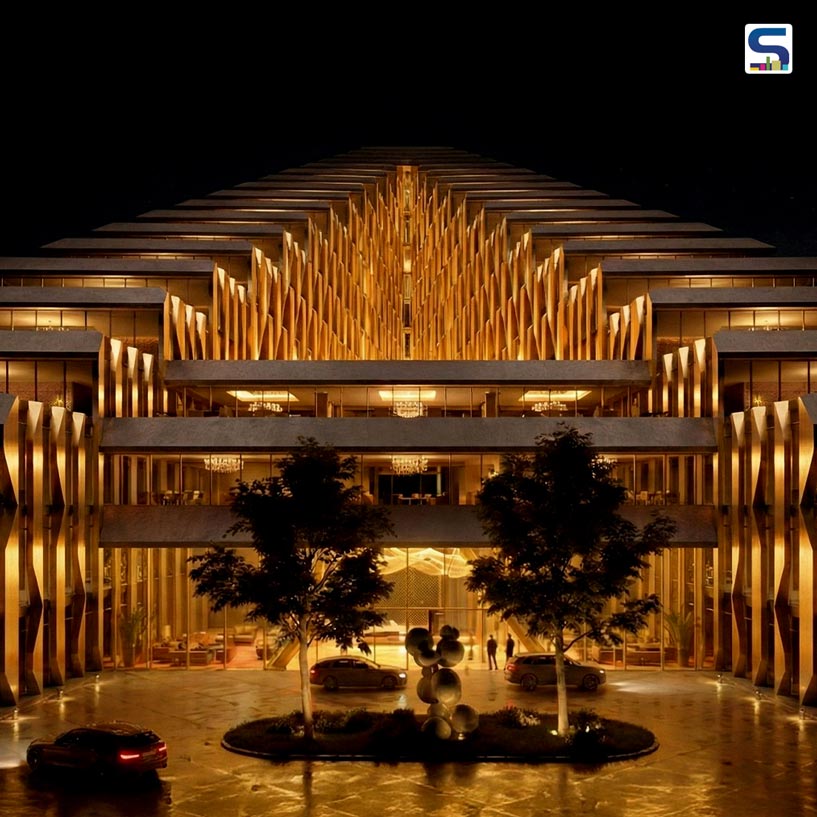
Architecture practice SOM recently revealed designs for two distinctive stepped, wedge-shaped towers intended to serve as the defining landmark of Alatau, a new city currently taking shape in south-eastern Kazakhstan. The project, known as the Alatau Iconic Complex and Gateway District, is planned just beyond the boundaries of Almaty and will bring together a soaring 272m skyscraper accommodating both office and residential functions, alongside a comparatively lower but no less significant 80m luxury hotel. Know more about it on SURFACES REPORTER (SR).
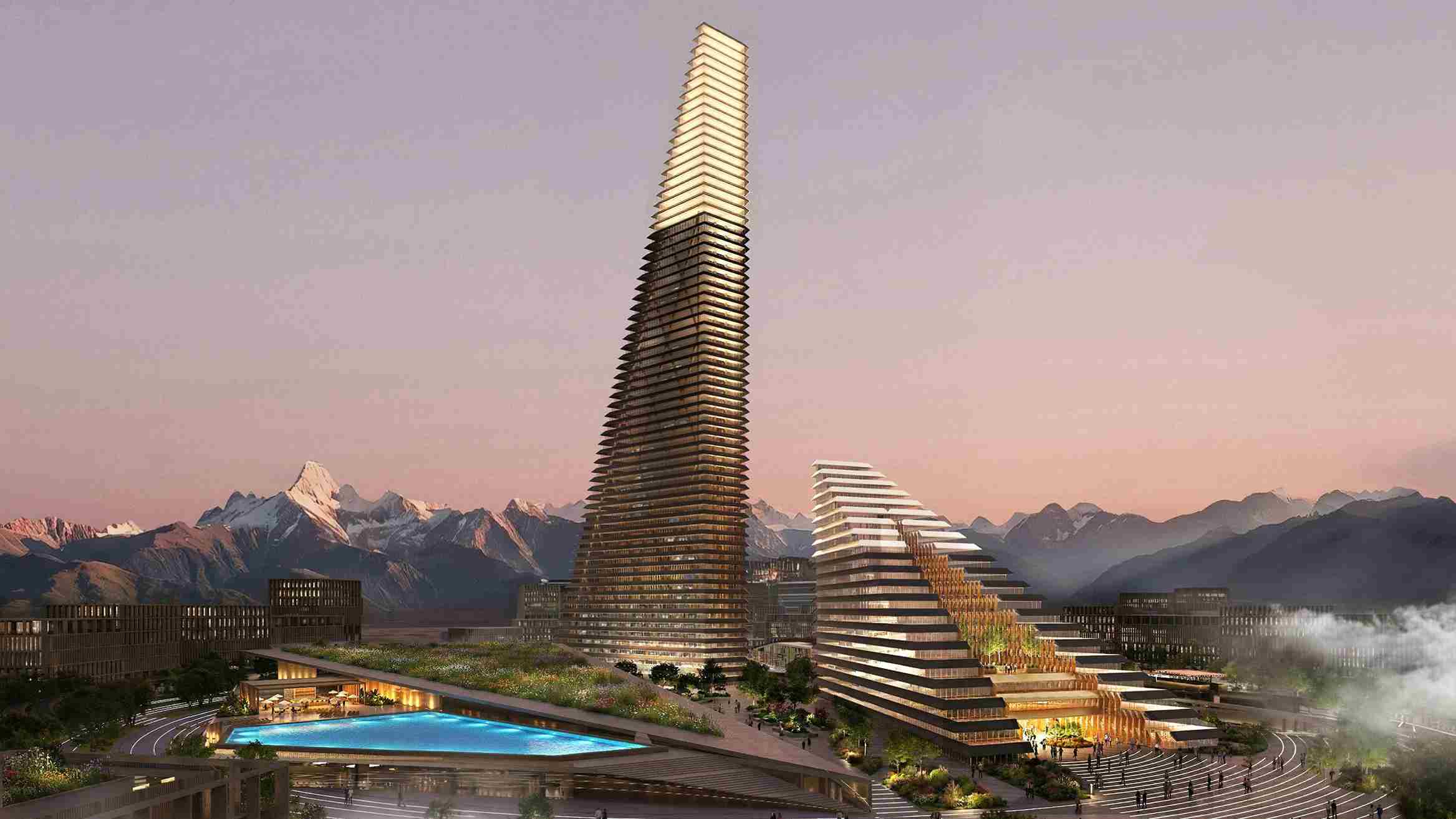
At every level, the buildings are lined with external terraces that further reinforce this connection to the mountainous terrain.
A skyscraper and luxury hotel
Reportedly, the taller of the two structures is poised to become the tallest building in the region upon completion. SOM received the commission with a clear brief, to design an economic and administrative nucleus for this emerging city, which, when fully realised, will extend across an extraordinary 88,000 hectares divided into four districts. Alatau is envisioned not merely as a local urban expansion but as an international hub for the Central Asian region, positioning Kazakhstan as a significant player on the broader global stage.
The design language of both towers draws directly from the dramatic natural topography that surrounds the site. The nearby Trans-Ili Alatau mountain range, which is a sweeping 350km expanse of valleys, glaciers and layered geological formations, served as the primary source of inspiration. SOM translated the stratified, stepped character of this landscape into architectural form, giving the towers their distinctive terraced profiles. At every level, the buildings are lined with external terraces that further reinforce this connection to the mountainous terrain, creating a visual dialogue between the built environment and the natural world beyond.
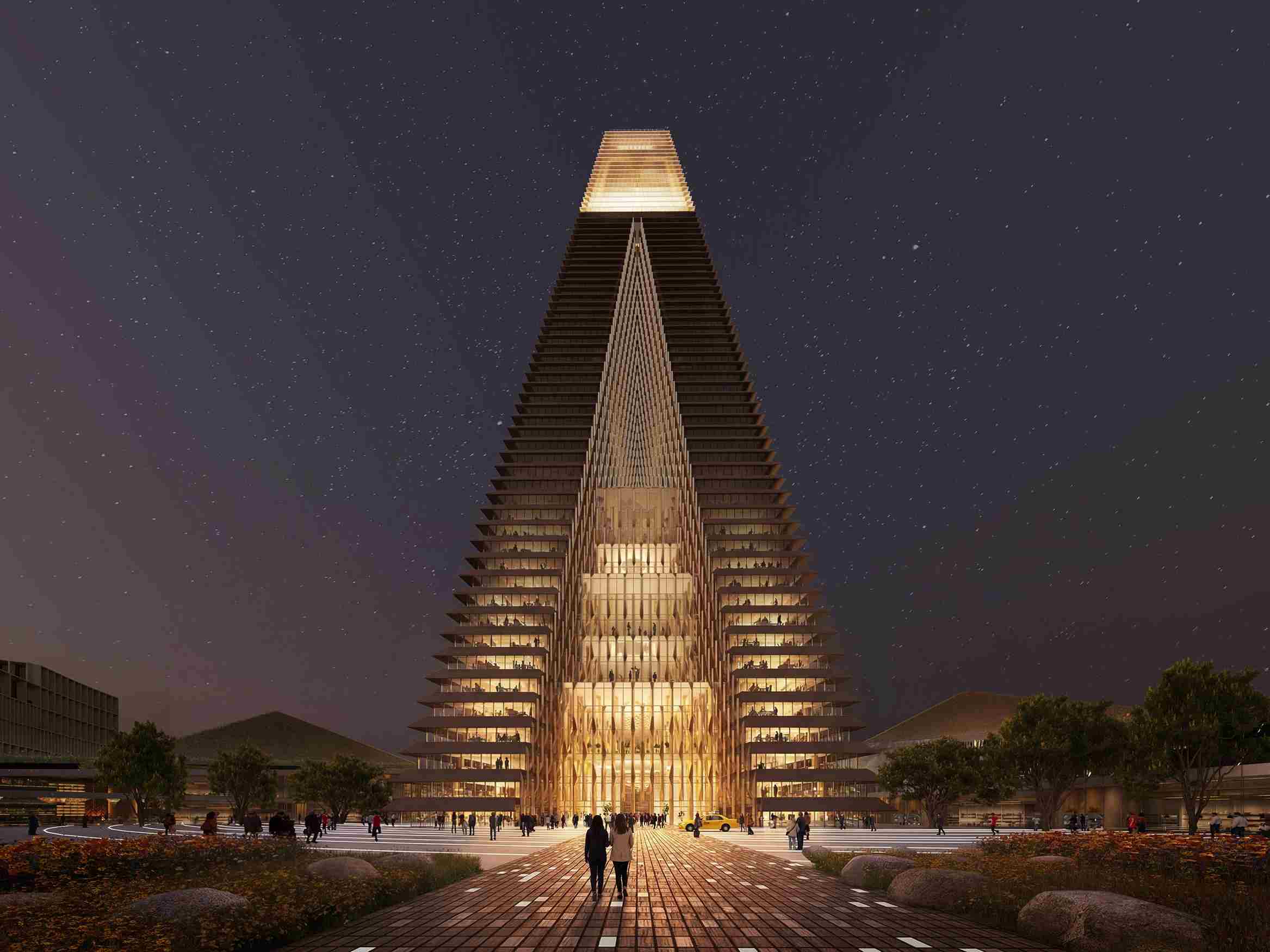
The proposal, which encompasses a total floor area of 276,800sqm, features largely glazed facades on both towers.
Redefining the urban landscape
The proposal, which encompasses a total floor area of 276,800sqm, features largely glazed facades on both towers. A striking architectural feature common to both structures is the inclusion of large central atria, which serve a dual purpose of drawing natural daylight deep into the interior floor plates and framing panoramic views of the surrounding mountain landscape for occupants within. To address the climatic demands of the region, SOM has also incorporated high-performance facade systems and integrated shading strategies into both buildings, minimising solar heat gain and contributing to the overall energy efficiency of the complex.
At street level, a three-storey podium forms the base of the development, spanning approximately 58,000sqm. This expansive lower structure will house a diverse mix of retail outlets, cultural venues and flexible events spaces, giving the complex a vibrant public-facing dimension that extends its relevance beyond the purely commercial and residential. Complementing the podium, a landscaped public realm at ground level will create an inviting outdoor environment, encouraging activity and engagement at the base of the towers.
Rising above this podium, the skyscraper will contain its mix of offices and residential units, while the adjacent hotel will offer branded residences in addition to its hospitality functions. In both towers, the prominent central openings are designed with stepped glazed fronts and generous external terraces, reinforcing the architectural rhythm that runs consistently through the entire composition and tying the design back to its mountain-inspired origins.
Image credit: SOM