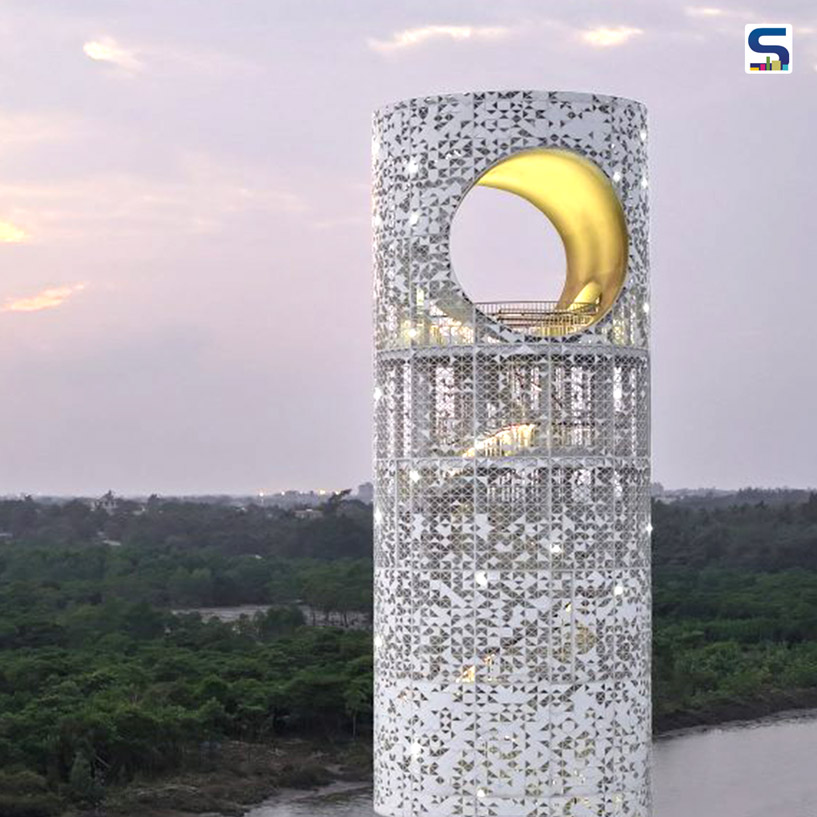
The Architectural Design and Research Institute of South China University of Technology (SCUTAD) envisioned an observation structure situated within the ecologically-sensitive mangrove belt of Hainan Island. Called the Lunar Tower, it is positioned in the Dongzhai Harbor Mangrove Natural Reserve Area in eastern Haikou, where the project stands within China’s first wetland type nature reserve that is dedicated to the preservation of mangrove forests. Within this protected ecological zone, the tower has been conceived not just as a lookout point but as an architectural gesture that reinforces the bond between people and nature while also supporting scientific research, environmental monitoring and passive recreation. Know about this observation point on SURFACES REPORTER (SR).
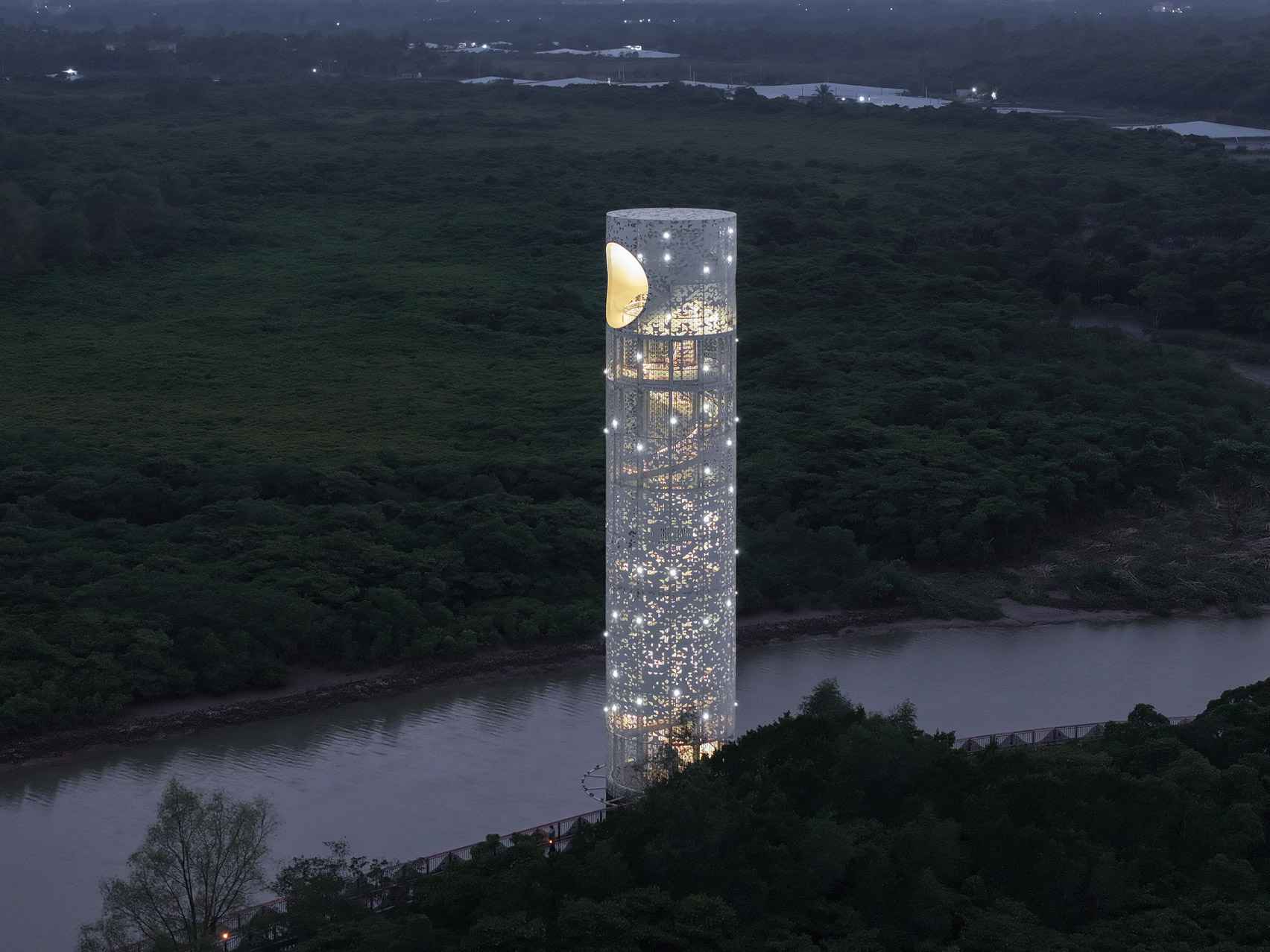
Rising 33.5m above, the Lunar Tower takes the form of a sleek cylindrical volume measuring approximately 6.5m in external diameter.
Rising 33.5m above, the Lunar Tower takes the form of a sleek cylindrical volume measuring approximately 6.5m in external diameter. SCUTAD designed the tower with the intention of capturing the quiet and serene presence of the moon. The moon is considered as an element that is deeply associated with cycles of nature and tides that also shape mangrove ecosystems. At the tower’s crown, a large circular aperture is carved out, echoing the image of a full moon. Inside this circular opening, the geometry thins into a delicate crescent-like profile, creating a subtle visual metaphor of a silver moon resting within the cylindrical form. This sculptural gesture defines the identity of the tower, thereby enabling visitors to experience the reserve through an architectural frame.
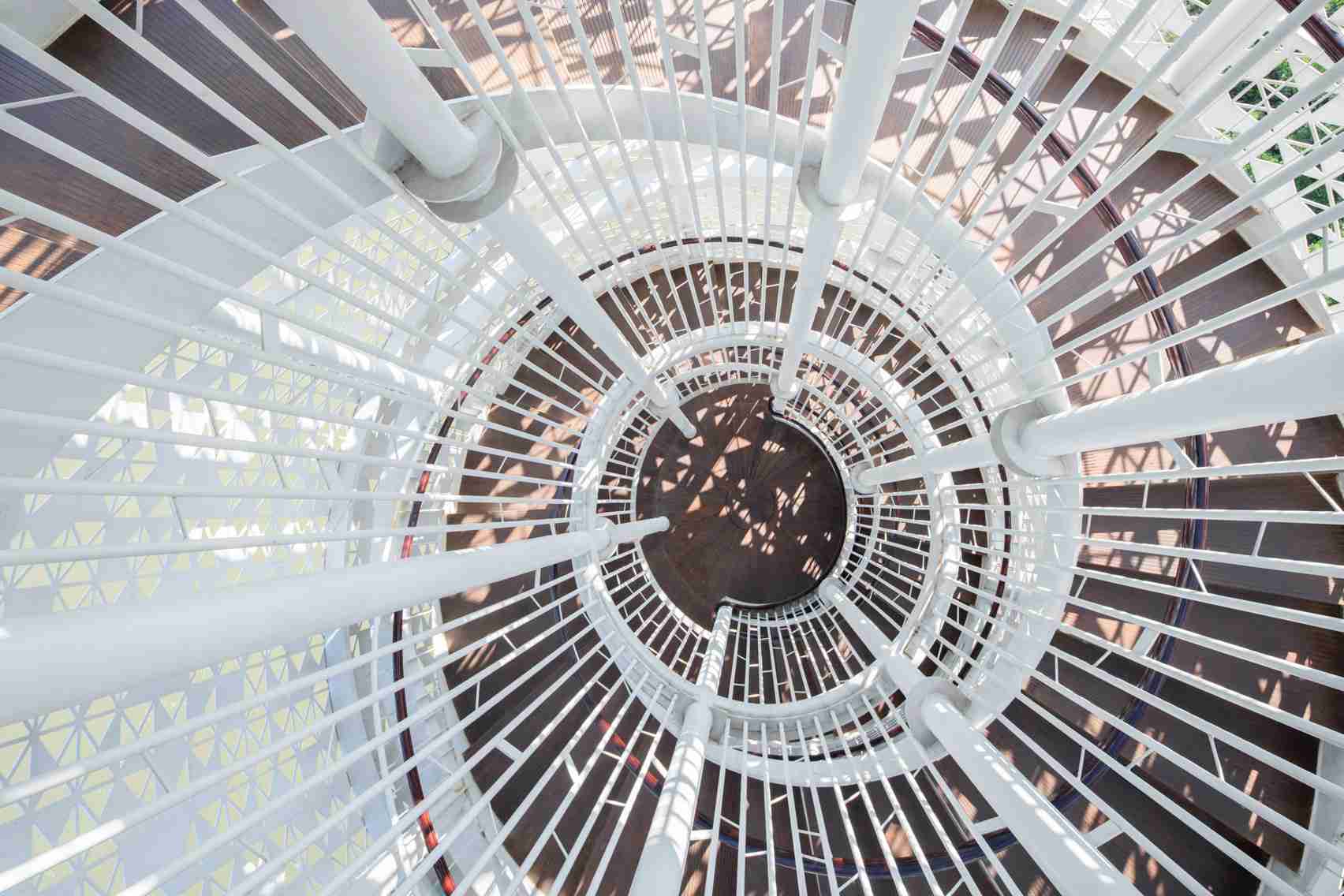
At the core of the tower, a spiralling staircase leads to three distinct observation platforms placed at different heights.
The facade of the tower employs low-reflective white aluminium panels arranged with perforations inspired by the organic shapes of mangrove leaves. This perforated skin not only gives the tower a textured, shimmering appearance but also helps reduce glare and visual disturbance within the habitat. The play between light, shadow and pattern becomes especially prominent at night through the project’s sensitive lighting design. Rather than brightly illuminating the structure, which could disturb wildlife, SCUTAD deliberately limited internal lighting and highlighted only the topmost viewing platform. Dotted lighting on the facade creates a subtle constellation-like effect, giving the impression of stars surrounding a luminous moon.

The facade of the tower employs low-reflective white aluminium panels arranged with perforations inspired by the organic shapes of mangrove leaves.
Visitors enter the tower through a ground level foyer positioned at the highest tidal point of the riverbank, ensuring minimal disruption to the natural ebb and flow of the ecosystem. At the core of the tower, a spiralling staircase leads to three distinct observation platforms placed at different heights. The first platform, located 12m above ground, offers close views of the mangrove forest and serves as an ideal vantage point for watching migratory bird activity. Higher up, at 24m, a long rectangular cut-out forms the second platform, opening up vistas that extend beyond the forest to neighbouring villages. At the summit, the circular rooftop platform provides panoramic views that stretch across the sweeping mangrove canopy, the distant urban skyline and the expansive river merging with the sea.

The first platform, located 12m above ground, offers close views of the mangrove forest and serves as an ideal vantage point for watching migratory bird activity.
Recognising the vulnerability of migratory birds and the fragile mangrove ecosystem, the architects introduced a deliberate buffer zone between the internal staircase and the exterior facade. This spatial separation reduces acoustic and visual disturbance caused by visitor movement. Structurally, the tower is designed to withstand the region’s extreme weather conditions, particularly typhoon-level winds. The frame consists of 18 parallel steel pipe columns on each level, strengthened by staircase ribs and circular ring beams. The steel pipes below the first viewing platform are filled with C40 concrete to enhance the structure’s ability to resist level 15 typhoons, which are among the most severe.
Image credit: Wu Sitong