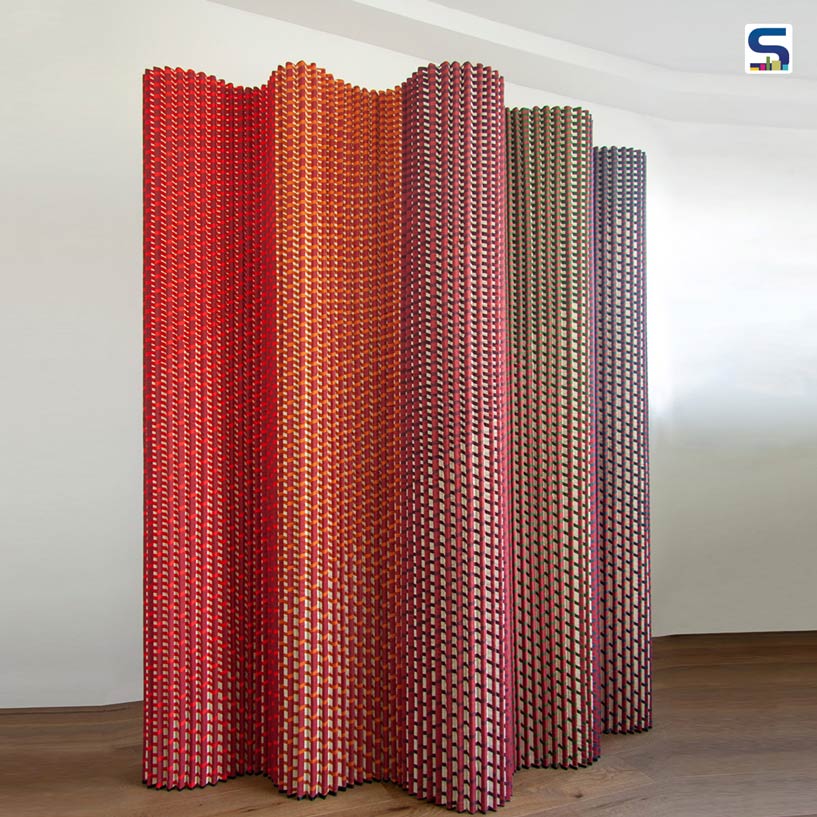
Dutch design studio Luis Marie has reimagined traditional pleating techniques to create an innovative acoustic room divider made entirely from textiles that is strong enough to stand independently. Named Plissade, the piece is described by the studio as the first ever all textile room divider, merging craftsmanship with material innovation to rethink how fabric-based structures can function in interior spaces. SURFACES REPORTER (SR) showcases how traditional fabric techniques, when combined with sustainable materials and contemporary design thinking, can expand the possibilities of textile architecture.
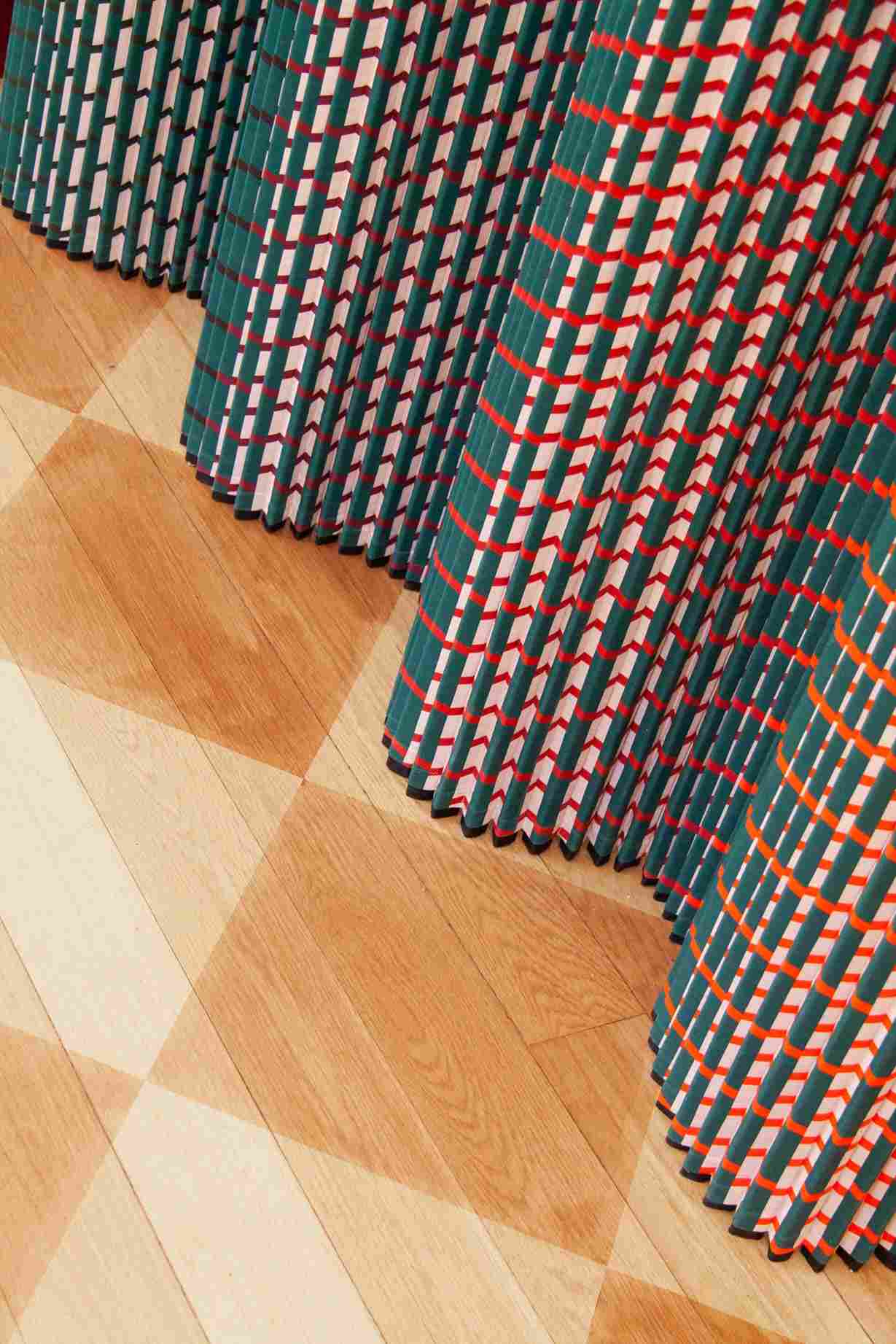
They fold into a sequence of hollow, diamond-shaped tubes that provide both structure and acoustic performance.
Plissade was conceived by studio founders Fenna van der Klei and Patricio Nusselder, who drew inspiration from the age old art of textile pleating. Traditionally used to shape garments and add volume, pleating involves folding fabric into precise geometric patterns. Luis Marie applied this technique in a new structural context, folding textiles not just for aesthetics but to create stability, sound absorption and sculptural presence.
The divider consists of two distinct textile layers engineered to work together. The inner layer is made from felt produced using post-consumer polyester clothing, giving new life to discarded garments. The outer layer features a woven fabric crafted from recycled polyester yarns, maintaining durability while advancing the project’s sustainability goals. Despite being fully textile-based, Plissade is able to stand freely without frames or additional supports. This is achieved through a binder-free and adhesive-free stiffening technique that enables both materials to be pleated into a compact, load-bearing form.
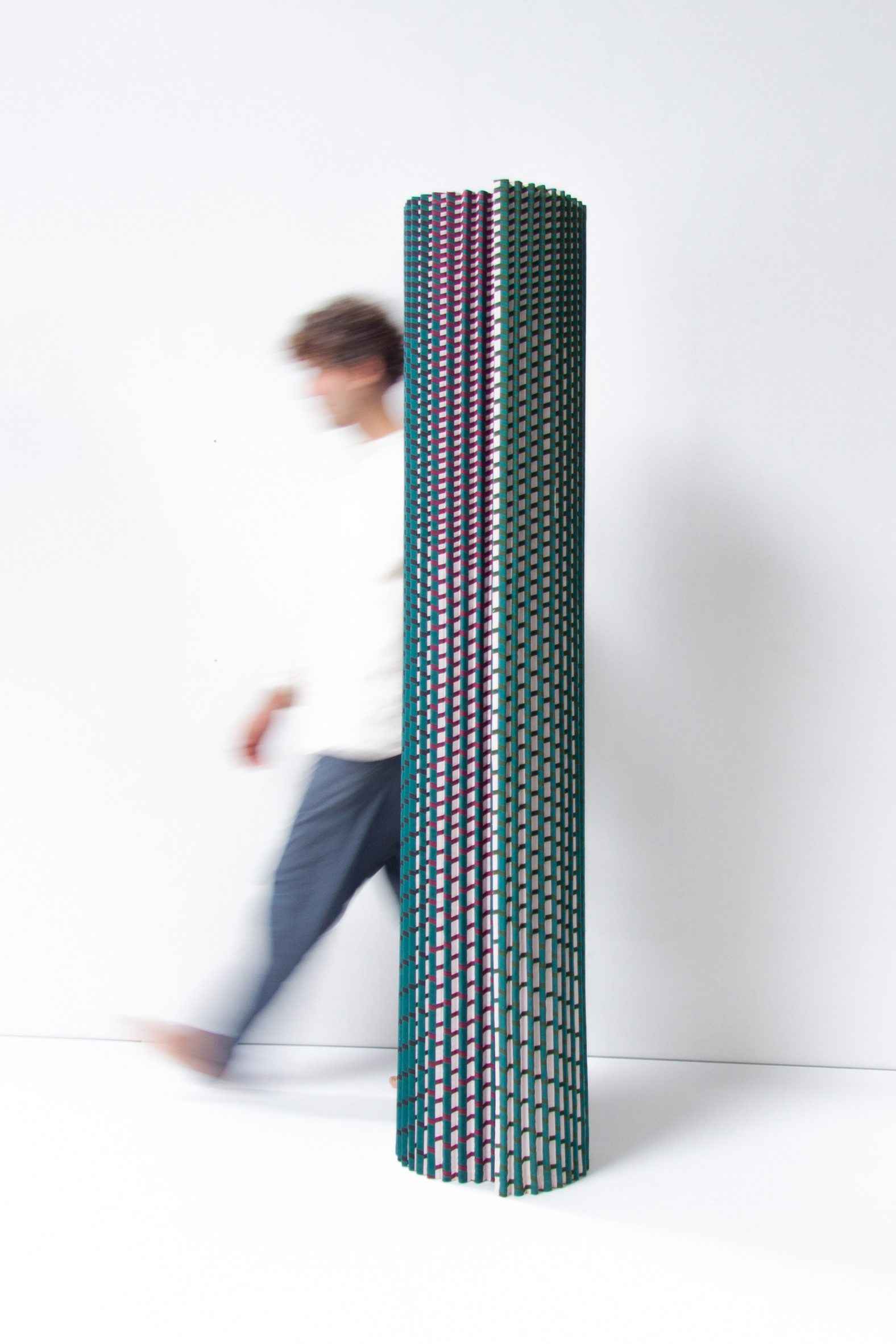
Plissade is able to stand freely without frames or additional supports.
A key innovation lies in how the two layers interlock. They fold into a sequence of hollow, diamond-shaped tubes that provide both structure and acoustic performance. These tubular forms also allow the divider to be easily taken apart at the end of its life, reinforcing the design’s circularity. According to Luis Marie, the construction method borrows techniques from the fashion industry and automotive upholstery but applies them in a novel architectural context. By avoiding glues, resins or rigid inserts, the piece remains fully recyclable and simple to disassemble, supporting closed-loop material use.
To further reduce environmental impact, only the outer textile is dyed and even then through digital printing, which minimizes water consumption and chemical waste. The final product is intentionally lightweight, modular and foldable, allowing it to adapt to various interiors. Its acoustic qualities make it suitable for open-plan homes, offices, studios and shared spaces where sound control and flexibility are essential.
Image credit: Luis Marie