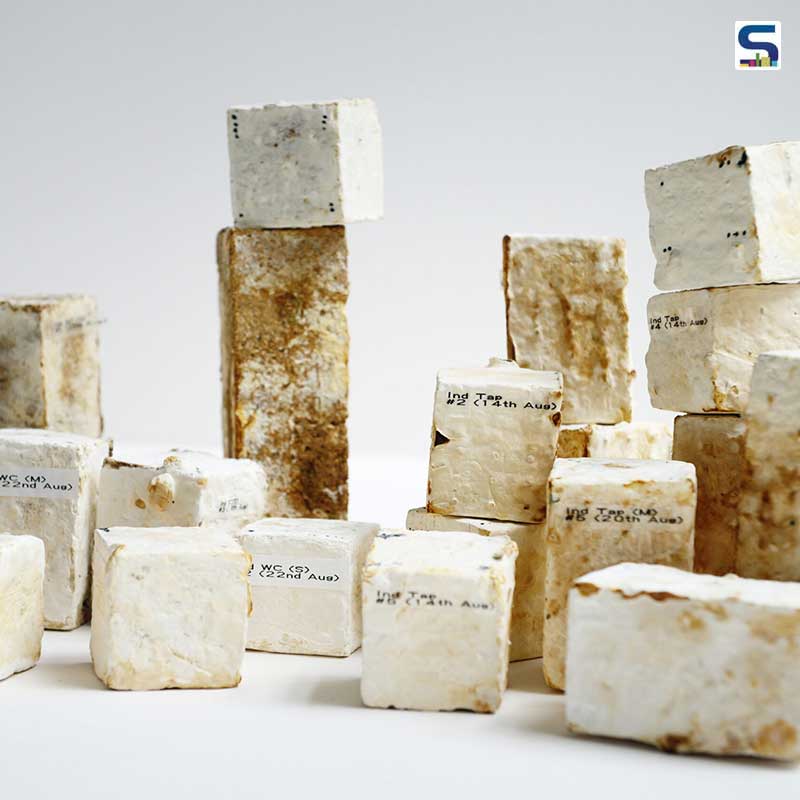
Fungal biomaterials are not only becoming popular but also in demand in the field of architecture and design on account of their sustainable properties. Mycelium is a stabilizing compound sourced from agricultural waste. David Cheshire, Sustainability Director, AECOM suggests that mycelium can be used to insulate and fire-proof buildings while sequestering carbon. He further informed that the biomaterial, which forms the root systems of fungi, is a ‘fantastic thing.’
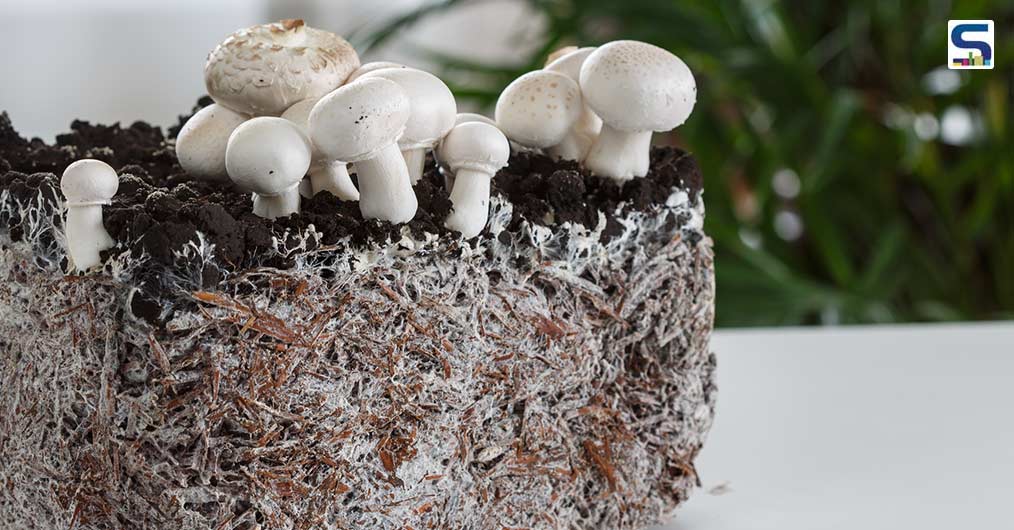 Top: Image credits: Change Lab; Above: Image credits: Arch Daily
According to sustainability expert Cheshire, it is naturally fire retardant and possesses better insulation properties than most standard insulation. Reportedly, the material is sequestering carbon and is grown on waste from the agriculture industry. Mycelium is one of the few materials that allows itself to inspire and transform the architectural design. He strongly advocates that mycelium material can be part of the solution to carbon-negative buildings.
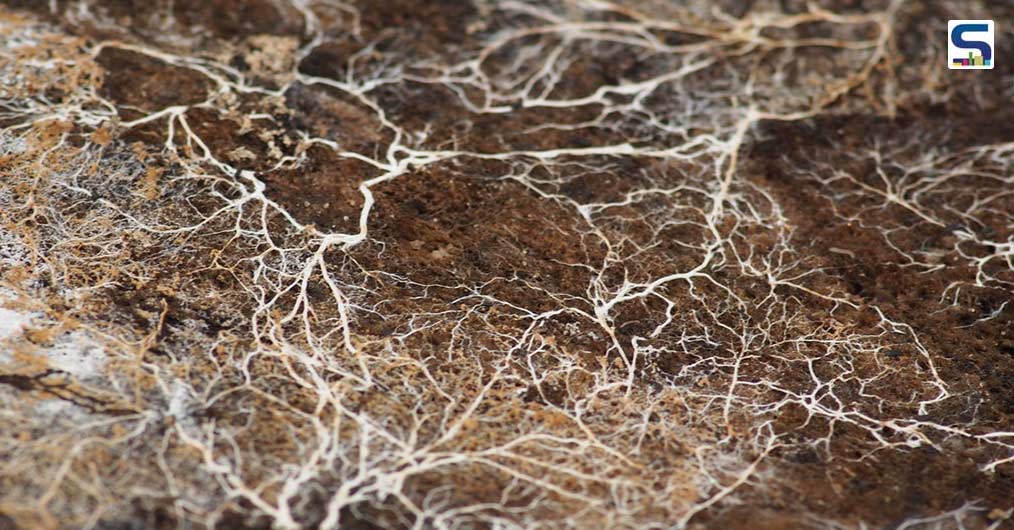 Image credits: The Exploded View
Mycelium grows in soil or on substrates such as wood in thread-like shoots known as hyphae. These hyphae can be further formed into hard masses of sclerotia – a vegetative part of fungi where the visible part (such as a mushroom) is the fruit. According to studies, mycelium feeds on low-grade agricultural waste, sequestering the carbon that is stored in the biomass, which would otherwise be burned or composted by returning the carbon to the atmosphere. Furthermore, mycelium is biodegradable and non-toxic and provides as a good insulating, acoustic and fire performance. It grows faster and is cheap to produce in custom-made bioreactors where sclerotia can be grown in moulds of products such as lamps and packaging. It can further be turned into faux leather and can be used to make handbags and clothes.
That said, there are a wide range of mycelium composite materials that are reportedly under development. According to scientific research paper on the material, the material can be used to replace foams, timber and plastics for applications such as insulation, door cores, panelling, flooring, cabinetry and other furnishings.