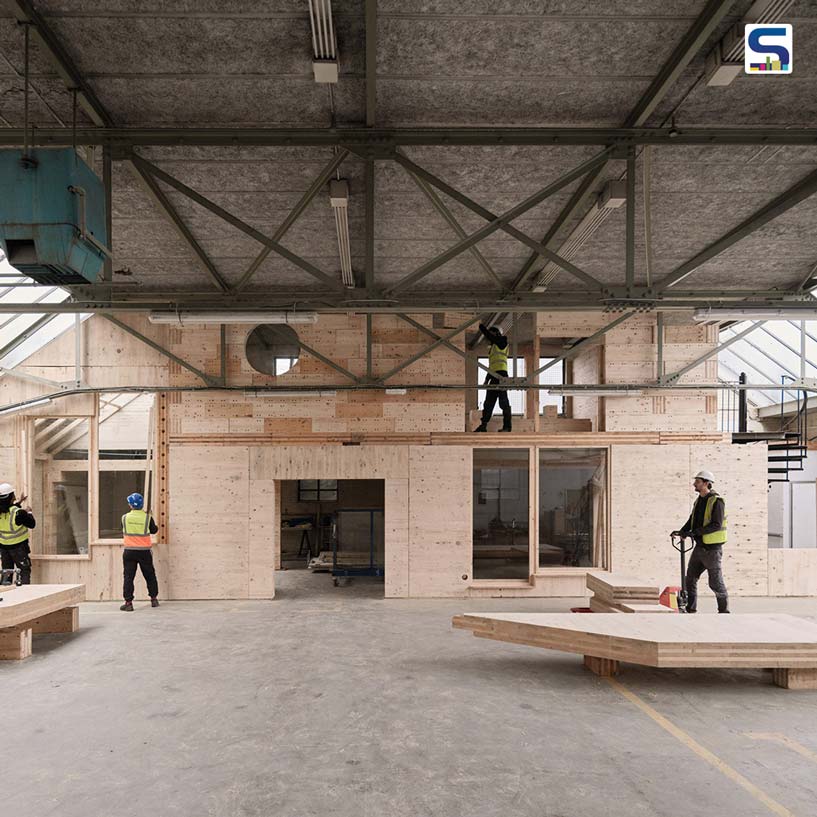
Three design studios, namely Yes Make, Resolve Collective and Material Cultures, joined forces to transform a long, neglected warehouse in London into Tipping Point East, a groundbreaking facility that holds the distinction of being the United Kingdom’s first dedicated circular construction hub. The project has been developed in collaboration with Newham Council and the Greater London Authority, and represents a significant step forward in the effort to redirect construction waste away from landfill and back into productive use across the built environment. Here is a detailed report on SURFACES REPORTER (SR).

The hub includes a community workshop, event and training spaces, an electrical testing facility, a collective office environment, a materials store operated by Resolve Collective and an assembly space capable of accommodating large-scale group construction builds.
The process
The warehouse, located in Newham’s Royal Docks, sat in ruins for nine years before Yes Make took the lead in overhauling it into a fully functional material reuse facility. The aim, according to the studio, was to create a building capable of serving the broader material revolution that Tipping Point East is intended to drive. The interior of the hub has been carefully organised into a series of distinct zones, each designed to facilitate a specific stage of the material sorting and reuse process.
Waste materials entering the facility first pass through initial loading zones before moving into a quarantine area for pre-inspection. They are then subject to a thorough inspection process that includes inventory management and material passporting, a system that tracks and documents materials to support their reintegration into future construction projects. Once cleared, materials are moved into dedicated storage areas specifically designed to prevent contamination from entering the hub.
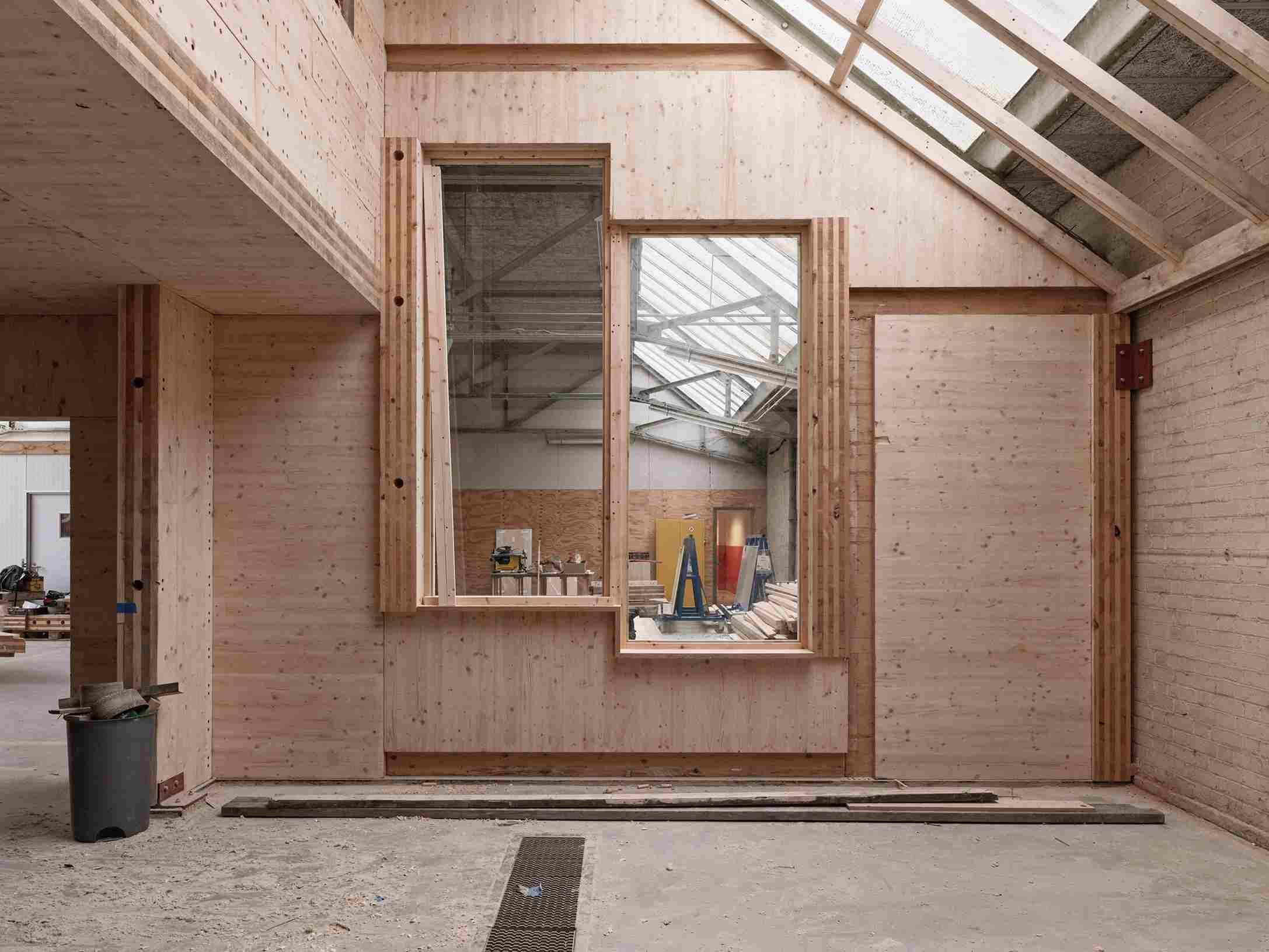
Tipping Point East forms part of the first phase of a wider Circular Economy Village being developed in the Silvertown district of east London.
Recreating the warehouse
The second half of the warehouse is devoted to processing materials in accordance with client requirements. This includes cleaning, respraying, cutting and preparing salvaged components so they are ready for redistribution and reuse in new building projects. Beyond its core logistical function, Tipping Point East also serves as a community resource. The hub includes a community workshop, event and training spaces, an electrical testing facility, a collective office environment, a materials store operated by Resolve Collective and an assembly space capable of accommodating large-scale group construction builds.
According to Yes Make, London alone generates approximately 10 million tonnes of construction waste every year, while construction and demolition activities collectively account for 62 per cent of all waste produced across the United Kingdom. Intercepting this waste stream before it reaches landfill would have a twofold benefit; firstly, it would significantly reduce the carbon footprint of the construction sector, and secondly bring greater stability to the often volatile pricing of building materials.
Tipping Point East forms part of the first phase of a wider Circular Economy Village being developed in the Silvertown district of east London. The hub also aligns with the London Mayor’s ambitious goal of making the capital a zero-carbon city by 2030, positioning it as both a practical facility and a meaningful contribution to one of the most pressing environmental challenges of our time.
Image credit: Henry Woide