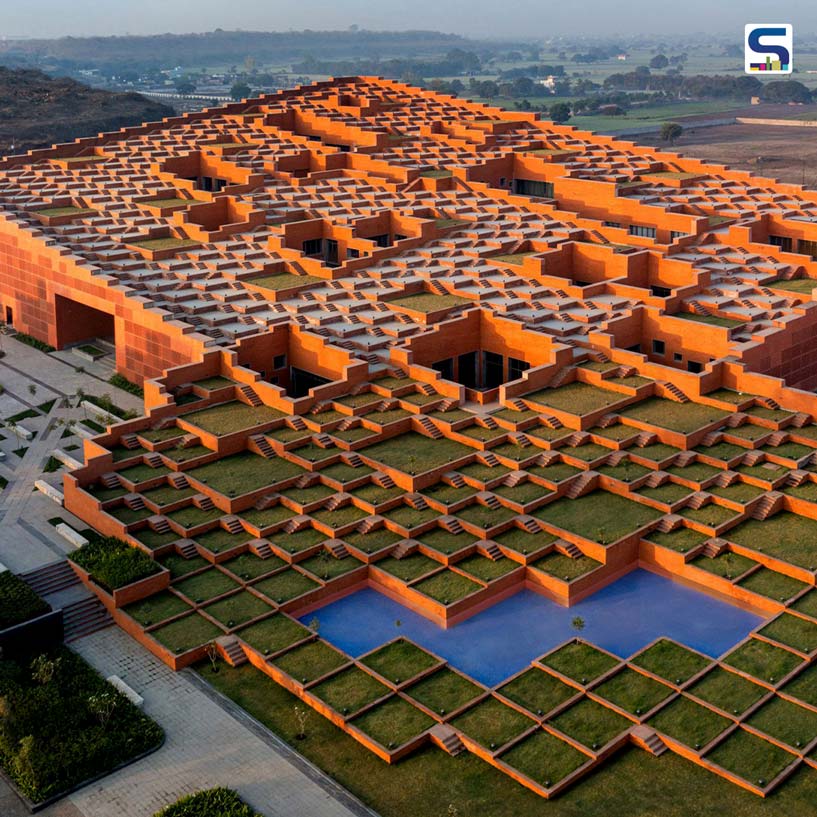
Sanjay Puri Architects recently unveiled a new academic building at Prestige University in Indore, Madhya Pradesh, distinguished by an extraordinary rooftop that functions simultaneously as an open-air auditorium and a collection of several social terraces. The project represents a thoughtful amalgamation of ancient Indian spatial traditions and contemporary architectural skill, resulting in a structure that is as culturally resonant as it is functionally ambitious. Know more about it on SURFACES REPORTER (SR).
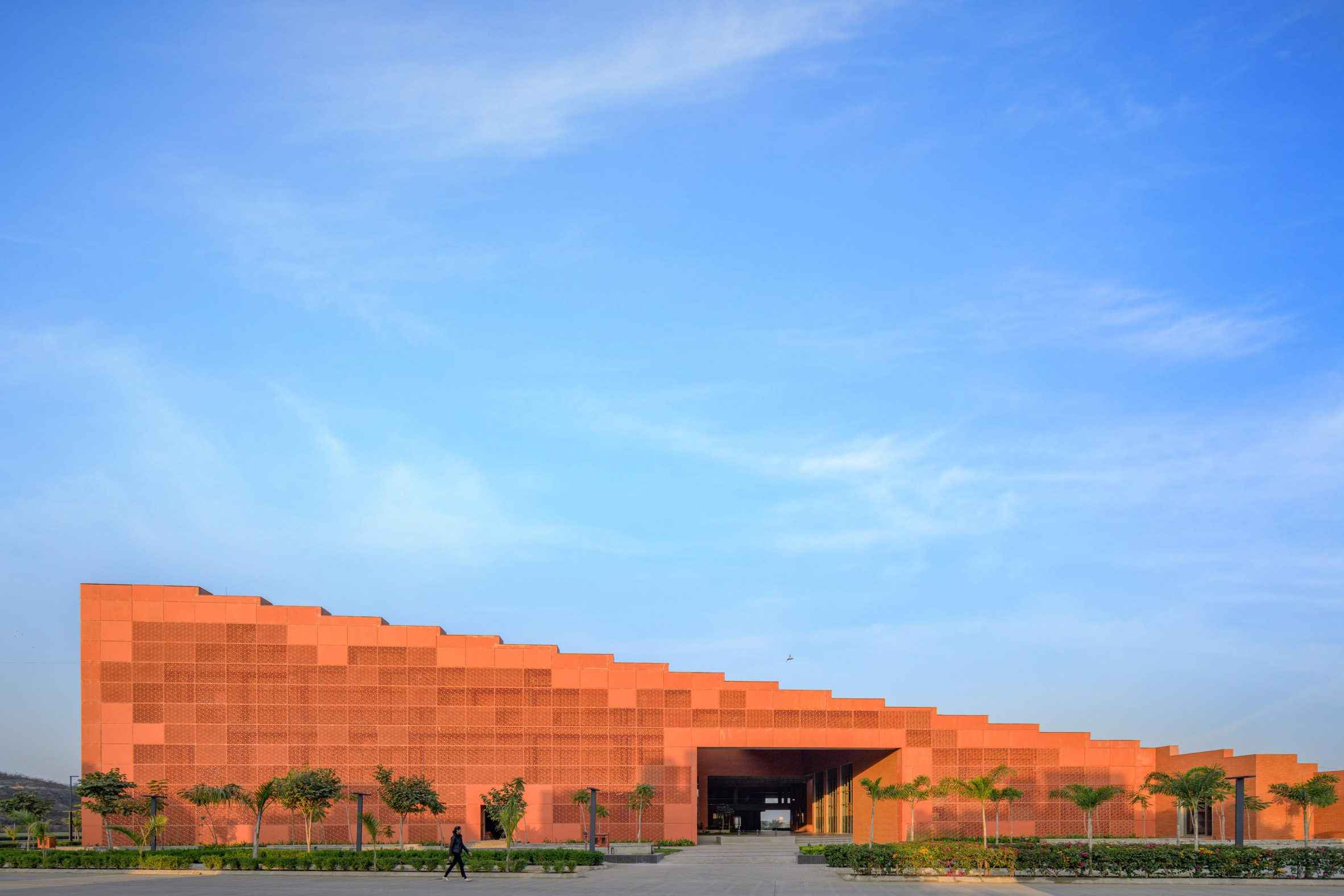
Situated on the university’s expanding 13 hectare campus, the five storey building encompasses a total floor area of 30,800sqm and accommodates a broad range of academic and social facilities, including offices, seminar halls, an auditorium, a library and a cafe.
Inspired by Ancient Indian Stepwells
Situated on the university’s expanding 13 hectare campus, the five storey building encompasses a total floor area of 30,800sqm and accommodates a broad range of academic and social facilities, including offices, seminar halls, an auditorium, a library and a cafe. Its most remarkable feature is its 9,000 sqm walkable roof, composed of 463 individually stepped platforms. These terraces can function independently as smaller gathering and study spaces, or collectively as a single open-air auditorium with a capacity of up to 9,000 people, which is sufficient to bring the entire student body of the campus together in one place. Accessibility has also been considered, with four of the terraces reachable through wheelchair hoist.
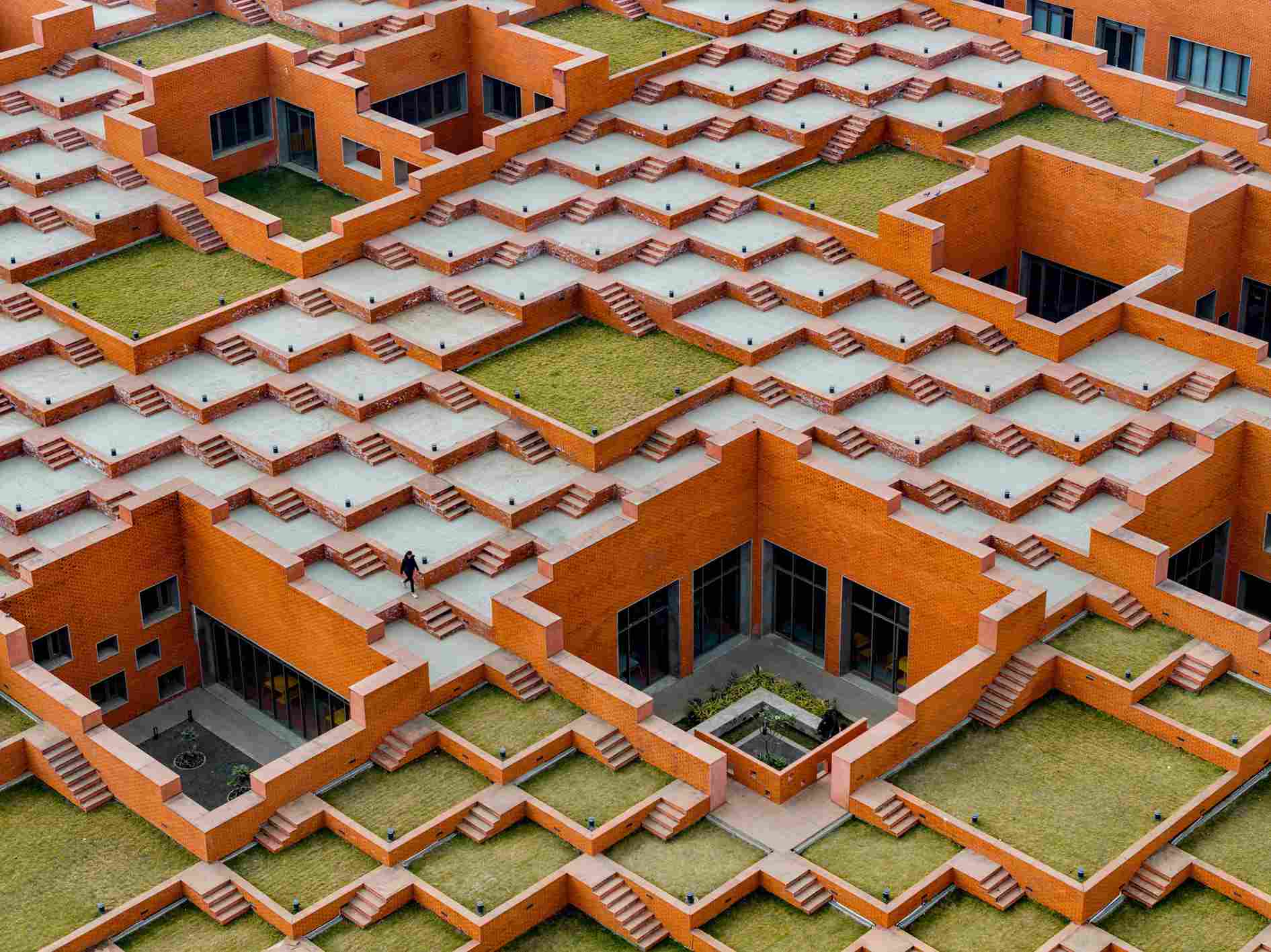
Its most remarkable feature is its 9,000 sqm walkable roof, composed of 463 individually stepped platforms.
The conceptual foundation of this rooftop design was reportedly drawn from India’s ancient stepwells, which are not only historical structures that were meant as water storage infrastructure but as significant communal spaces where communities would gather and interact. According to the studio, the campus aims to educate more than 3,000 students, and the ambition was to create a rooftop capable of uniting the entire student population in a single shared environment. In practice, the terraces have already proven their versatility, having hosted Independence Day flag-hoisting ceremonies, open-air lectures and recreational activities since the building opened.
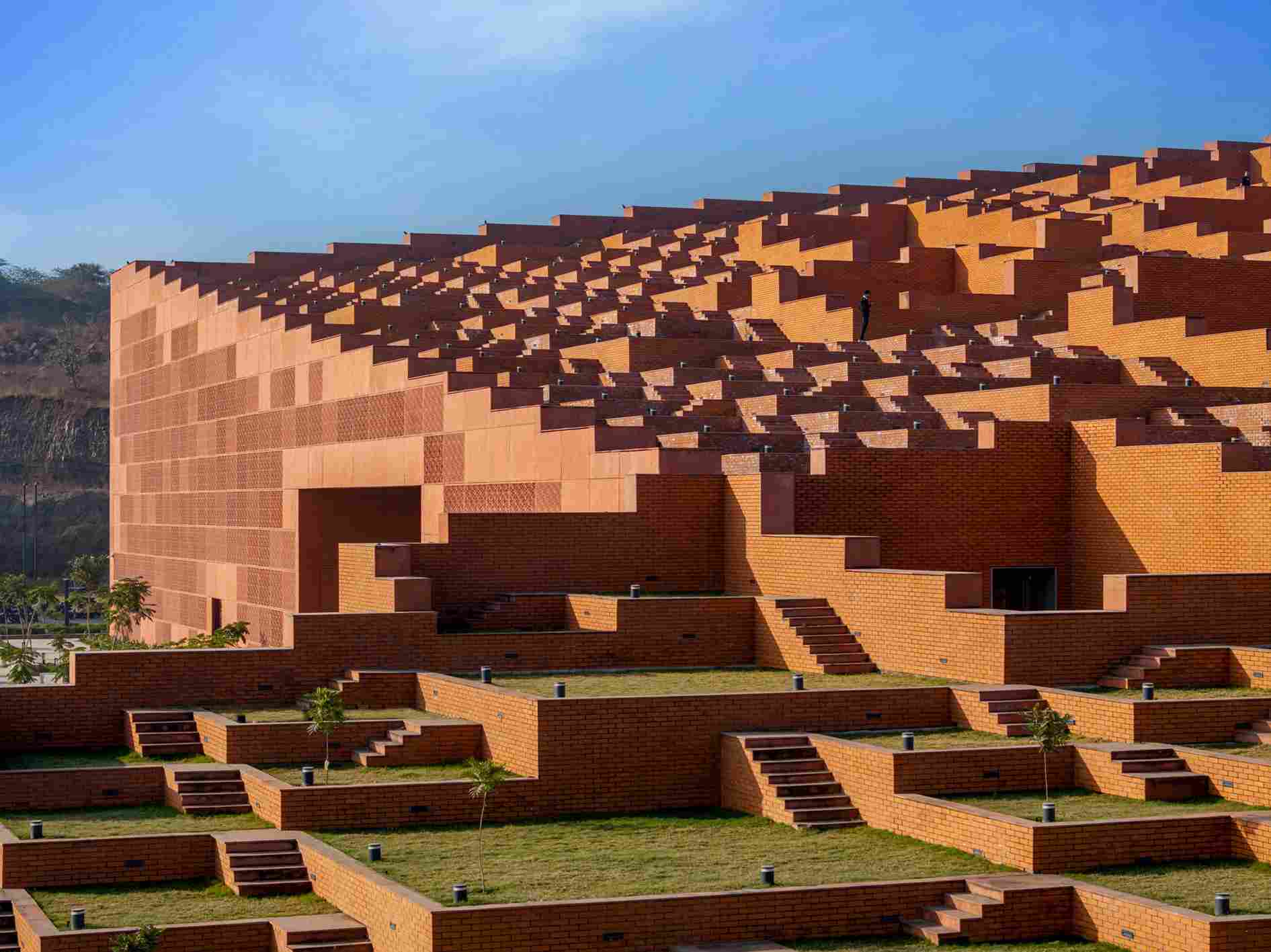
These terraces can function independently as smaller gathering and study spaces, or collectively as a single open-air auditorium with a capacity of up to 9,000 people, which is sufficient to bring the entire student body of the campus together in one place.
The building rises diagonally from its northern point, stepping upward to a height of 28m. At its base, a shallow reflecting pool contributes to the passive cooling of the structure, reducing reliance on mechanical air conditioning systems. This concern for energy efficiency and environmental performance runs throughout the design. The stepped massing also serves to reduce the perceived visual bulk of a very large building. The deliberately low-lying profile minimises the need for mechanical vertical circulation.
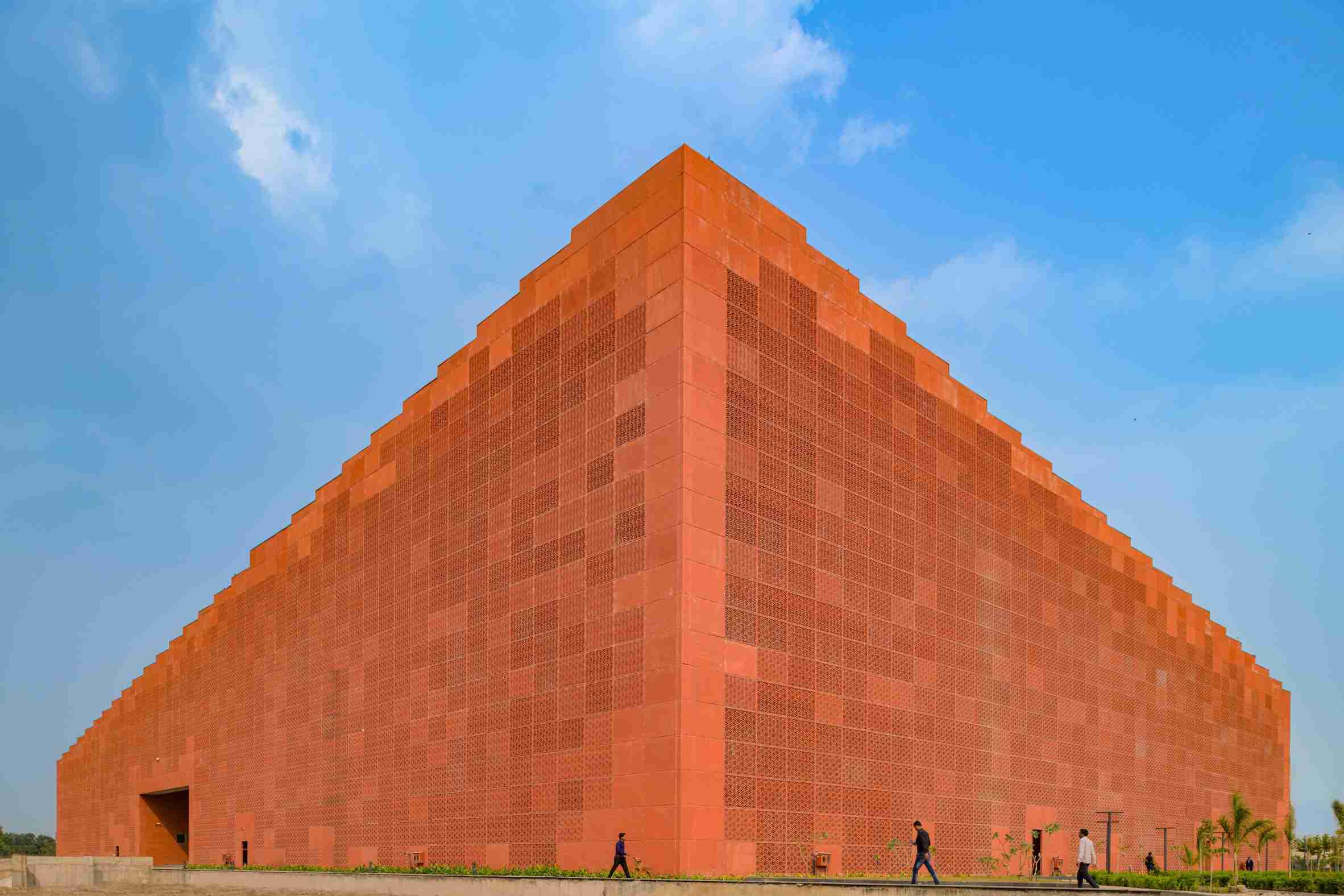
The building rises diagonally from its northern point, stepping upward to a height of 28m.
Rooftop that Seats 9,000
Ventilation and natural light are channelled deep into the building’s interior through a series of internal courtyards that punctuate the roofscape, working in alongside a diagonal indoor street running the full length of the ground floor. The primary structure is constructed from concrete and fly ash bricks, with the exterior finished in clay brick cladding that lends the building a warm, textured appearance. Decorative perforated screens made from glass fibre-reinforced concrete panels are incorporated into the elevations, providing an additional layer of natural ventilation while contributing to the visual richness of the facade. Internally, floors throughout the building are laid with Indian sandstone, while the concrete structural frame has been left exposed.
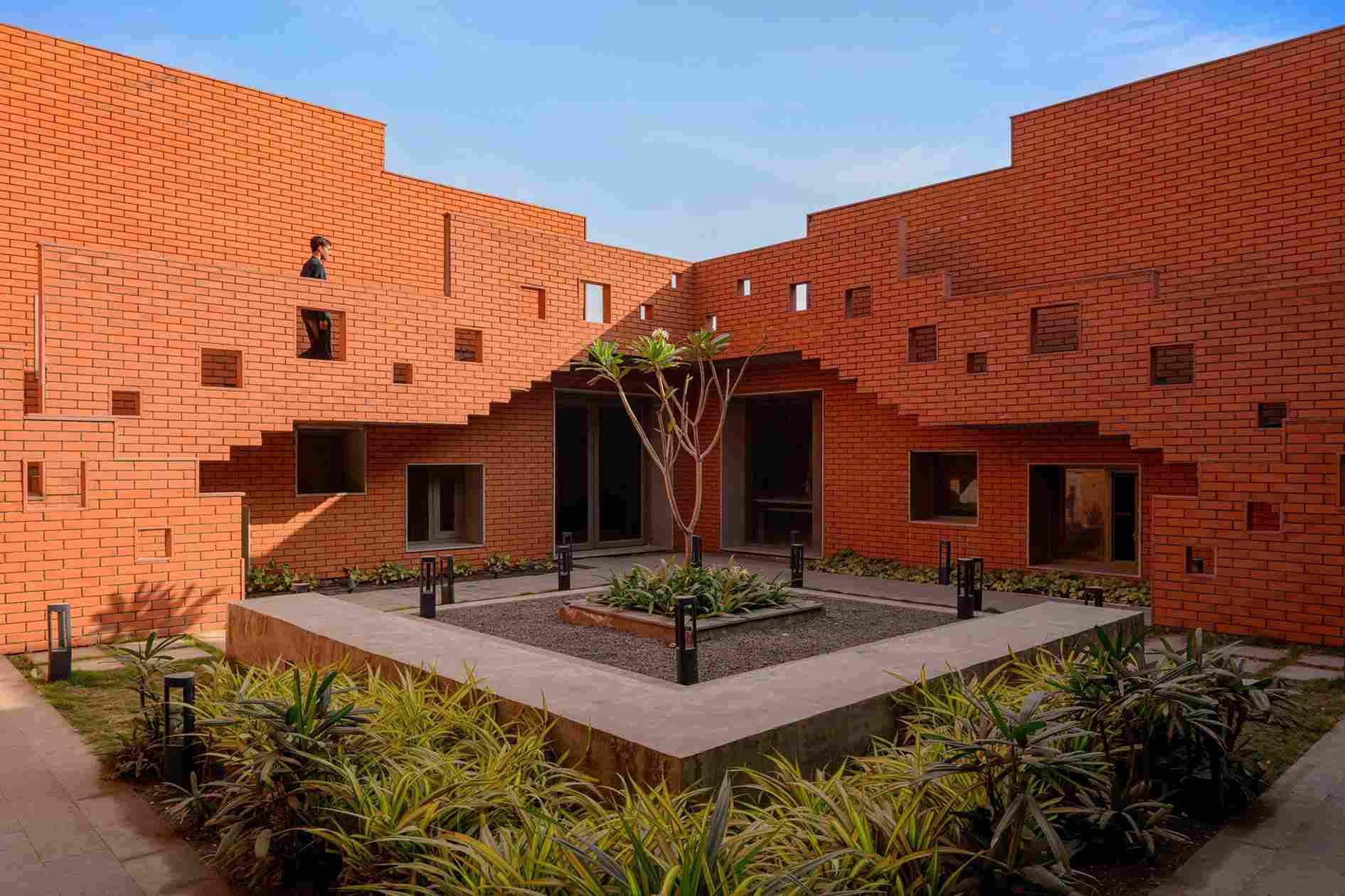
At its base, a shallow reflecting pool contributes to the passive cooling of the structure, reducing reliance on mechanical air conditioning systems.
The ground floor is the most publicly active level of the building, housing the 700 seat cafe, the indoor auditorium, the university’s administrative offices and the open courtyards that are available for recreational use. One floor above, the library occupies the first floor and features a distinctive bridge that spans the indoor street running below. The second and third floors are given over entirely to the building’s 45 classrooms, while the uppermost floor is reserved for faculty administration and related academic management functions.
Image credit: Vinay Panjwani