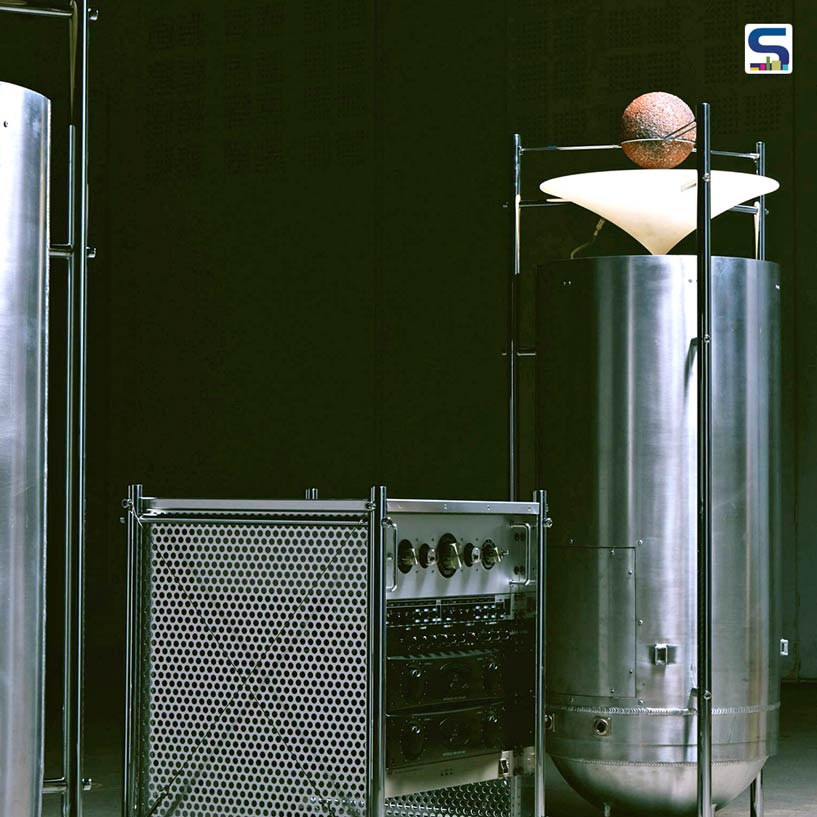
At this year’s Designart Tokyo, two striking sculptural speakers crafted from a discarded rocket fuel tank were unveiled, drawing attention for both their form and their conceptual link to the debris that drifts through outer space. These large cylindrical speakers, called Debris Rocket Tank speakers, were developed through a collaboration between Noon by Material Record, Nomura’s research and development arm focused on spatial design, and the &Space Project, which is an initiative dedicated to repurposing waste generated by space-related industries. The speakers were showcased at the event’s main exhibition venue in Shibuya. Know more about it on SURFACES REPORTER (SR).
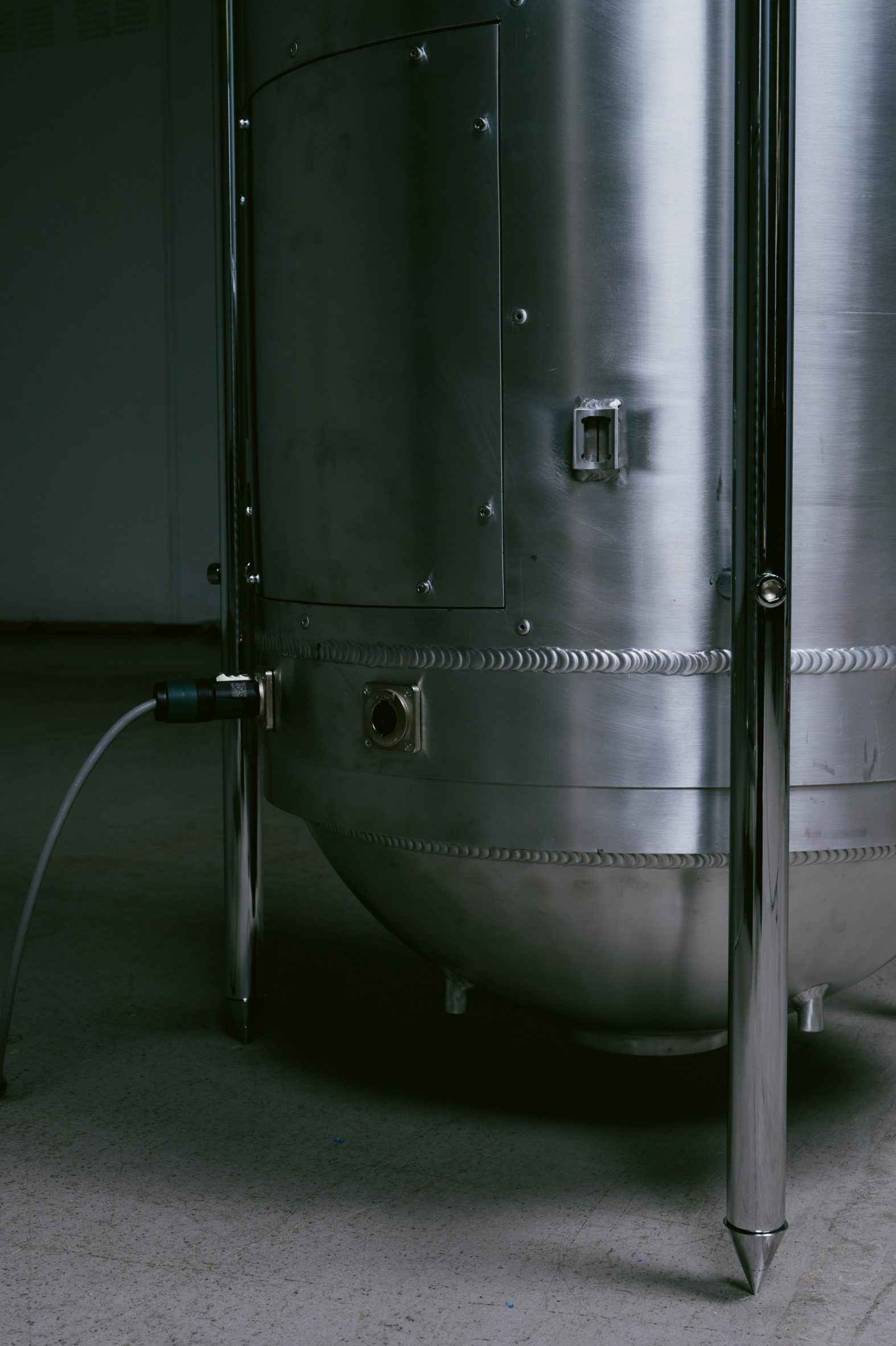
After it was retrieved by the &Space Project, where the tank was cut into two sections to form the body of one of the speakers.
The origin of these speakers lies in a rocket fuel tank that had been used for testing purposes at Japan’s primary space development centre in Taiki, Hokkaido. Although the tank never actually left Earth’s atmosphere, it provided a rare and meaningful raw material. Constructed from an aluminium alloy, the tank had originally been engineered to store liquid oxygen and ethanol during experiments. After it was retrieved by the &Space Project, where the tank was cut into two sections to form the body of one of the speakers.
According to Yoshihisa Goto, Nomura’s section chief of sustainable design, the acquisition of the tank was surprisingly straightforward. During the launch, he recalled how a private rocket development company casually offered the unused component, where they asked whether he would want it and, Goto simply agreed. That is when he turned it into a speaker. However, the transformation was not without challenges. Goto explained that aluminium alloy is generally unsuitable for speaker construction, as its high resonance causes excessive vibration. To address this, he added internal insulation to improve sound quality.
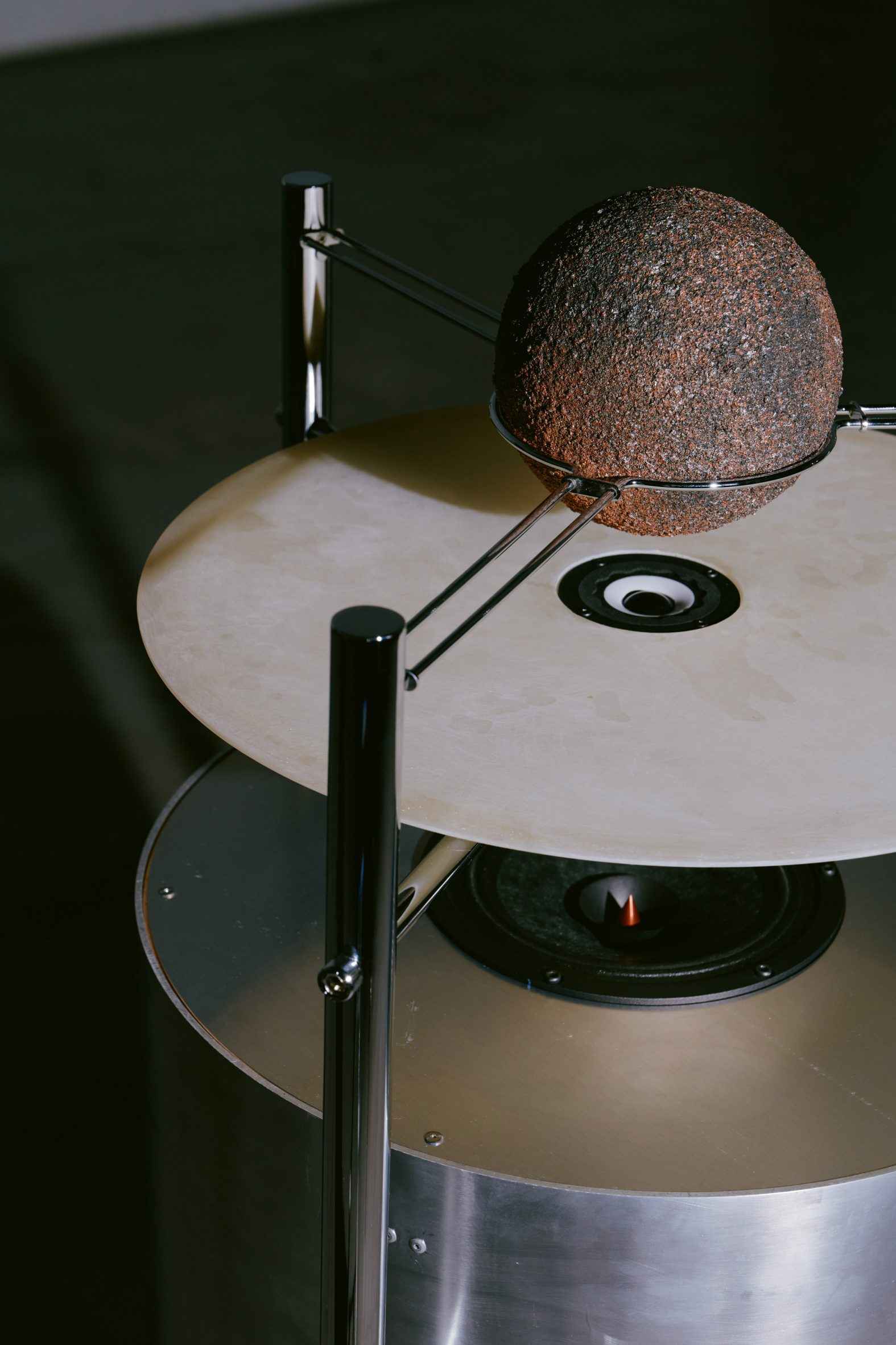
The origin of these speakers lies in a rocket fuel tank that had been used for testing purposes at Japan’s primary space development centre in Taiki, Hokkaido.
Above the cylindrical metal body, each speaker features an element such as an antenna, crafted from grass fibre. This component plays a crucial acoustic role by distributing sound throughout the space. The design intentionally echoes the absence of orientation in space, where no up, down, left, or right exists, thus resulting in an omni-directional audio experience. At the top sits a decorative yet functional sphere created by metal artist Kazuhiro Toyama. By melting down everyday metals such as copper, aluminium and iron, Toyama produced an organic form that echoes the appearance of space debris, thus reinforcing the project’s conceptual theme. Beyond its design innovation, for Goto, the Debris Rocket Tank project is a tool for inspiring Nomura’s 600 designers to engage with sustainability in a more intuitive and accessible way. According to him, conventional sustainability metrics, such as carbon emissions or material circularity, often feel restrictive to creatives.
A complementary amplifier, made in a similar metallic aesthetic, was also created for the speakers, although it did not incorporate reclaimed space-industry materials. For now, the Debris Rocket Tank speakers remain a unique, one off creation, largely due to the rarity of the rocket tank material itself. According to Goto, the challenge in producing more lies in if he can get another rocket fuel tank, but it’s not something one can simply find on the street.
Image credit: Nomura