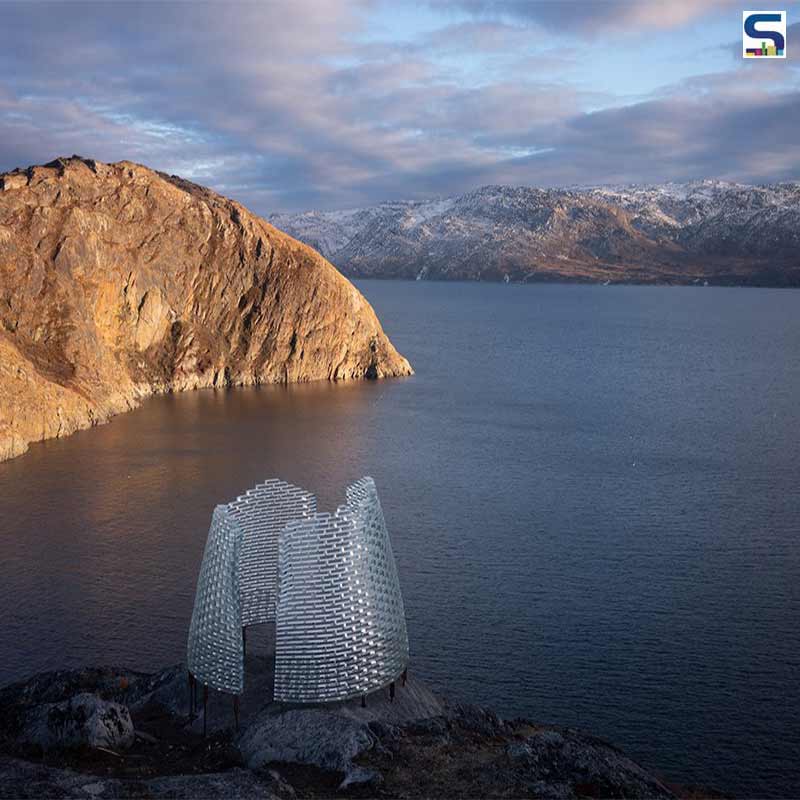
Konstantin Arkitekter, a Swedish architecture studio, has designed a sled house that ideates the notion of home on a rocky terrain of a UNESCO World Heritage site. Named Qaammat Pavilion, the house is located on a hiking trail in the municipality of Sarfannguit, Greenland. Know more about the project on SURFACES REPORTER (SR).
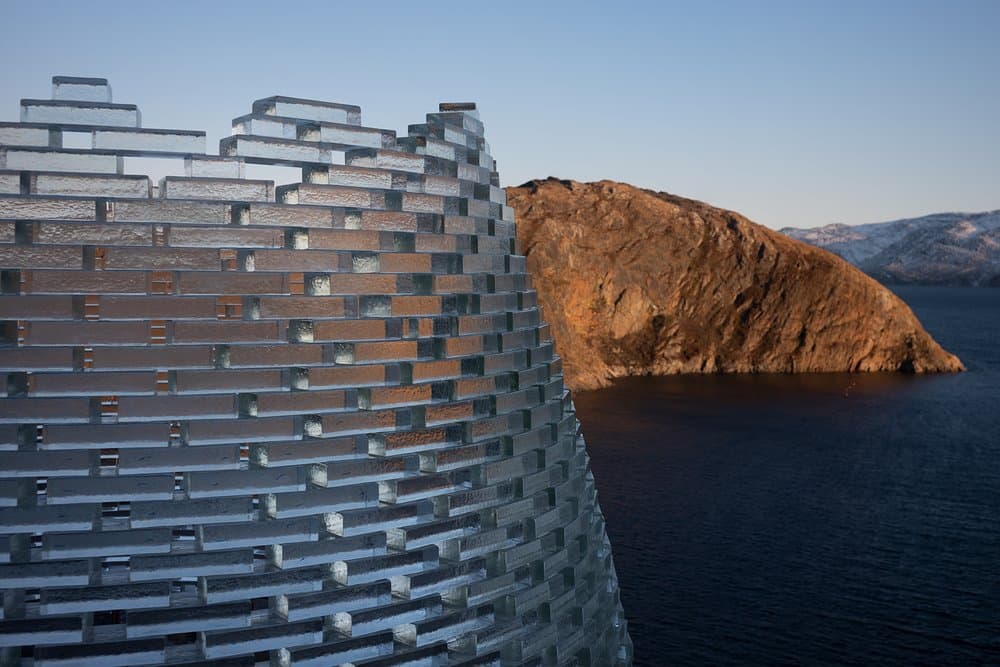
The use of glass in the structure aims at translating the reflection of the immense sense of power of the natural environment.
Made of two glass blocks, the Qaammat Pavilion has been designed as a landmark for gathering to promote local culture and heritage. The structure draws inspiration from Greenlandic inussuk whose structure is made from stone and used by the Inuit communities to mark travel routes. Konstantin Arkitekter closely worked with the Inuit community and the UNESCO team to finalise the location. The location of the pavilion was pivotal as the structure would highlight the environment and cultural heritage of the site.
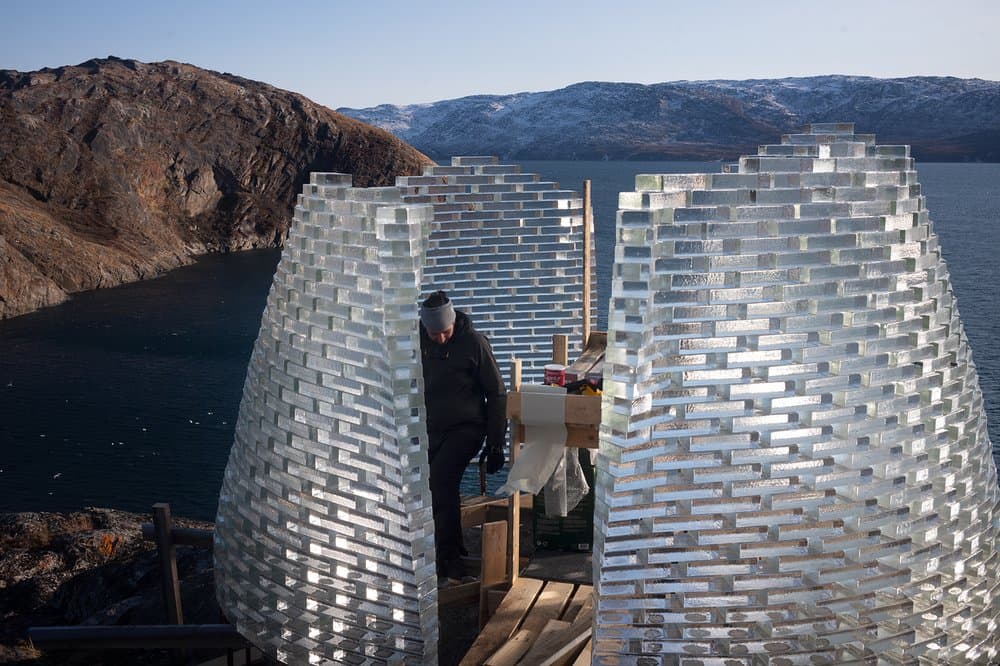
Nearly 1,200 glass blocks are glued together in a brick-like pattern to form the transparent, curved walls of the Qaammat Pavilion.
The use of glass in the structure aims at translating the reflection of the immense sense of power of the natural environment. Nearly 1,200 glass blocks are glued together in a brick-like pattern to form the transparent, curved walls of the Qaammat Pavilion. A linear path in the pavilion is created by two narrow openings between the walls. The glass blocks absorb and oscillate light, whereas from afar, the glass reflects the colours of the changing surrounding. Additionally, the glass alters the spectator’s perspective of the surrounding.
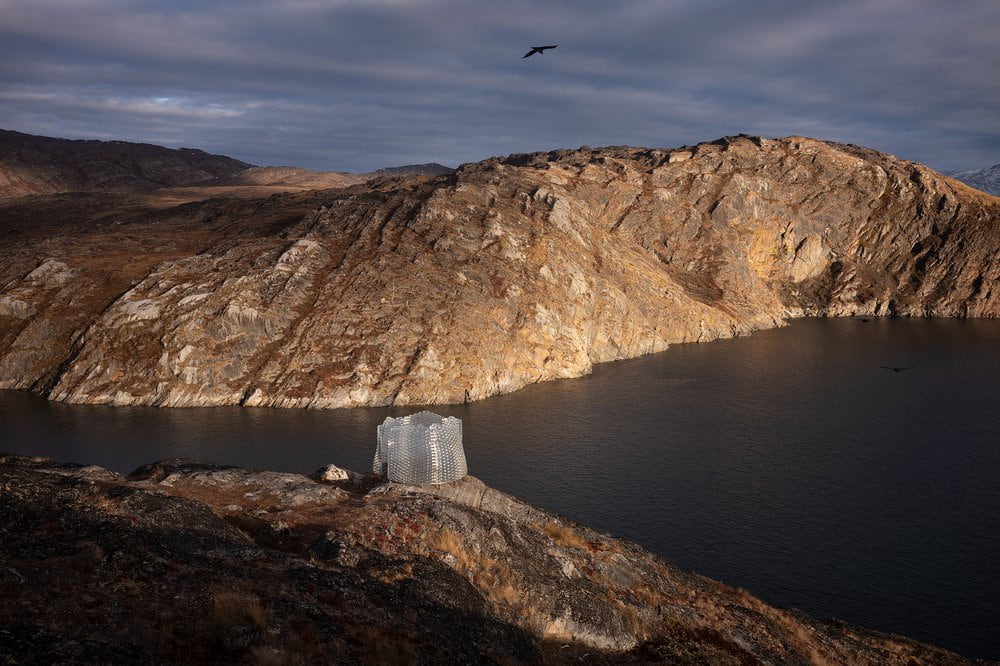
The glass blocks absorb and oscillate light, whereas from afar, the glass reflects the colours of the changing surrounding.
Holes have been drilled into the ground to install the Qaammat Pavilion on the rocky terrain. Circular steel brackets form the base of the glass pavilion. The anchors and poles are custom-made by upgrading standard 15mm components used in local construction to 40mm to hold nearly 5 tonne of glass blocks. With the help of installation post anchors, a method that is used to construct houses in the area, the pavilion sits comfortably in the popular seven-day hiking trail on the south branch of the Arctic Circle Trail. The pavilion guides hikers and acts as a start or finish point for shorter trails.
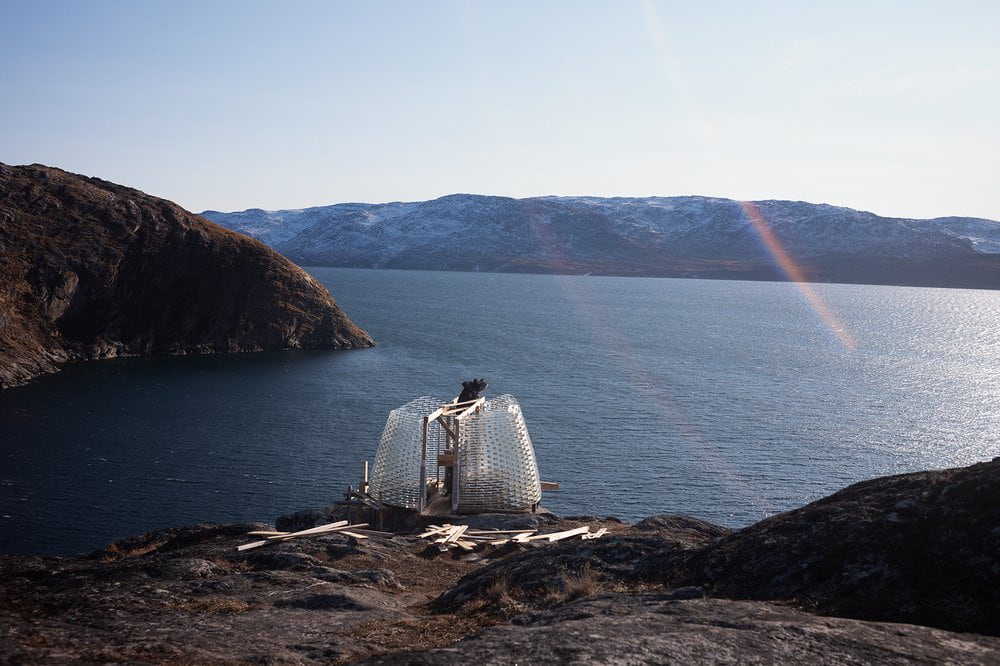
Holes have been drilled into the ground to install the Qaammat Pavilion on the rocky terrain.
Photographs: Julien Lanoo; Courtesy: Konstantin Arkitekte