One of the fastest-growing renewable energy technologies, the usage of wind power around the world is rapidly increasing. In many countries, wind turbines are now becoming a part of the growing local landscape. Non-biodegradable blades, which are commonly seen in present-day wind turbines, have a lifespan of nearly 20 years. This means that they need to be disposed of soon. However, the recycling of these wind turbines has been actively rising in the past few years. A project named Re-Wind formed by an interdisciplinary research team comprising experts from the City University of New York, Georgia Institute of Technology, University College Cork and Queen’s University Belfast has come up with ingenious plans for repurposing these gigantic metal structures – one of which is the newly inaugurated BladeBridge in Ireland. Here is a detailed report by SURFACES REPORTER (SR).
Repurposing wind turbine blades
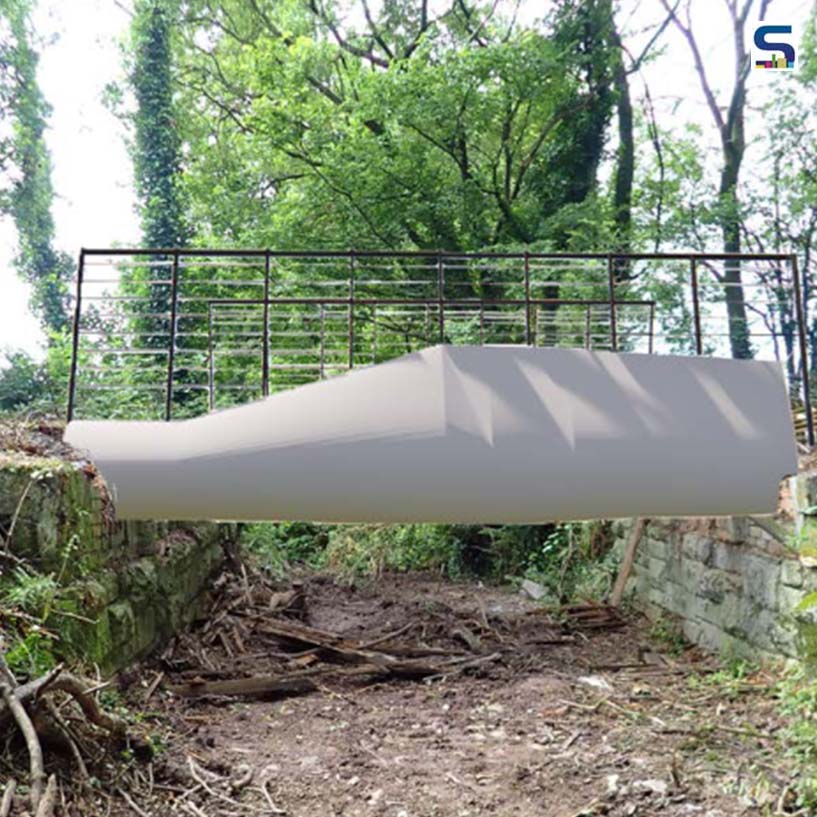
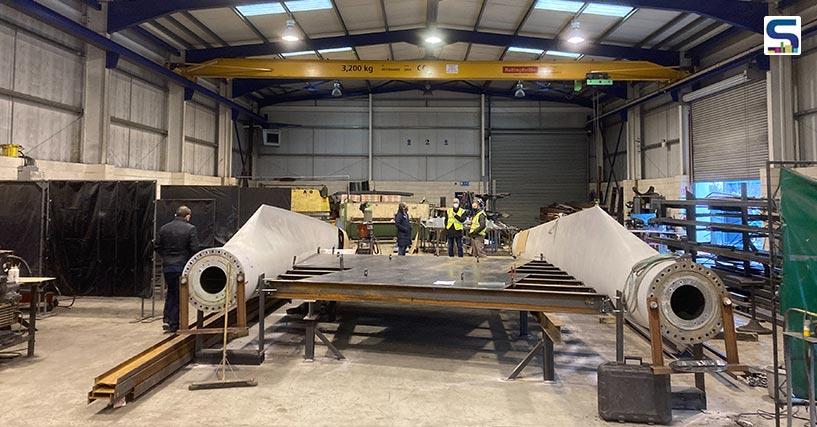
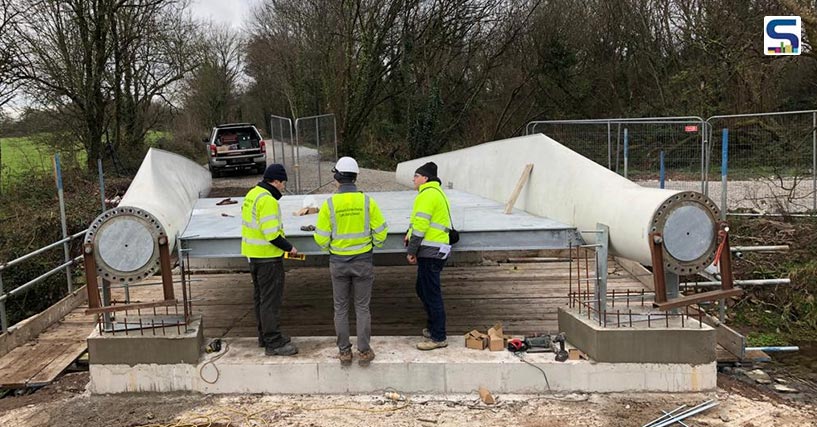
Re-Wind has set up the first BladeBridge for pedestrians, cyclists and emergency vehicles in Ireland’s Country Cork. Second in the world, the Cork Bridge is designed by Kieran Ruane who is part of the Re-Wind Network. The BladeBridge – built with discarded wind turbines – was completed by January, 2022. Two disused LM13.4 wind turbines make up the bridge structure. The bridge is 4 m wide and 5.5 m long. Such bridges offer light workable bridges which are mainly used for maintenance and emergency vehicles as well as pedestrians and cyclists.
Challenges
The main challenges include the length and material usage. A typical 2.0 MW turbine has three 50 m-long blades that contain nearly 20 ton of fibre reinforced polymer (FRP) composites. Reports suggest that by 2050, the global wind industry will have to find out better solutions to dispose of nearly 39.8 mn ton of waste. The reason for this is that most of the wind turbine blades are made of glass, fibre, resins and foams. This makes them non-biodegradable and is not easy to recycle. Re-Wind aims at finding solution to the major waste problem by exploring the potential reuse of the blades across architecture and engineering.
That said, Re-Wind has also proposed several other uses such as refreshment points, noise barriers or bicycle sheds.
Image credits: Re-Wind