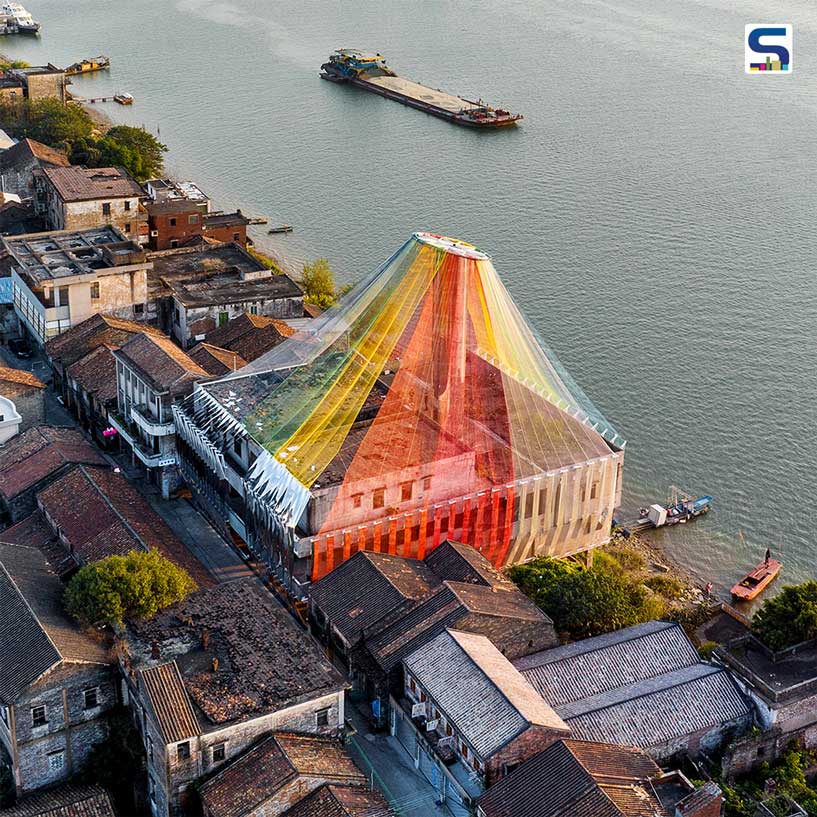
Architect Ma Yansong recently completed an art installation in Taiping Xu, Nanhai, Guangdong province of China. Named Timeless Beacon, the installation is made of multi-coloured fishing nets and reflective film that envelopes the abandoned market building. Here is a detailed report on SURFACES REPORTER (SR).
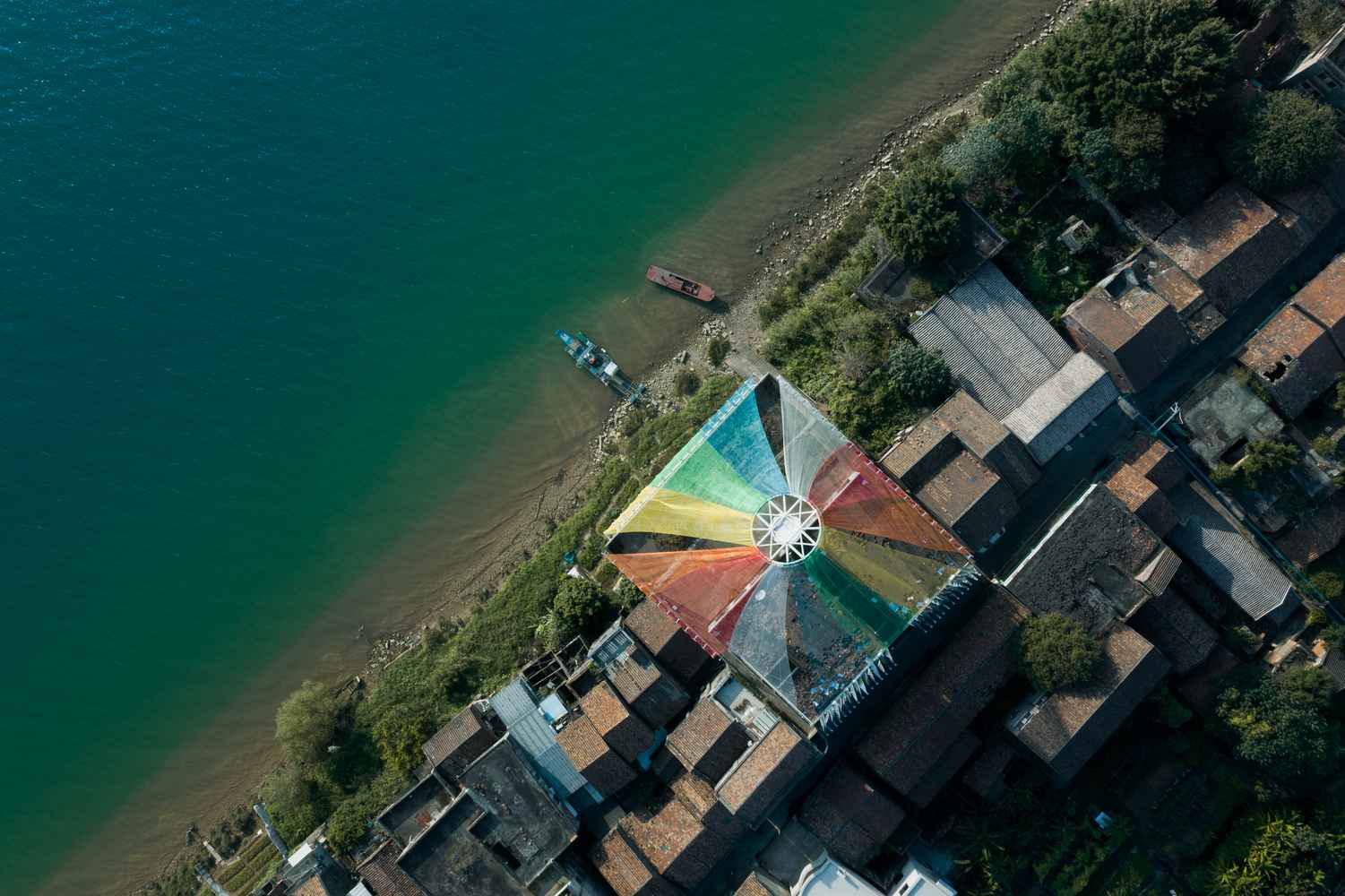
Named Timeless Beacon, the installation is made of multi-coloured fishing nets and reflective film that envelopes the abandoned market building.
The architect had been commissioned by Guangdong Nanhai Art Field to create the art installation that covers the abandoned three-storey waterfront market building, which was once a bustling commercial area for trading during the late Ming Dynasty. The design renovated the old Taiping market with a reflective film made of a new material that faintly mirrors the surrounding of old streets through the façade and inner space of the building. The building’s lower floors are wrapped vertically in ribbons of this reflective film.
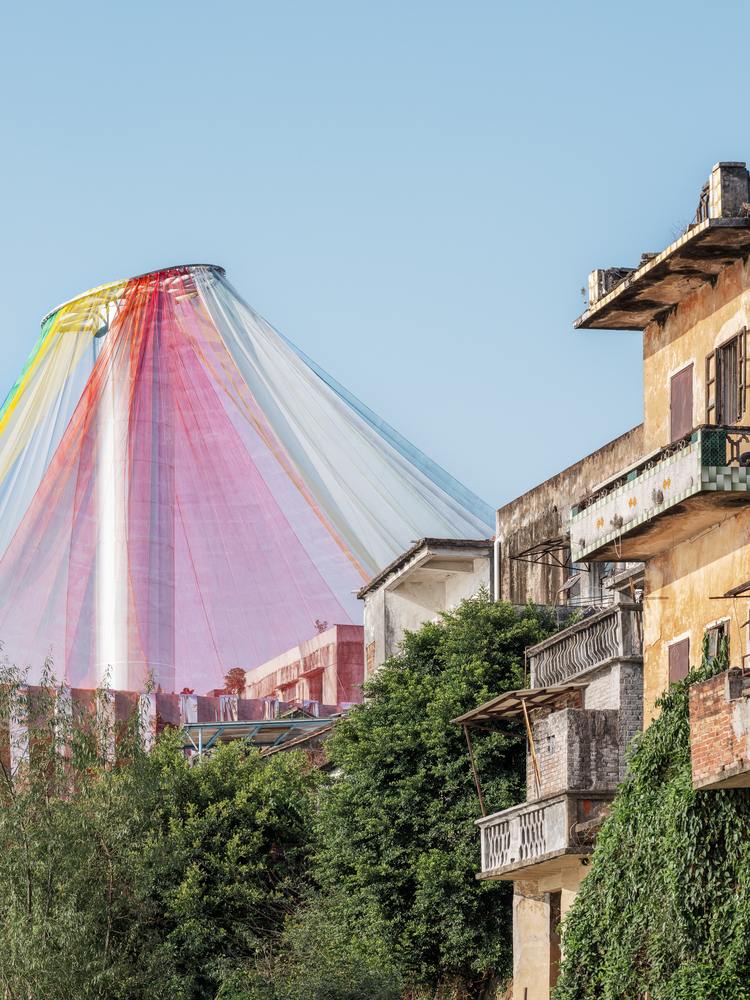
The design renovated the old Taiping market with a reflective film made of a new material that faintly mirrors the surrounding of old streets through the façade and inner space of the building.
The multi-coloured fishing nets cover the third floor of the building, thus stretching to the top of the building where a cylindrical tower is fitted with a lighting system. The cylindrical tower, which supports and anchors fishing nets, helps in creating a veil over the structure that flutters in the wind romantically.
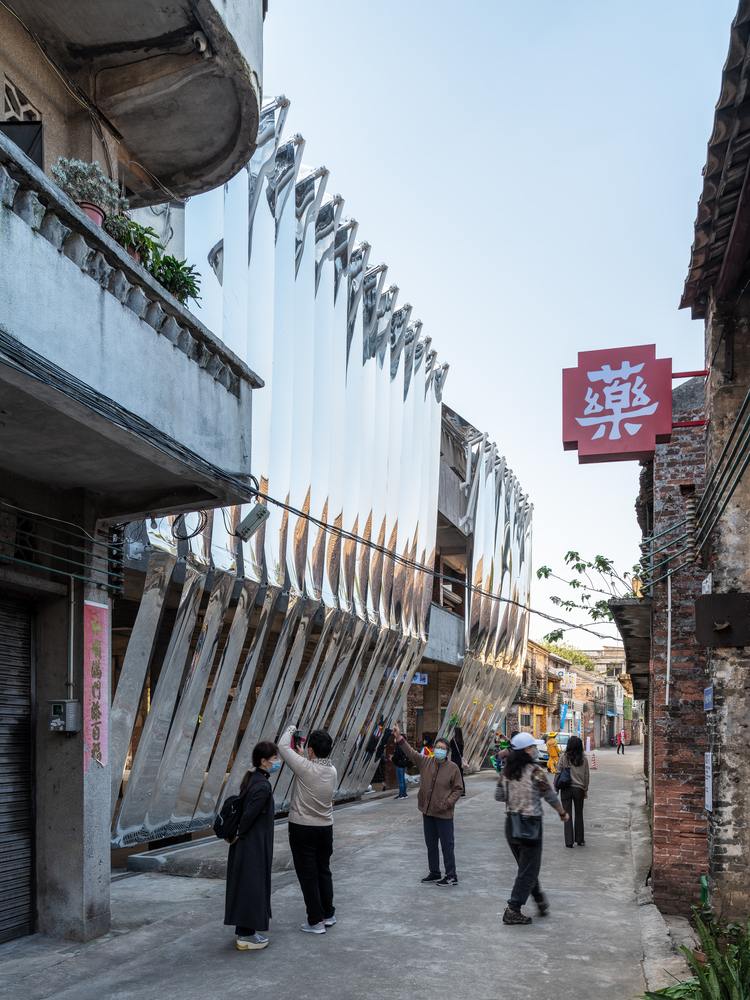
The building’s lower floors are wrapped vertically in ribbons of this reflective film.
Patrons can walk through the Timeless Beacon building through all its levels. Originally, the architect had wrapped the building in vertical ribbons of film. However, they were destroyed in a storm, which eventually gave him the idea to use fishing nets. By night, the building is transformed into a lighthouse that glows in all its glory in contrast to the contemporary backdrop of the fast-growing city by the waterfront. Symbolizing the vitality and rebirth of the ruins, Timeless Beacon exhibits the history of the former market area.
Image credit: Fangfang Tian, Yu Lu, Junliang Li and Kai Zhang